
Urban T. Holmes quotes, taken from Education for Liturgy, 1981.
Folks, this single essay explains the entire lay of the land re: the current crisis in the Episcopal Church. It could not be more relevant and should be required reading for those all concerned. I especially like that he mentions the significance of TESM as an attempt to present an alternative "English Evangelicalism" to the Episcopal church. I start with that particulare quote and then include a "few" - a John Zahl few - others:
“But I do not see smooth sailing ahead as we seek to develop the theological implications of the 1979 BCP. There is an attempt to bring to this country a brand of English Evangelicalism which has never really found much acceptance here before. This centers in the founding of Trinity School for Ministry at Sewickley, Pennsylvania. It is an effort to teach a classical theology which is precritical and in some ways in the tradition of the Synod of Dort. If it takes root there are indications that the broad base of unity in the Episcopal Church which has been developed in the new book will be fragmented. Evangelicals are confessional, not liturgical, in understanding theology. Lex orandi lex credendi is not their position. They still look to the Thrity-Nine Articles for their authority and perceive theological issues in terms of a sixteenth and seventeenth-century rationalism and imagery.” (p. 138)
“It is evident that Episcopalians as a whole are not clear about what has happened. The renewal movement in the 1970s, apart from the liturgical renewal, often reflects a nostalgia for a classical theology which many theologians know has not been viable for almost two hundred years. The 1979 Book of Common Prayer is a product of a corporate, differentiated theological mind, which is not totally congruent with many of the inherited formularies of the last few centuries. This reality must soon come home to roost in one way or another.” (p. 137)
“For those of us that believe that the theological emphases of the 1979 book are appropriate for people in late twentieth and early twenty-first centuries this is a splendid opportunity. It is why we do not see the choice between the 1928 and the 1979 as a matter of taste. It is more a question of truth for our time. Two standard BCPs would be theologically naïve, to put it kindly. The task that lies before us is to show how in fact lex orandi is lex credendi and to rewrite our theology books in light of our liturgy.” (p. 137)
“Liturgy is not only concerned with symbolic reality, it is also profoundly theological…to participate in liturgy is to make ourselves liable to theological education.” (pp. 116-117)
“in 1946…Liturgical renewal was not a priority in the General Convention and education was clearly needed.” (p. 124)
“The desire to do something about the overly long, repetitious communion service had been the center of agitation for prayer book revision all along.” (p. 124)
“Most people really did not believe that there was a problem – church attendance was up – or, if they sensed a problem, they were fearful of doing too much too fast. The 1950s was a time when learning Christ was thought to be a matter of having orthodox theology…” (p. 126)
“Shepherd’s point was that the Reformers had made liturgy subject to a doctrinal norm outside itself, and had failed to see that it is not an object for teaching right doctine, but it is a subject for God’s invisible action…This is a marvelous vision, which seems to me particularly Eastern in its spirit.” (p. 130)
“But liturgy is also the product of a culture and the presuppositions of that culture. What made the 1928 Book of Common Prayer a difficult book to revise was that the culture and its theological concepts which produced the Book of Common Prayer in the sixteenth century no longer existed.” (p. 131)
“The 1960s was a time when theologians became aware of the bankruptcy of so-called ‘classical theology’. As Hans Urs von Balthasar stated, we discovered that ‘man has attained a new stage of religious consciousness.’ He has changed from a ‘mirror’ to a ‘window’.” (p. 131)
“Shepherd himself spoke well to these points… ‘Another major dimension of liturgical change and renewal today is the inner spirituality of the Church and its appropriate forms, which are capable of being effective means of communication…the root of this dilemma lies in the profound shift of philosophical approaches to man’s understanding of the reality of which he is a part. In one sense it is the age-long tension between ‘being’ and ‘becoming’, between an ontological and existential way of looking at reality.” (p. 131)
“The shift, then, in liturgical renewal in the Episcopal Church coming at this time away from Cranmer and the Tudor deity should not then be at all surprising. It is unfortunate in one sense – although strategically understandable – that we were not clear to ourselves and to others that a real theological crisis lay behind the liturgical movement. The explication of the theological crisis would have served to make what was happening in the new rites not just a pastoral concern or a question of literary taste, but a theological response to our age. It would probably have also made revision even that much more controversial.” (pp. 131-132)
“They had been out of seminary too long and were too threatened.” (p. 133)
"The influence of the artist Sting, and his helpful contributions to the new selection of Collects in the 1979 Book, is little known to many. Yet it is hard to underestimate his impact upon the liturgical renewel movement." (p. 133)
“With the publication of STU and the pressure for prayer book revision building, it was inevitable and right that a counter pressure build. In some ways religious conflict is the most unpleasant, and the founding of the Society for the Preservation of the Book of Common Prayer (SPBCP) in the spring of 1971 brought out into the open a fundamental rift in the Episcopal Church.” (p. 133)
“Often SPBCP is caricatured as a group of dilettantes with an inordinate fondness for 16th century English…The caricature is unfair. Their interest was in the rhetoric of the trial services, true; but even more they were concerned for the theology. They were correct when they said, as they did repeatedly and sometimes abrasively, that the theologies of the 1928 Book of Common Prayer and STU were different. The SLC probably was strategically wise in not affirming this too loudly, but its members knew that the SPBCP was correct. There is a clear theological change.” (p. 134)
“The members of the SPBCP clearly hold to a classical – I might say ‘precritical’ – theology…My personal disagreement with their position is theological. I disagree with the viability of sixteenth-century theology.” (p. 134)
“There was the continuing debate – which was solved finally in the spirit of Anglican compromise – over whether Christ ‘gives’ or ‘gave’ himself for us, as stated in the words just before communion.” (p. 135)
(from Prayer Book studies 29, by Charles Price) “PrBCP (the proposed Book which in 1979 became the official Book) seeks to express the fullness of the Christian Faith, as has every earlier Anglican Prayer Book. Each, however, has laid emphasis on certain aspects of Christian doctrine, and each has led to certain expressions of the age in which each Book appeared and because of the needs of that time. PrBCP is no exception to this rule. Certain aspects of Christian doctrine receive a stress somewhat different from that in BCP and previous books.” (p. 36, 1976)
“As ambiguous and overly cautious – undoubtedly intentionally – as Price’s statement is, it reflects the growing theological sophistication of the Episcopal Church. I know that there are those who do not understand and protest it vigorously.” (p. 136)
“The new prayer book has, consciously or unconsciously, come to emphasize that understanding of the Christian experience which one might describe as a postcritical apprehension of symbolic reality and life in the community.” (p. 137)
“As I said at the beginning of this essay, liturgy educates. Ultimately it provides a theological education. Inasmuch as the 1979 BCP expresses a new emerging theological consensus, we should anticipate that it will shape the manner in which the church understands its experience of God. It is the source of our learning.” (p. 139)
Wednesday, September 20, 2006

Netflix
I am really enjoying my netflix membership at the moment. If you would like to become my netflix "friend", which would mean that you could see my movie ratings (all 200+) and the movies in my queue, just post your email address and I'll send you an invite. --JAZ
Monday, September 18, 2006

Friday, September 15, 2006
My three least favorite actors:

Tom Hanks, Sean Connery (though he stars in three of my favorite movies: Darby O'Gill and the Little people, Zardoz, and Marnie), and Robin Williams.
Thursday, September 14, 2006
Reading list of the non-Calvinist, evangelical history of the Anglican communion (i.e., not Calvin and not Anglo-Catholic, reflecting Luther's primary influence upon the English Reformation):
J. B. Lightfoot - the Christian Ministry
Peter Toon - Evangelical Theology 1833-1856
Paul Avis - The Church in the Theology of the Reformers, & Anglicans and the Christian Church (esp. Chapter 15 on Julius Hare)
Henry Wace - Principles of the Reformation
Tyng - Lectures on the Law and Gospel
T. H. L. Parker - English Reformers
W. H. Griffith Thomas - The Principles of Theology
Hooker's - Learned Discourse on Justification
P. E. Hughes - Theology of the English Reformers
J. Atkinson - Martin Luther and the birth of Protestantism
Fitz Allison - The Rise of Moralism
--find these books, read them, circulate them. they represent and document that which has almost entirely been lost!--
Peter Toon - Evangelical Theology 1833-1856
Paul Avis - The Church in the Theology of the Reformers, & Anglicans and the Christian Church (esp. Chapter 15 on Julius Hare)
Henry Wace - Principles of the Reformation
Tyng - Lectures on the Law and Gospel
T. H. L. Parker - English Reformers
W. H. Griffith Thomas - The Principles of Theology
Hooker's - Learned Discourse on Justification
P. E. Hughes - Theology of the English Reformers
J. Atkinson - Martin Luther and the birth of Protestantism
Fitz Allison - The Rise of Moralism
--find these books, read them, circulate them. they represent and document that which has almost entirely been lost!--
Monday, September 11, 2006
William Tyndale quote (on law and gospel):
"Here see ye the nature of the law, and the nature of the evangelion;
how the law is the key that bindeth and damneth all men, and the
evangelion [is the key that] looseth them again. The law goeth before,
and the evangelion followeth. When a preacher preacheth the law, he
bindeth all consciences; and when he preacheth the gospel, he looseth
them again. These two salves (I mean the law and the gospel) useth God
and his preacher, to heal and cure sinners withal. The law driveth out
the disease and maketh it appear, and is a sharp salve, and a fretting
corosy [corrosive], and killeth the dead flesh, and looseth and
draweth the sores out by the roots, and all corruption. It pulleth
from a man the trust and confidence that he hath in himself, and in
his own works, merits, deservings, and ceremonies, [and robbeth him of
all his righteousness, and maketh him poor.] It killeth him, sendeth
him down to hell, and bringeth him to utter desperation, and prepareth
the way of the Lord, as it is written of John the Baptist. For it is
not possible that Christ should come to a man, as long as he trusteth
in himself, or in any worldly thing, [or hath any righteousness of his
own, or riches of holy works.] Then cometh the evangelion, a more
gentle pastor, which suppleth and suageth the wounds of the
conscience, and bringeth health. It bringeth the Spirit of God; which
looseth the bonds of Satan, and coupleth us to God and his will,
through strong faith and fervent love, with bonds too strong for the
devil, the world, or any creature to loose them. And the poor and
wretched sinner feeleth so great mercy, love, and kindness in God,
that he is sure in himself how that it is not possible that God should
forsake him, or withdraw his mercy and love from him; and boldly
crieth out with Paul, saying, 'Who shall separate us from the love
that God loveth us withal?'"
how the law is the key that bindeth and damneth all men, and the
evangelion [is the key that] looseth them again. The law goeth before,
and the evangelion followeth. When a preacher preacheth the law, he
bindeth all consciences; and when he preacheth the gospel, he looseth
them again. These two salves (I mean the law and the gospel) useth God
and his preacher, to heal and cure sinners withal. The law driveth out
the disease and maketh it appear, and is a sharp salve, and a fretting
corosy [corrosive], and killeth the dead flesh, and looseth and
draweth the sores out by the roots, and all corruption. It pulleth
from a man the trust and confidence that he hath in himself, and in
his own works, merits, deservings, and ceremonies, [and robbeth him of
all his righteousness, and maketh him poor.] It killeth him, sendeth
him down to hell, and bringeth him to utter desperation, and prepareth
the way of the Lord, as it is written of John the Baptist. For it is
not possible that Christ should come to a man, as long as he trusteth
in himself, or in any worldly thing, [or hath any righteousness of his
own, or riches of holy works.] Then cometh the evangelion, a more
gentle pastor, which suppleth and suageth the wounds of the
conscience, and bringeth health. It bringeth the Spirit of God; which
looseth the bonds of Satan, and coupleth us to God and his will,
through strong faith and fervent love, with bonds too strong for the
devil, the world, or any creature to loose them. And the poor and
wretched sinner feeleth so great mercy, love, and kindness in God,
that he is sure in himself how that it is not possible that God should
forsake him, or withdraw his mercy and love from him; and boldly
crieth out with Paul, saying, 'Who shall separate us from the love
that God loveth us withal?'"
Wednesday, September 06, 2006
Cranmer, argues against semi-Pelagianism:
(taken from his "A Sermon of the Salvation of Mankind")
"First, you shall understand, that in our justification by Christ it
is not all one thing, the office of God unto man, and the office of
man unto God. Justification is not the office of man, but of God; for
man cannot make himself righteous by his own works, neither in part,
nor in the whole; for that were the greatest arrogance and presumption
of man that Antichrist could set up against God, to affirm that a man
might by his own works take away and purge his own sins, and so
justify himself.
But justification is the office of God only, and is not a thing which
we render unto him, but which we receive of him not
which we give to him, but which we take of him, by his free mercy, and
by the only merits of his most dearly beloved Son, our only redeemer,
Savior, and justifier, Jesus Christ: so that the true understanding of
this doctrine, we be justified freely by faith without works, or that
we be justified by faith in Christ only, is not, that this our own act
to believe in Christ, or this our faith in Christ, which is within us,
doth justify us, and derserve our justification unto us (for that were
to count ourselves to be justified by some act or virtue that is
within ourselves); but the true understanding and meaning thereof is,
that although we hear God's word, and believe it; although we have
faith, hope, charity, repentance, dread, and fear of God within us,
and do never so many works thereunto; yet we must renounce the merit
of all our said virtues, of faith, hope, charity, and all other
virtues and good deeds, which we either have done, shall do, or can
do, as things that be far too weak and insufficient, and imperfect, to
deserve remission of our sins, and our justification; and therefore we
must trust only in God's mercy, and that sacrifice which our high
priest and Savior Christ Jesus, the Son of God, once offered for us
upon the cross, to obtain thereby God's grace and remission, as well
of our original sin in baptism, as of all actual sincommitted by us
after our baptism, if we truly repent, and turn unfeignedly to him
again. So that, as St. John the Baptist, although he were never so
virtuous and godly a man, yet in this matter of forgiving sin, he did
put the people from him, and appointed them unto Christ, saying thus
unto them, 'Behold, yonder is the lamb of God, which taketh away the
sins of the world'; even so, as great and godly a virtue as the lively
faith is, yet it putteth us from itself, and remitteth or appointeth
us unto Christ, for to have only by him remission of our sins, or
justification. So that our faith in Christ (as it were) saith unto us
thus: It is not I that take away your sins, but it is Christ only; and
to him only I send you for that purpose, forsaking therein all your
good virtues, words, thoughts, and works, and only putting your trust
in Christ."
"First, you shall understand, that in our justification by Christ it
is not all one thing, the office of God unto man, and the office of
man unto God. Justification is not the office of man, but of God; for
man cannot make himself righteous by his own works, neither in part,
nor in the whole; for that were the greatest arrogance and presumption
of man that Antichrist could set up against God, to affirm that a man
might by his own works take away and purge his own sins, and so
justify himself.
But justification is the office of God only, and is not a thing which
we render unto him, but which we receive of him not
which we give to him, but which we take of him, by his free mercy, and
by the only merits of his most dearly beloved Son, our only redeemer,
Savior, and justifier, Jesus Christ: so that the true understanding of
this doctrine, we be justified freely by faith without works, or that
we be justified by faith in Christ only, is not, that this our own act
to believe in Christ, or this our faith in Christ, which is within us,
doth justify us, and derserve our justification unto us (for that were
to count ourselves to be justified by some act or virtue that is
within ourselves); but the true understanding and meaning thereof is,
that although we hear God's word, and believe it; although we have
faith, hope, charity, repentance, dread, and fear of God within us,
and do never so many works thereunto; yet we must renounce the merit
of all our said virtues, of faith, hope, charity, and all other
virtues and good deeds, which we either have done, shall do, or can
do, as things that be far too weak and insufficient, and imperfect, to
deserve remission of our sins, and our justification; and therefore we
must trust only in God's mercy, and that sacrifice which our high
priest and Savior Christ Jesus, the Son of God, once offered for us
upon the cross, to obtain thereby God's grace and remission, as well
of our original sin in baptism, as of all actual sincommitted by us
after our baptism, if we truly repent, and turn unfeignedly to him
again. So that, as St. John the Baptist, although he were never so
virtuous and godly a man, yet in this matter of forgiving sin, he did
put the people from him, and appointed them unto Christ, saying thus
unto them, 'Behold, yonder is the lamb of God, which taketh away the
sins of the world'; even so, as great and godly a virtue as the lively
faith is, yet it putteth us from itself, and remitteth or appointeth
us unto Christ, for to have only by him remission of our sins, or
justification. So that our faith in Christ (as it were) saith unto us
thus: It is not I that take away your sins, but it is Christ only; and
to him only I send you for that purpose, forsaking therein all your
good virtues, words, thoughts, and works, and only putting your trust
in Christ."
Friday, August 11, 2006
Tuesday, July 18, 2006
A excerpt from John Burwell:
"While I was in seminary, 'renewal' was the current buzzword used by all. 'Renewal parishes' were springing up all over the country, and we were told that the key to the future of the church lay in renewing congregations. We were also told that in order for renewal to happen, the traditional hymns needed to be replaced with praise music from guitars and pianos (keyboards were not yet mainstream) and above all, the staid, old, worn-our Rite One liturgy had to go. rite One was seen to bee too penitential. We were being told that no young person could ever identify with it.
"I didn't buy that. Just five years before seminary, I had rediscovered my Lord in the middle of a Rite One Eucharist, and I was 25 years old at the time. And a couple of years after that rediscovery, I heard my call to ordained ministry during a Rite One Morning Prayer service! Somehow, in spite of antiquated prayers with 'thees and thous' and in spite of an organ playing hymns -- somehow, God spoke to me anyway. I wondered -- could the people pushing renewal be missing the mark, at least a little? I began to attend renewal churches, to analyse what they had that the un-renewed parishes didn't. I came to the conclusion that it wasn't simply modern music or contemporary language. There was a sense of joy and a sense of belonging -- a feeling of community and a sense of purpose. In these renewed parishes, worship seemed to be fun -- and there was a feeling that the people wanted to share the joy they had with others. It seemed to me that the rite being used or the music being sung was of a secondary importance.
"So why did everyone insist on Rite Two with 'renewal' music? I theorized the insistence was circumstantial. After a person got 'turned on' they identified with the rite and the setting in which their renewal first occured. Since they got their 'happy feeling' in a Rite Two setting with guitars and praise music, and since they didn't have that feeling back when they went back to a church with rite one and organ hymns, they assumed it was the style of worship. And since being around non-renewed, joy-less people robbed them of their warm fuzzy feeling, they cam to believe that renewal could only occur in a contemporary setting.
"While still in seminary I heard a call from the Lord to renew a traditional parish. I felt called to take the joy and sense of community (i.e., low-church sensibilities) and apply it in a traditional setting. It seemed to me that God was calling me to renew, and to do it using Rite One and traditional surroundings. My fellow classmates thought I was crazy. They said I wasn't being realistic, and all I would be doing is tying God's hands. They said it would never work. Church of the Holy Cross provided me with the opportunity to test that call from the Lord. They were wrong. It worked."
"I didn't buy that. Just five years before seminary, I had rediscovered my Lord in the middle of a Rite One Eucharist, and I was 25 years old at the time. And a couple of years after that rediscovery, I heard my call to ordained ministry during a Rite One Morning Prayer service! Somehow, in spite of antiquated prayers with 'thees and thous' and in spite of an organ playing hymns -- somehow, God spoke to me anyway. I wondered -- could the people pushing renewal be missing the mark, at least a little? I began to attend renewal churches, to analyse what they had that the un-renewed parishes didn't. I came to the conclusion that it wasn't simply modern music or contemporary language. There was a sense of joy and a sense of belonging -- a feeling of community and a sense of purpose. In these renewed parishes, worship seemed to be fun -- and there was a feeling that the people wanted to share the joy they had with others. It seemed to me that the rite being used or the music being sung was of a secondary importance.
"So why did everyone insist on Rite Two with 'renewal' music? I theorized the insistence was circumstantial. After a person got 'turned on' they identified with the rite and the setting in which their renewal first occured. Since they got their 'happy feeling' in a Rite Two setting with guitars and praise music, and since they didn't have that feeling back when they went back to a church with rite one and organ hymns, they assumed it was the style of worship. And since being around non-renewed, joy-less people robbed them of their warm fuzzy feeling, they cam to believe that renewal could only occur in a contemporary setting.
"While still in seminary I heard a call from the Lord to renew a traditional parish. I felt called to take the joy and sense of community (i.e., low-church sensibilities) and apply it in a traditional setting. It seemed to me that God was calling me to renew, and to do it using Rite One and traditional surroundings. My fellow classmates thought I was crazy. They said I wasn't being realistic, and all I would be doing is tying God's hands. They said it would never work. Church of the Holy Cross provided me with the opportunity to test that call from the Lord. They were wrong. It worked."
Saturday, July 08, 2006
Wednesday, June 28, 2006
update
Dear All,
I arrived in Charleston, on Saturday for Andrew Pearson's wonderful wedding to Lauren. Attended fantastic, refreshing services, both contemporary and Rite 1, at Church of the Holy Cross, Sullivan's Island where I have now begun my summer placement, which is already proving an amazing opportunity to learn much about top-notch parish ministry. Such a joy to be back in the South (not to mention near the beach)!
Love, JAZ
I arrived in Charleston, on Saturday for Andrew Pearson's wonderful wedding to Lauren. Attended fantastic, refreshing services, both contemporary and Rite 1, at Church of the Holy Cross, Sullivan's Island where I have now begun my summer placement, which is already proving an amazing opportunity to learn much about top-notch parish ministry. Such a joy to be back in the South (not to mention near the beach)!
Love, JAZ
Monday, June 19, 2006

Thursday, June 08, 2006
A really funny tattoo:

and another:

For more of the same, and some of them are very hilarious, check out these links (be warned, some of these are graphic, and/or gross):
Click Me!
Click Me 2!
Sunday, June 04, 2006
A sermon from Simeon Zahl:
Peterhouse Sermon: June 4, 2006 (Pentecost)
John 15:26-27; 16:4b-15
Acts 2:1-21
Rom. 8:22-27
- It is appropriate on this Pentecost Sunday to talk about the third member of the Trinity, the Holy Spirit. If you are anything like me, when you think of the Spirit, you might think of some vaguely positive but non-descript way of talking about God. The Spirit is sort of nice and benign and everwhere, and is mainly associated with feeling loved, with inspiring the Biblical writers, with beautiful sunsets, and, for at least some of you, with speaking in tongues. And it is true that the Spirit does nice things for us, as our readings today tell us: he is our ‘Comforter’ or ‘Helper.’ He ‘intercedes for us’ in prayer when we do not know how to pray as we ought. He creates unity and enables communication between Christians, as at the first Pentecost. These are all very nice things, and we are happy that the Spirit does them for us.
- But our passages today tell us that there is also what you could call a ‘darker side’ to the Spirit. Jesus tells us in the Gospel passage: ‘I will send [the Comforter] to you. And when he is come, he will reprove the world of sin and of righteousness and of judgment.’ Reprove? ‘Reprove’ is not a very happy word, nor is it very vague. It is troubling. Many other translations translate it ‘convict.’ An unsettling word. We do not wish to be convicted of anything. What comfort is there in conviction?
- The Romans passage, too, points to a less pleasant than usual view of the Spirit: ‘For we know that the whole creation groaneth and travaileth in pain together until now. And not only they, but ourselves also, which have the firstfruits of the Spirit, even we ourselves groan within ourselves, waiting for the adoption, to wit, the redemption of our body.’ We who have the Spirit ‘groan within ourselves.’ It is clear from the context that this ‘groaning’ is not a sort of longing or yearning so much as the response to a real feeling of pain. It is a metaphor from childbirth, a metaphor of pain. Jesus, in the same chapter from which our Gospel reading is taken, identifies this Spirit-related pain with birth pangs.
-What are we to make of this ‘dark side’ of the Spirit? What does it mean that the Holy Spirit convicts us, and makes us to feel ‘birth pangs’? In trying to answer this question, I was struck by a remarkable quotation from a man named Christoph Blumhardt, a 19th century German preacher, and a very wise man, about whom I happen to be writing my doctoral disseration.
- Blumhardt explains about this side of the Holy Spirit in the following way: ‘Although people do sometimes have a sense of peace with God, ...nevertheless, in a given situation it is not so much peace with God that is the true mark of the Holy Spirit at work, but birth pangs and a sense of deep unsettlement.’ [repeat quote] I think Blumhardt is right about this. It is worth exploring what he said a little bit.
- So let us ask ourselves, then: do we see any of these symptoms in ourselves? Do you feel unsettled by anything in your life this morning? Have you been taken out of your comfort zone in a profound way? For example, often people like my wife and me, who come to Cambridge to study from abroad, feel unsettled and out of our comfort zone for a long time here.
- Or are you perhaps anxious about exams you still have to take, or, about the results of exams you have already taken? Or perhaps a job or funding application you are waiting to hear about? Often, these types of things can make us feel deeply unsettled.
- So what about Blumhardt’s other ‘sign of the Spirit’; what about ‘birth pangs’? Let me ask: are you hurting right now for some reason? Last year, when Bonnie and I were engaged and across the world from each other, I felt very lonely. It hurt to be alone, so far from her. I think this loneliness was a ‘birth pang.’ Or maybe there is a different pain, the pain of not knowing what the future holds? A close friend here in Cambridge moved here to study with the expectation that his house back home would sell soon, and he and his family would be able to live off of that money. 9 months have passed now, and the house still hasn’t sold, and that uncertainty is very painful for him. That feeling, of helplessness in the face of the future, of being thwarted in our will and our desires, is also a ‘birth pang,’ I think.
- We all know of these pains: of feeling unsettled, of living in uncomfortable anticipation of some result, of not having as much power over the future as we would like. The curious thing about our passages today is not their testimony that such pain exists in our lives, but that it is associated quite directly in John and in Romans with the presence of the Holy Spirit of God. My father sometimes describes this curious correlation in paradoxical terms: talking about God, he calls it ‘the presence of His absence.’
- It would be nice, of course, if I could explain to you, neatly and theologically, this strange relationship Scripture identifies between the Holy Spirit and the more uncomfortable feelings in our lives. But such an explanation is difficult. Why? Well, God is good, and we have heard again and again that he loves us. Why then, would He cause us these pains, even if they are only really just ‘birth pangs’? It would make more sense, would it not, to think of God only as the deliverer from the pains and the uncomfortable feelings, rather than as their cause also? And Deliverer he is, I assure you! Jesus himself calls the Spirit the ‘Comforter’ or ‘Helper,’ depending on your translation.
- But our passages today tell us that God is more than just a Deliverer, or at least that his style of deliverance is not always as straightforward as we might wish. Sometimes, his Deliverance hurts. Sometimes, truly divine ‘comfort’ and divine ‘help’ are deeply unsettling, and in fact feel very much like the opposite of what we want.
- This, then, would be one possible explanation for why the Spirit is so profoundly present not only in the obviously good things, but also in the unsettling ‘birth pangs.’ It is not an exhaustive explanation—I am not sure an exhaustive one is possible—but it is perhaps the chief explanation.
- So let me say it again: Often the places where we are hurting and where we are unsettled are the places where we have come in contact with a deep disconnect between what we desire for ourselves, on the one hand, and our power to bring it about, on the other. It is painful to run up against the limits of our self-determination. We see this clearly when we are trying to prepare as best we can for an exam: we can work very hard, but in the end we do not know what the questions will be, or how exactly they will be marked. There is an element of lack of control here, try as we might, and it is awful. Similarly, we are faced with the limits of our power when we have completed an exam or a piece of work or job application, and we are stuck in the limbo of waiting to hear how we did. In these cases, we know what we want—to succeed, to be affirmed, to get the job—but we are past the point where we can effect the result, no matter how important the result is to us.
- It is here, at the painful, awkward limit of our self-determination, at the limit of our power to control our own lives, that we are told today that the Spirit of God is present. To put it even a bit more strongly, the Spirit is perhaps most powerfully present, at least sometimes, when we experience the explicit defeat of our self-determination, the failure of our own power to effect what we desire. For it is here, here more than anywhere else, that the salvation of God can begin to have meaning for us.
- That is why Jesus can tell us, just a few verses after our passage today, that our sorrow will be turned to joy, like a mother’s pain is forgotten in the joy of the birth of her child: he says, ‘a woman when she is in travail hath sorrow, because her hour is come: but as soon as she is delivered of the child, she remembereth no more the anguish, for joy that a child is born into the world. And you now therefore have sorrow: but I will see you again, and your heart shall rejoice, and your joy no man shall take from you.’
- The salvation of God begins with ‘birth-pangs.’ So the Bible tells us. But let us rest assured also of God’s promise, through his Spirit, that his salvation will end in joy.
John 15:26-27; 16:4b-15
Acts 2:1-21
Rom. 8:22-27
- It is appropriate on this Pentecost Sunday to talk about the third member of the Trinity, the Holy Spirit. If you are anything like me, when you think of the Spirit, you might think of some vaguely positive but non-descript way of talking about God. The Spirit is sort of nice and benign and everwhere, and is mainly associated with feeling loved, with inspiring the Biblical writers, with beautiful sunsets, and, for at least some of you, with speaking in tongues. And it is true that the Spirit does nice things for us, as our readings today tell us: he is our ‘Comforter’ or ‘Helper.’ He ‘intercedes for us’ in prayer when we do not know how to pray as we ought. He creates unity and enables communication between Christians, as at the first Pentecost. These are all very nice things, and we are happy that the Spirit does them for us.
- But our passages today tell us that there is also what you could call a ‘darker side’ to the Spirit. Jesus tells us in the Gospel passage: ‘I will send [the Comforter] to you. And when he is come, he will reprove the world of sin and of righteousness and of judgment.’ Reprove? ‘Reprove’ is not a very happy word, nor is it very vague. It is troubling. Many other translations translate it ‘convict.’ An unsettling word. We do not wish to be convicted of anything. What comfort is there in conviction?
- The Romans passage, too, points to a less pleasant than usual view of the Spirit: ‘For we know that the whole creation groaneth and travaileth in pain together until now. And not only they, but ourselves also, which have the firstfruits of the Spirit, even we ourselves groan within ourselves, waiting for the adoption, to wit, the redemption of our body.’ We who have the Spirit ‘groan within ourselves.’ It is clear from the context that this ‘groaning’ is not a sort of longing or yearning so much as the response to a real feeling of pain. It is a metaphor from childbirth, a metaphor of pain. Jesus, in the same chapter from which our Gospel reading is taken, identifies this Spirit-related pain with birth pangs.
-What are we to make of this ‘dark side’ of the Spirit? What does it mean that the Holy Spirit convicts us, and makes us to feel ‘birth pangs’? In trying to answer this question, I was struck by a remarkable quotation from a man named Christoph Blumhardt, a 19th century German preacher, and a very wise man, about whom I happen to be writing my doctoral disseration.
- Blumhardt explains about this side of the Holy Spirit in the following way: ‘Although people do sometimes have a sense of peace with God, ...nevertheless, in a given situation it is not so much peace with God that is the true mark of the Holy Spirit at work, but birth pangs and a sense of deep unsettlement.’ [repeat quote] I think Blumhardt is right about this. It is worth exploring what he said a little bit.
- So let us ask ourselves, then: do we see any of these symptoms in ourselves? Do you feel unsettled by anything in your life this morning? Have you been taken out of your comfort zone in a profound way? For example, often people like my wife and me, who come to Cambridge to study from abroad, feel unsettled and out of our comfort zone for a long time here.
- Or are you perhaps anxious about exams you still have to take, or, about the results of exams you have already taken? Or perhaps a job or funding application you are waiting to hear about? Often, these types of things can make us feel deeply unsettled.
- So what about Blumhardt’s other ‘sign of the Spirit’; what about ‘birth pangs’? Let me ask: are you hurting right now for some reason? Last year, when Bonnie and I were engaged and across the world from each other, I felt very lonely. It hurt to be alone, so far from her. I think this loneliness was a ‘birth pang.’ Or maybe there is a different pain, the pain of not knowing what the future holds? A close friend here in Cambridge moved here to study with the expectation that his house back home would sell soon, and he and his family would be able to live off of that money. 9 months have passed now, and the house still hasn’t sold, and that uncertainty is very painful for him. That feeling, of helplessness in the face of the future, of being thwarted in our will and our desires, is also a ‘birth pang,’ I think.
- We all know of these pains: of feeling unsettled, of living in uncomfortable anticipation of some result, of not having as much power over the future as we would like. The curious thing about our passages today is not their testimony that such pain exists in our lives, but that it is associated quite directly in John and in Romans with the presence of the Holy Spirit of God. My father sometimes describes this curious correlation in paradoxical terms: talking about God, he calls it ‘the presence of His absence.’
- It would be nice, of course, if I could explain to you, neatly and theologically, this strange relationship Scripture identifies between the Holy Spirit and the more uncomfortable feelings in our lives. But such an explanation is difficult. Why? Well, God is good, and we have heard again and again that he loves us. Why then, would He cause us these pains, even if they are only really just ‘birth pangs’? It would make more sense, would it not, to think of God only as the deliverer from the pains and the uncomfortable feelings, rather than as their cause also? And Deliverer he is, I assure you! Jesus himself calls the Spirit the ‘Comforter’ or ‘Helper,’ depending on your translation.
- But our passages today tell us that God is more than just a Deliverer, or at least that his style of deliverance is not always as straightforward as we might wish. Sometimes, his Deliverance hurts. Sometimes, truly divine ‘comfort’ and divine ‘help’ are deeply unsettling, and in fact feel very much like the opposite of what we want.
- This, then, would be one possible explanation for why the Spirit is so profoundly present not only in the obviously good things, but also in the unsettling ‘birth pangs.’ It is not an exhaustive explanation—I am not sure an exhaustive one is possible—but it is perhaps the chief explanation.
- So let me say it again: Often the places where we are hurting and where we are unsettled are the places where we have come in contact with a deep disconnect between what we desire for ourselves, on the one hand, and our power to bring it about, on the other. It is painful to run up against the limits of our self-determination. We see this clearly when we are trying to prepare as best we can for an exam: we can work very hard, but in the end we do not know what the questions will be, or how exactly they will be marked. There is an element of lack of control here, try as we might, and it is awful. Similarly, we are faced with the limits of our power when we have completed an exam or a piece of work or job application, and we are stuck in the limbo of waiting to hear how we did. In these cases, we know what we want—to succeed, to be affirmed, to get the job—but we are past the point where we can effect the result, no matter how important the result is to us.
- It is here, at the painful, awkward limit of our self-determination, at the limit of our power to control our own lives, that we are told today that the Spirit of God is present. To put it even a bit more strongly, the Spirit is perhaps most powerfully present, at least sometimes, when we experience the explicit defeat of our self-determination, the failure of our own power to effect what we desire. For it is here, here more than anywhere else, that the salvation of God can begin to have meaning for us.
- That is why Jesus can tell us, just a few verses after our passage today, that our sorrow will be turned to joy, like a mother’s pain is forgotten in the joy of the birth of her child: he says, ‘a woman when she is in travail hath sorrow, because her hour is come: but as soon as she is delivered of the child, she remembereth no more the anguish, for joy that a child is born into the world. And you now therefore have sorrow: but I will see you again, and your heart shall rejoice, and your joy no man shall take from you.’
- The salvation of God begins with ‘birth-pangs.’ So the Bible tells us. But let us rest assured also of God’s promise, through his Spirit, that his salvation will end in joy.
Friday, June 02, 2006

Wednesday, May 31, 2006
PZ on blogging ethics:
Blogging Ethics
The ethics of blogging need to be addressed.
A couple of serious, bad things are happening:
First, character assassination has become routine on blog sites, both liberal and conservative. People are saying and implying things, without substantiation or information, about personalities, and this comes under an old category: libel. The English newspapers were the ‘90s equivalent of today’s blog threads, and a number of successful prosecutions for libel made them more hesitant to make personal attacks on the front page. Those papers are still up to it, but they check their stories now.
A lot of what we are reading on the blog threads comes under the heading of libel. This needs to change. I believe we all know that.
Second, anonymous posts put authorities in various fields at the mercy of people who do not know what they are talking about. We say this is good – a democratizing tendency; that cyberspace knows no hierarchies or professional closed-shops. But it is not all good, at all. People who have no experience and no background in church life are able to attack people who have served for decades and who do know something about what they are saying. For myself, I am often labeled as “non-Anglican,” because I stress the Protestant dimension of the old Church, by people who seem to have fled into episcopalianism just a few years ago and simply do not like the actual history of the denomination into which they have fled. It is not right to be labeled as “non-Anglican” when you have grown up in that church forever and simply were fed by a different stream within it. I get the idea that some of the people who go on the attack here have just not read very much, or even experienced very much. The point is, anonymous bloggers get by with outrageous statements without having to give account for them.
Third, blog-threads have the potential to unleash deeply inbuilt aggression within all of us. Because we do not have to deal with the writer face-to-face, there is too little discretion and not enough thoughtfulness. When I dissent with someone whom I know, then I have to couch what I say in a way that can be “heard,” at least in principle. But when I don’t know the person – don’t even know if he or she is using his or her real name – I can say anything I wish, and just tear off in the opposite direction, without fear of having to look into his/her eyes. The potential for Original-Sin aggression to get in the mix on the internet is high. I know it in myself, and it is not good.
I would suggest – and several seem to be saying this now – that internet postings, and especially on those lethal blog threads, be limited to people who are willing to use their real names and list their actual e-mail addresses. Anonymous or coded names should be dropped. That would help. Also, something like libel legislation needs to be thought through in terms of the web. Innuendo and at times vicious personal attack really needs to stop. How many people who are reading this find that they are losing sleep after checking the threads on various sites? And I mean conservative as well as liberal, “reasserter” as well as “reappraiser.” How many people are going to bed mad? Ich frage nur.
Love,
PZ
The ethics of blogging need to be addressed.
A couple of serious, bad things are happening:
First, character assassination has become routine on blog sites, both liberal and conservative. People are saying and implying things, without substantiation or information, about personalities, and this comes under an old category: libel. The English newspapers were the ‘90s equivalent of today’s blog threads, and a number of successful prosecutions for libel made them more hesitant to make personal attacks on the front page. Those papers are still up to it, but they check their stories now.
A lot of what we are reading on the blog threads comes under the heading of libel. This needs to change. I believe we all know that.
Second, anonymous posts put authorities in various fields at the mercy of people who do not know what they are talking about. We say this is good – a democratizing tendency; that cyberspace knows no hierarchies or professional closed-shops. But it is not all good, at all. People who have no experience and no background in church life are able to attack people who have served for decades and who do know something about what they are saying. For myself, I am often labeled as “non-Anglican,” because I stress the Protestant dimension of the old Church, by people who seem to have fled into episcopalianism just a few years ago and simply do not like the actual history of the denomination into which they have fled. It is not right to be labeled as “non-Anglican” when you have grown up in that church forever and simply were fed by a different stream within it. I get the idea that some of the people who go on the attack here have just not read very much, or even experienced very much. The point is, anonymous bloggers get by with outrageous statements without having to give account for them.
Third, blog-threads have the potential to unleash deeply inbuilt aggression within all of us. Because we do not have to deal with the writer face-to-face, there is too little discretion and not enough thoughtfulness. When I dissent with someone whom I know, then I have to couch what I say in a way that can be “heard,” at least in principle. But when I don’t know the person – don’t even know if he or she is using his or her real name – I can say anything I wish, and just tear off in the opposite direction, without fear of having to look into his/her eyes. The potential for Original-Sin aggression to get in the mix on the internet is high. I know it in myself, and it is not good.
I would suggest – and several seem to be saying this now – that internet postings, and especially on those lethal blog threads, be limited to people who are willing to use their real names and list their actual e-mail addresses. Anonymous or coded names should be dropped. That would help. Also, something like libel legislation needs to be thought through in terms of the web. Innuendo and at times vicious personal attack really needs to stop. How many people who are reading this find that they are losing sleep after checking the threads on various sites? And I mean conservative as well as liberal, “reasserter” as well as “reappraiser.” How many people are going to bed mad? Ich frage nur.
Love,
PZ
Friday, May 26, 2006
Thursday, May 25, 2006

Wednesday, May 24, 2006

Tuesday, May 23, 2006
Gerhard Forde on Sanctification:
from "Christian Spirituality"--
(pp. 31-32) "But if we are saved and sanctified only by the unconditional grace of God, we ought to be able to become more truthful and lucid about the way things really are with us. Am I making progress? If I am really honest, it seems to me that the question is odd, even a little rediculous. As I get older and death draws nearer, it doesn't seem to get any easier. I get a little more impatient, a little more anxious about having perhaps missed what this life has to offer, a little slower, harder to move, a little more sedentary and set in my ways. It seems more and more unjust to me that now that I have spent a good part of my life 'getting to the top,' and I seem just about to have made it, I am already slowing down, already on the way out. A skiing injury from when I was sixteen years old acts up if I overexert myself. I am too heavy, the doctors tell me, but it is so hard to lose weight! Am I making progress? Well, maybe it seems as though I sin less, but that may only be because I'm getting tired! It's just too hard to keep indulging the lusts of youth. Is that sanctification? I wouldn't think so! One should not, I expect, mistake encroaching senility for sanctification! "But can it be, perhaps, that it is precisely the unconditional gift of grace that helps me to see and admit all that? I hope so. The grace of God should lead us to see the truth about ourselves, and to gain a certain lucidity, a certain humor, a certain down-to-earthness."
(pp. 31-32) "But if we are saved and sanctified only by the unconditional grace of God, we ought to be able to become more truthful and lucid about the way things really are with us. Am I making progress? If I am really honest, it seems to me that the question is odd, even a little rediculous. As I get older and death draws nearer, it doesn't seem to get any easier. I get a little more impatient, a little more anxious about having perhaps missed what this life has to offer, a little slower, harder to move, a little more sedentary and set in my ways. It seems more and more unjust to me that now that I have spent a good part of my life 'getting to the top,' and I seem just about to have made it, I am already slowing down, already on the way out. A skiing injury from when I was sixteen years old acts up if I overexert myself. I am too heavy, the doctors tell me, but it is so hard to lose weight! Am I making progress? Well, maybe it seems as though I sin less, but that may only be because I'm getting tired! It's just too hard to keep indulging the lusts of youth. Is that sanctification? I wouldn't think so! One should not, I expect, mistake encroaching senility for sanctification! "But can it be, perhaps, that it is precisely the unconditional gift of grace that helps me to see and admit all that? I hope so. The grace of God should lead us to see the truth about ourselves, and to gain a certain lucidity, a certain humor, a certain down-to-earthness."
Sunday, May 21, 2006
Rod Rosenbladt quote/photo (feat. Dave Zahl):

from "Solus Christus and the Pastor"--
(pp. 39-40) A Reformation pastor is called to preach Christ crucified to the congregation and to administer the sacraments to the congregation. Someone says, "But surely you don't mean that the pastor should be evangelizing believers from the pulpit?" Most evangelicals have no category for preaching Christ to a congregation of believers; their only category for preaching the Gospel is the evangelizing of pagans. But important as the latter is, the former is no less important.
Think of the inner soliloquy many Christians experience week by week. "There may have been grace for me when, as a sinner, I was initially converted. But now, having been given the Spirit of God, I fear that things have gotten worse in me rather than better. I have horribly abused all of God's good gifts to me. I was so optimistic in the beginning, when the pastor told me that Christ outside of me, dying for me, freely saved me by his death, and that the Holy Spirit now dwelling within me would aid me in following Christ. I looked forward to so much. But it has all gone badly (!). Others have no doubt done what God equipped them to do, but not I. I have used grace and Christ's shed blood as an excuse for doing things I probably wouldn't even have done as a pagan. I have rededicated myself to Christ more times than I can count. But it seems to stay the same, or even get worse, no matter what I do. Whatever the outer limits of Christ's grace are, I have certainly crossed them. I have utterly, consciously, and with planning aforethought blown it all.
"I guess I was never a Christian in the first place, because if I had been, I would have made some progress in the Christian life. Maybe I was never part of the elect. If I wasn't there's nothing I can do about that. Anyway, I am now beyond hope. I'll try going to church for a while longer, but I think I've tried every possible thing the church has told me to do. After that, I guess I'll return to paganism and 'eat, drink, and be merry' for the time I've got left. What else is there to do?"
First of all, he recognizes that the Law has done, and is doing, its work on him or her. The pastor realizes that what is needed in this case is not the Law but the Gospel. One of the effects of Wesleyan revivalism in this country has been the common conviction that genuine conversion always shows itself in measurable moral progress (and correlatively, the lack of such progress is evidence that no true regeneration has taken place.) so the still-sinning believer is led to believe that he is not now a believer at all. Luther recognized the deadliness of this sort of theology. He knew that any counsel that turns us back into ourselves for assurance is no assurance at all. To put the matter bluntly, Luther knew that the death and resurrection of Christ in our stead was strong enough in its effect to save even a Christian!
J. Budziszewski quote:

On the prolongation of adolescence, JB reminds us that "Adolescence is the span of time between the biological readiness to begin a family and the moral readiness to assume its responsibilities" (p.174) and he finishes the section with this paragraph:
"The unnatural prolongation of adolescence poses a variety of moral problems. Normal erotic desire is transmuted from a spur to marriage to an incentive for promiscuity. Promiscuity thwarts the attainment of moral wisdom, and makes conjugal love itself seem unattractive. Furthermore, prolonged irresponsibility is itself a sort of training, and a bad one. Before long the entire culture is caught up in a Peter Pan syndrome, terrified of leaving childhood. At this point even the responsibilities of marriage and family begin to lose their transformative character. Men in their forties with children in their twenties say “I still don’t feel like a grown-up,” “I still can’t believe I’m a father.” Their very capacity to face the moral life has been impaired."
Thursday, May 18, 2006
Elert on "the question of the law's third function" --
(taken from Law & Gospel, pp. 38-39, - thanks Jady Koch!)
Is there such a thing as a "third use" or "third function" of the law in addition to the usus theologicus, elenchticus, or paedagogicus and the usus politicus? Melanchthon, the Formula of Concord, and Calvin as well, answered this question in the affirmative, but in different ways and for different reasons. Luther also is said to have "clearly espoused" the usus triplex legis (threefold function of the law), hence also a third function, at the conclusion of his Second Disputation Against the Antinomians held on January 13, 1538. Here in fact, at the conclusion, one finds the following sentences: "Why should the law be taught? the law is to be taufht for the sake of discipline ... that by this pedagogy men might come to Christ. Secondly, the law is to be taught in order to expose sin. Thirdly, the law is to be retained so that the saints may know which works God requires." One could hardly state the usus triplex more clearly. These sentences, however, represent a forgery.
Is there such a thing as a "third use" or "third function" of the law in addition to the usus theologicus, elenchticus, or paedagogicus and the usus politicus? Melanchthon, the Formula of Concord, and Calvin as well, answered this question in the affirmative, but in different ways and for different reasons. Luther also is said to have "clearly espoused" the usus triplex legis (threefold function of the law), hence also a third function, at the conclusion of his Second Disputation Against the Antinomians held on January 13, 1538. Here in fact, at the conclusion, one finds the following sentences: "Why should the law be taught? the law is to be taufht for the sake of discipline ... that by this pedagogy men might come to Christ. Secondly, the law is to be taught in order to expose sin. Thirdly, the law is to be retained so that the saints may know which works God requires." One could hardly state the usus triplex more clearly. These sentences, however, represent a forgery.
Monday, May 15, 2006

Saturday, May 13, 2006
Wittgenstein quotes:
from "Culture and Value"
 "Christianity is not a doctrine, not, I mean, a theory about what has happened and will happen to the human soul, but a description of something that actually takes place in human life. For 'consciousness of sin' is a real event and so are despair and salvation through faith. Those who speak of such things (Bunyan for instance) are simply describing what has happened to them, whatever gloss anyone may want to put on it."
"Predestination: it is only possible to write like this out of the most dreadful suffering -- and then it means something quite different. But for the same reason it is not possible for someone to assert it as a truth, unless he himself says it in torment. -- It simply isn't a theory. -- Or, to put it another way: If this is truth, it is not the truth that seems at first sight to be expressed by these words. It's less a theory than a sigh, or a cry."
"Rules of life are dressed up in pictures. And these pictures can only serve to describe what we are to do, not justify it. Because they could provide a justification only if they held good in other respects as well. I can say: "Thank these bees for the honey as though they were kind people who have prepared it for you"; that is intelligible and describes how I should like you to conduct yourself. But I cannot say: "Thank them because, look, how kind they are!" -- since the next moment they may sting you.
Religion says: Do this! -- Think like that! -- but it cannot justify this and once it even tries to, it becomes repellent; because for every reason it offers there is a valid counter-reason. It is more convincing to say: "Think like this! however strangely it may strike you." Or: "Won't you do this? -- however repugnant you find it."
 "Christianity is not a doctrine, not, I mean, a theory about what has happened and will happen to the human soul, but a description of something that actually takes place in human life. For 'consciousness of sin' is a real event and so are despair and salvation through faith. Those who speak of such things (Bunyan for instance) are simply describing what has happened to them, whatever gloss anyone may want to put on it."
"Predestination: it is only possible to write like this out of the most dreadful suffering -- and then it means something quite different. But for the same reason it is not possible for someone to assert it as a truth, unless he himself says it in torment. -- It simply isn't a theory. -- Or, to put it another way: If this is truth, it is not the truth that seems at first sight to be expressed by these words. It's less a theory than a sigh, or a cry."
"Rules of life are dressed up in pictures. And these pictures can only serve to describe what we are to do, not justify it. Because they could provide a justification only if they held good in other respects as well. I can say: "Thank these bees for the honey as though they were kind people who have prepared it for you"; that is intelligible and describes how I should like you to conduct yourself. But I cannot say: "Thank them because, look, how kind they are!" -- since the next moment they may sting you.
Religion says: Do this! -- Think like that! -- but it cannot justify this and once it even tries to, it becomes repellent; because for every reason it offers there is a valid counter-reason. It is more convincing to say: "Think like this! however strangely it may strike you." Or: "Won't you do this? -- however repugnant you find it."
Friday, May 12, 2006
Blacklisted: Is Stephin Merritt a racist because he doesn't like hip-hop?
--taken from slate.com
 Stephin Merritt is an unlikely cracker. The creative force behind the Magnetic Fields, Merritt is diminutive, gay, and painfully intellectual. His music is witty and tender. He plays the ukulele. He named his Chihuahua after Irving Berlin. And yet no less an influential music critic than The New Yorker's Sasha Frere-Jones has used that word—"cracker"—to describe him. Frere-Jones has also called him "Stephin 'Southern Strategy' Merritt," presumably in reference to Richard Nixon's race-baiting attempt to crush the Democratic Party. These are heady words, part of a two-year online campaign of sorts by Frere-Jones (also a former Slate music critic) and the Chicago Reader music contributor Jessica Hopper to brand Merritt a racist. The charge: He doesn't like hip-hop, and on those occasions when he's publicly discussed his personal music tastes, he has criticized black artists.
The bizarre case against Merritt came to a head last month at the Experience Music Project's annual Pop Conference. Merritt was the keynote speaker, and in a panel conversation he described "Zip-A-Dee Doo-Dah," from Disney's legendarily racist 1946 musical Song of the South, as a "great song." He made clear, according to a partial transcript of the panel provided by his band mate Claudia Gonson, that he did not actually like Song of the South, calling it unwatchable and saying that it has just "one great song. The rest of it is terrible, actually."
This was too much for Hopper, who was in the audience and had already written on her blog that she intended to confront Merritt. She walked out in anger and wrote, falsely, that, "I did not have to ask Stephin Merrit [sic] of Magnetic Flds whether he was racist, because his nice, long elucidating comment about his love, NAY, obsession with racist cartoon, Song of the South, served as a pre-emptive answer. It's one thing to have 'Zippitty Doo Da' be your favorite song. It is another to lay in for Uncle Remus appreciation hour amidst a panel—('I love all of it,' he says)."
Of course Merritt had said no such thing. Later, when confronted with a transcript of the panel, Hopper retracted her comments. But not before other bloggers picked up the meme. Frere-Jones linked to a list of favorite recordings of the 20th century—one for each year—that Merritt had written for Time Out New York six years ago and noted that few of the artists or composers were black. I have never met Merritt, and I have no idea whether or not he hates black people. But neither do Sasha Frere-Jones and Jessica Hopper. The evidence on which they base their claims and insinuations—the fact that Merritt doesn't enjoy listening to select black artists and doesn't like most hip-hop—is flimsy stuff. Moreover, the whole of their sustained attack against Merritt is founded on the dangerous and stupid notion that one's taste in music can be interrogated for signs of racist intent the same way a university's admissions process can: If the number of black artists in your iPod falls too far below 12.5 percent of the total, then you are violating someone's civil rights.
"I've obviously said it already," Hopper told me when I asked her flat-out if Merritt is a racist. "I think there's some real questionable shit in what he thinks about race and music." Asked where that "questionable shit" can be found, Hopper referred me to a 2004 Salon interview in which Merritt said that he liked "the first two years of rap," including the first Run DMC record, but that he finds contemporary hip-hop boring and—wait for it—racist. "I think it's shocking that we're not allowed to play coon songs anymore," Merritt said, "but people, both black and white, behave in more vicious caricatures of African-Americans than they had in the 19th century. It's grotesque. … It probably would have been considered too tasteless for the Christy Minstrels." In the same interview, he made the moral error of not liking OutKast, whose single "Hey Ya!" was at the time serving as America's background music: "I'm desperately sick of hearing it."
Around the same time, in a New York magazine interview, Merritt again dared to publicly express his boredom with OutKast and furthermore said of Justin Timberlake: "I'm not really exposed to him except as a photographic image. He gives good photo shoot." Of Beyoncé and Britney Spears: "[Spears] would be absolutely meaningless if we didn't see pictures of her. Beyoncé is not famous for her songs, she's famous for that outfit. Which is not necessarily a bad thing."
A reasonable person would understand two things from these comments: 1) that Merritt believes contemporary popular music, whether it's produced by white people (Timberlake and Spears), or black people (Beyoncé), to be more concerned with selling an image than recording and performing songs; and 2) that, like much of America, he had heard as much OutKast as he cared to. Frere-Jones, who writes cogently and seriously about hip-hop and plays guitar and sings in his own carefully disorganized (and quite good) rock band, surveyed the above and reacted as though Merritt had stood in the doorway of the University of Alabama's Foster Auditorium and declared that OutKast shall not pass. "[N]ote how eager Merritt is to dismiss Beyoncé, OutKast, Britney, and Justin, not just as singers and songwriters but as bearers of meaning. That's a bias. Two women, three people of color and one white artist openly in love with black American music. That's who he's biased against. You could say there's no pattern here. … You would then, hopefully, let me get a taste of whatever has made you so HIGH."
The final count in Merritt's indictment is a Playlist he wrote for the New York Times' Sunday Arts and Leisure section in May 2004. According to his band mate Gonson, the Times presented Merritt with a stack of forthcoming CDs to write about. He chose seven, and all of them were by white artists. To which Frere-Jones responded: "The new idea for Playlist at the New York Times is to find some rockist cracker and let him loose. … Let's watch Stephen [sic] Merritt swing a scythe through the fields of popular music with a blindfold on. Huh! Seven 'great' new pop records and not a person of color involved in a single one. That's one magical, coincidence-prone scythe you got there, Stephen."
I would refute Frere-Jones' posturing, but upon inspection there is no argument to refute. There is nothing but innuendo and implication. Frere-Jones is either too cowardly or too prudent to call Merritt a racist, but he doesn't have to—he lets sophistry do the work for him. It would be one thing if Frere-Jones were just some disgruntled OutKast fan with a MySpace page. But he is in fact a disgruntled OutKast fan with access to The New Yorker's pages and all the credibility and authority that go along with that. He ought to take the things he writes on his blog seriously.
I asked Frere-Jones what, precisely, he was trying to say about Merritt, but after promising to reply via e-mail, he never did. So, we are left to assume that his argument is something along the lines of: In order to not be racist, you have to like Beyoncé, or at least pretend to. Or we could give him the benefit of the doubt and assume that he simply means that you must like, or publicly profess to like, some minimum number of black artists relative to the total number of artists you like. Which puts him in an awkward position with respect to Merritt, considering he has no earthly idea what other artists Merritt listens to, or why.
And even if he did: If black artists are underrepresented in my CD collection relative to the frequency with which black people are found in the general population, does that make me a racist? To even begin to believe that it does, you have to first maintain that racial preferences somehow logically relate to music preferences; that racists avoid music made by black people, and that people who aren't racist don't pay attention to the race of the artist when evaluating music. Both propositions are ludicrous. Anybody who has been to a frat party knows that people can simultaneously a) entertain racist attitudes and b) enjoy listening to hip-hop music created by black people. (In fact, Merritt's argument is that the latter tends to reinforce the former.)
By the same token, perfectly reasonable nonracist people take race and ethnicity into account in their musical preferences all the time. Hopper herself, whom I presume Frere-Jones would certify is kosher when it comes to the race-music axis, has complained bitterly on her blog of the "whiteness"—which she describes as "purposeful," "icky," and "dangerous"—of Merritt's music. So, if it sounds dangerously white, we can infer that she'd like it to sound like something else. More … what?
The closest thing to a coherent argument that can be gleaned from what Frere-Jones and Hopper are saying is that a genuine respect for our common dignity and humanity requires that we enjoy listening to hip-hop, and that we bend our intuitive aesthetic judgments about music to a political will—like eating our vegetables and avoiding dessert. "Zip-A-Dee Doo-Dah" may be catchy and delightfully mindless, but an understanding of its context requires you to reject its charms. And Beyoncé may be trite and boring, but your subtle racist ideology provokes that reaction, so you must find a way to appreciate her music.
And if you can't? Try harder, cracker.
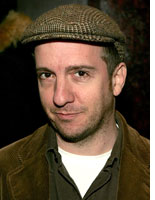 Stephin Merritt is an unlikely cracker. The creative force behind the Magnetic Fields, Merritt is diminutive, gay, and painfully intellectual. His music is witty and tender. He plays the ukulele. He named his Chihuahua after Irving Berlin. And yet no less an influential music critic than The New Yorker's Sasha Frere-Jones has used that word—"cracker"—to describe him. Frere-Jones has also called him "Stephin 'Southern Strategy' Merritt," presumably in reference to Richard Nixon's race-baiting attempt to crush the Democratic Party. These are heady words, part of a two-year online campaign of sorts by Frere-Jones (also a former Slate music critic) and the Chicago Reader music contributor Jessica Hopper to brand Merritt a racist. The charge: He doesn't like hip-hop, and on those occasions when he's publicly discussed his personal music tastes, he has criticized black artists.
The bizarre case against Merritt came to a head last month at the Experience Music Project's annual Pop Conference. Merritt was the keynote speaker, and in a panel conversation he described "Zip-A-Dee Doo-Dah," from Disney's legendarily racist 1946 musical Song of the South, as a "great song." He made clear, according to a partial transcript of the panel provided by his band mate Claudia Gonson, that he did not actually like Song of the South, calling it unwatchable and saying that it has just "one great song. The rest of it is terrible, actually."
This was too much for Hopper, who was in the audience and had already written on her blog that she intended to confront Merritt. She walked out in anger and wrote, falsely, that, "I did not have to ask Stephin Merrit [sic] of Magnetic Flds whether he was racist, because his nice, long elucidating comment about his love, NAY, obsession with racist cartoon, Song of the South, served as a pre-emptive answer. It's one thing to have 'Zippitty Doo Da' be your favorite song. It is another to lay in for Uncle Remus appreciation hour amidst a panel—('I love all of it,' he says)."
Of course Merritt had said no such thing. Later, when confronted with a transcript of the panel, Hopper retracted her comments. But not before other bloggers picked up the meme. Frere-Jones linked to a list of favorite recordings of the 20th century—one for each year—that Merritt had written for Time Out New York six years ago and noted that few of the artists or composers were black. I have never met Merritt, and I have no idea whether or not he hates black people. But neither do Sasha Frere-Jones and Jessica Hopper. The evidence on which they base their claims and insinuations—the fact that Merritt doesn't enjoy listening to select black artists and doesn't like most hip-hop—is flimsy stuff. Moreover, the whole of their sustained attack against Merritt is founded on the dangerous and stupid notion that one's taste in music can be interrogated for signs of racist intent the same way a university's admissions process can: If the number of black artists in your iPod falls too far below 12.5 percent of the total, then you are violating someone's civil rights.
"I've obviously said it already," Hopper told me when I asked her flat-out if Merritt is a racist. "I think there's some real questionable shit in what he thinks about race and music." Asked where that "questionable shit" can be found, Hopper referred me to a 2004 Salon interview in which Merritt said that he liked "the first two years of rap," including the first Run DMC record, but that he finds contemporary hip-hop boring and—wait for it—racist. "I think it's shocking that we're not allowed to play coon songs anymore," Merritt said, "but people, both black and white, behave in more vicious caricatures of African-Americans than they had in the 19th century. It's grotesque. … It probably would have been considered too tasteless for the Christy Minstrels." In the same interview, he made the moral error of not liking OutKast, whose single "Hey Ya!" was at the time serving as America's background music: "I'm desperately sick of hearing it."
Around the same time, in a New York magazine interview, Merritt again dared to publicly express his boredom with OutKast and furthermore said of Justin Timberlake: "I'm not really exposed to him except as a photographic image. He gives good photo shoot." Of Beyoncé and Britney Spears: "[Spears] would be absolutely meaningless if we didn't see pictures of her. Beyoncé is not famous for her songs, she's famous for that outfit. Which is not necessarily a bad thing."
A reasonable person would understand two things from these comments: 1) that Merritt believes contemporary popular music, whether it's produced by white people (Timberlake and Spears), or black people (Beyoncé), to be more concerned with selling an image than recording and performing songs; and 2) that, like much of America, he had heard as much OutKast as he cared to. Frere-Jones, who writes cogently and seriously about hip-hop and plays guitar and sings in his own carefully disorganized (and quite good) rock band, surveyed the above and reacted as though Merritt had stood in the doorway of the University of Alabama's Foster Auditorium and declared that OutKast shall not pass. "[N]ote how eager Merritt is to dismiss Beyoncé, OutKast, Britney, and Justin, not just as singers and songwriters but as bearers of meaning. That's a bias. Two women, three people of color and one white artist openly in love with black American music. That's who he's biased against. You could say there's no pattern here. … You would then, hopefully, let me get a taste of whatever has made you so HIGH."
The final count in Merritt's indictment is a Playlist he wrote for the New York Times' Sunday Arts and Leisure section in May 2004. According to his band mate Gonson, the Times presented Merritt with a stack of forthcoming CDs to write about. He chose seven, and all of them were by white artists. To which Frere-Jones responded: "The new idea for Playlist at the New York Times is to find some rockist cracker and let him loose. … Let's watch Stephen [sic] Merritt swing a scythe through the fields of popular music with a blindfold on. Huh! Seven 'great' new pop records and not a person of color involved in a single one. That's one magical, coincidence-prone scythe you got there, Stephen."
I would refute Frere-Jones' posturing, but upon inspection there is no argument to refute. There is nothing but innuendo and implication. Frere-Jones is either too cowardly or too prudent to call Merritt a racist, but he doesn't have to—he lets sophistry do the work for him. It would be one thing if Frere-Jones were just some disgruntled OutKast fan with a MySpace page. But he is in fact a disgruntled OutKast fan with access to The New Yorker's pages and all the credibility and authority that go along with that. He ought to take the things he writes on his blog seriously.
I asked Frere-Jones what, precisely, he was trying to say about Merritt, but after promising to reply via e-mail, he never did. So, we are left to assume that his argument is something along the lines of: In order to not be racist, you have to like Beyoncé, or at least pretend to. Or we could give him the benefit of the doubt and assume that he simply means that you must like, or publicly profess to like, some minimum number of black artists relative to the total number of artists you like. Which puts him in an awkward position with respect to Merritt, considering he has no earthly idea what other artists Merritt listens to, or why.
And even if he did: If black artists are underrepresented in my CD collection relative to the frequency with which black people are found in the general population, does that make me a racist? To even begin to believe that it does, you have to first maintain that racial preferences somehow logically relate to music preferences; that racists avoid music made by black people, and that people who aren't racist don't pay attention to the race of the artist when evaluating music. Both propositions are ludicrous. Anybody who has been to a frat party knows that people can simultaneously a) entertain racist attitudes and b) enjoy listening to hip-hop music created by black people. (In fact, Merritt's argument is that the latter tends to reinforce the former.)
By the same token, perfectly reasonable nonracist people take race and ethnicity into account in their musical preferences all the time. Hopper herself, whom I presume Frere-Jones would certify is kosher when it comes to the race-music axis, has complained bitterly on her blog of the "whiteness"—which she describes as "purposeful," "icky," and "dangerous"—of Merritt's music. So, if it sounds dangerously white, we can infer that she'd like it to sound like something else. More … what?
The closest thing to a coherent argument that can be gleaned from what Frere-Jones and Hopper are saying is that a genuine respect for our common dignity and humanity requires that we enjoy listening to hip-hop, and that we bend our intuitive aesthetic judgments about music to a political will—like eating our vegetables and avoiding dessert. "Zip-A-Dee Doo-Dah" may be catchy and delightfully mindless, but an understanding of its context requires you to reject its charms. And Beyoncé may be trite and boring, but your subtle racist ideology provokes that reaction, so you must find a way to appreciate her music.
And if you can't? Try harder, cracker.
Thursday, May 11, 2006
Lindstrom & Prins Thomas

Great current music coming out of Norway:
Eskimo Recordings are proud to unveil their debut artist album release, produced by two of the hottest leftfield dance artists around, namely Hans-Peter Lindstrøm and fellow Norwegian, Thomas M. Hermansen (aka Prins Thomas).
Lindstrøm is rapidly becoming one of the biggest new names on the electronic dance circuit, with a string of highly regarded EPs under his belt, including the recent underground smash ‘I Feel Space’. Often working alongside fellow Norwegian Prins Thomas, he’s remixed artists for labels from Wall of Sound to Clone and Kingsize and no remix package is complete these days without one of his analogue-heavy, Italo-esque reworkings.
Prins Thomas has made a name for himself as the remix king from Norway, working the likes of Kango’s Stein Massiv, Martini Bros, Flunk, Diskodans, Bermuda Triangle and Jackmaster Dahle amongst a host of other tip top names from the underground as well as releasing his own music on Feedelity and Rong Music.
Lindstrøm and Prins Thomas joined forces in 2003, after mutual admiration and inspiration of each others productions. Lindstrøm as muso-wizard and Prins Thomas as the nu-skool remix-champ. They both have a background from different Norwegian, and rather admittedly shameful, band-projects; ranging from punk to gospel via country to heavy metal to folk and psychedelia but they also share the same passion for collecting records and run their own labels Feedelity, Full Pupp and Tamburin from their Scandanavian liar. Besides working on various solo-projects, their main priority is their joint venture into the ever-expanding outer limits of futuristic disko and universal boogie! They both DJ, as well as performing a semi-live laptop-set which will be seen on a full world wide tour this autumn.
The Oslo-based producer/DJ Lindstrøm has been releasing tracks through Feedelity (the label he formed himself in 2003) and Steve ‘Fella’ Kotey’s like-minded Bear Funk imprint, garnering international acclaim which has recently seen him remixing the likes of LCD Soundsystem, The Juan McLean, Chicken Lips and Alden Tyrell. Now alongside Prins Thomas the duo unleash their highly anticipated debut long-player on the label that has given us defining mix CDs from The Glimmers, Optimo, Recloose, Rub N Tug, Headman, Ivan Smagghe and most recently Chromeo. Featuring Italo, funk and disco-influenced productions alongside the production spark genius that defined those lost halcyon releases of the post disco/punk era circa ’78-’84 Lindstrøm and Prins Thomas provide us with lush basslines, sublime melodies and rolling rhythms that cascade like snowflakes being hit by harsh early-morning sunlight – icy, but with a heart bursting with pure emotion. Throughout you can find the experimental energy of the continental space-disco of the Eighties which the pair still adore: melodic, synth-heavy and Moroder-esque, with arpeggiated basslines set to proto-house 4/4 grooves.
So stick it on and wrap yourself up in the basslines and melodies of Lindstrøm and Prins Thomas’s sublime norse code.
Listen to audio clips here:
Click Me, then choose "scando-med cosmic disco - lindstrom, prins thomas & todd terje" on the right, under "special features" section
Tuesday, May 09, 2006
Karl Holl excerpt:
taken from "The Reconstruction of Morality" (pp. 74-78)
 "Luther also attacked the Nominalist position on the basis of actual fact. He said the idea that the supreme achievement of morality, to love God above all things, can be realized on the basis of pure reason is a gross self-deception. The presupposition that the will is able and willing to carry into effect what reason dictates is false. For the will secretly goes its own way alongside and in spite of reason. Because the will is fundamentally selfish, it would rather have no God at all or be God itself than surrender completely to him. We are unable, by natural effort, to give the invisible God what we owe him, our whole will.
"In opposistion to the Scholastics, Luther refused to recognize as moral in any sense the still lower level of action, the deed without any reference to God, the morality without religion. Such action is defective in its decisive element: motivation. The inescapable conclusion is that where love of God is not the decisive thing, self-love prevails. There is no inbetween, such as a 'neutral act'. Luther was not impressed by the Nominalistic sophism that in that case someone who does not commit adultery, murder, or theft would be committing a sin. He affirms this conclusion wholeheartedly. The statement would be absurd only if the one who avoids the crude offense were also free from the secret impulse of desire or anger. With this in mind, one should not hesitate to call even nonadulterers sinners according to the Sermon on the Mount. Even if we grant the improbable -- that a person might act completely virtuously -- the final motive can only be a selfish one when the thought of God is completely excluded. Thus even a deed that is pure in itself becomes sinful in God's sight, since its author is really obliged to serve God.
"Luther thus consciously destroyed all the tendencies toward a so-called autonomous morality which Scholasticism had developed. In the Lectures on Romans he sharpened the judgment of Augustine concerning the virtues of the heathen and vented his full fury upon Aristotle as a moral philosopher. this was not due to a lack of education or theological narrow-mindedness. He saw that no one is devoid of good impulses, and that an autonomous morality indeed represents an ennobling of the person. But he clearly saw the profound contrast between a religiously determined and a self-centered morality, and after the pattern of Paul did not hesitate to draw our the ultimate deductions. These two interpretations of morality are not related as two stages, in which there can be progress from one to the other through the attainment of a higher point of view. They are opposites. For the attitude is fundamentally different in each case. In one case, the ultimate goal is purely immanent; moral effort aims at self-perfection. In the other, duty is defined by an a priori divine order, and there is awareness of conditioning by another will. This does not mean submission, in apathy or ease, to one's fate. One can -- and according to Luther, one should -- freely affirm the duty arising from such submission, as well as the submission itself. Only by doing so does one assume the attitude toward God which God himself regards as alone appropriate. A forced service does not please God. When Luther emphasized the freedom of this submission as essential he laid the basis for an autonomy of a higher type with respect to the obligations imposed by God. At the same time he was perfectly aware that such an affirmation of the will of God demands a rupture, a renunciation of self-seekinf, and above all the recognitions that self-seeking even in its refined 'moral' form is a violation of God's rightful claims. The self-awareness of the merely 'moral' person will always struggle against such a recognition and just for this reason a religiously determined morality, as soon as it correctly understands itself, will always regard an 'autonomous' morality as a hindrance rather than as a preparation.
"This point of view matches the severity with which Luther maintained his demand for a constant, conscious relationship to God in contrast to the more moderate expectations of Scholasticism. While the constantly repeated slogan of the 'good intention' was ringing in his ears, he noted but little real earnestness in this connection. He accordingly characterized the idea of a 'virtual intention' as an easy self-consolation that surely makes Satan rejoice, since there is no better way to teach people to neglect their perpetual responsibility toward God. In the 'actual intention' he now recognized the basic error of the Scholastic interpretation -- a deficient appreciation of the depth out of which a true act of the will must be born. The idea in the church was that an individual had accomplished somthing if a momentary good intention had been induced. But such an act is nothing more than a fleeting frame of mind, a wish , a quickly forgotten resolution. If one were serious about arousing an act of the will, the question would soon arise whether a good intention is really attainable that easily. It would then become obvious to everyone that the will is divided and, more important, that a conscious act is always influenced by the impression left by one's total previous behavior on the substratum of the personality. Every attempt at an elevation of the soul has the whole leaden weight of one's natural being to contend with, along with the results of one's development. The effort must go much deeper; it must continually try to encompass the unconscious, too, and where the ascent to God is ernestly soulght, a furious battle takes place in which success can be given only by God himself. The awakened act praised by the church is at best only a feeble 'willingness to will'; in the spirit of Jesus one must judge even more severly that it is hyposcrisy. For the actual person, the always self-seeking ego, is not at all affected by it.
"Luther thus accomplished in the moral realm what he was accomplishing in the religious realm. He cleared out everything alien and inferior, all dilutions and accommodations by which the moral idea of Christianity had been distorted in the course of its evolution, and thus restored its original vigor. To return to the New Testament interpretation of morality was equivalent, however, to perceiving once again the chasm that separated it from the ordinary secular interpretation of life and the general principles prevailing in state and society."
 "Luther also attacked the Nominalist position on the basis of actual fact. He said the idea that the supreme achievement of morality, to love God above all things, can be realized on the basis of pure reason is a gross self-deception. The presupposition that the will is able and willing to carry into effect what reason dictates is false. For the will secretly goes its own way alongside and in spite of reason. Because the will is fundamentally selfish, it would rather have no God at all or be God itself than surrender completely to him. We are unable, by natural effort, to give the invisible God what we owe him, our whole will.
"In opposistion to the Scholastics, Luther refused to recognize as moral in any sense the still lower level of action, the deed without any reference to God, the morality without religion. Such action is defective in its decisive element: motivation. The inescapable conclusion is that where love of God is not the decisive thing, self-love prevails. There is no inbetween, such as a 'neutral act'. Luther was not impressed by the Nominalistic sophism that in that case someone who does not commit adultery, murder, or theft would be committing a sin. He affirms this conclusion wholeheartedly. The statement would be absurd only if the one who avoids the crude offense were also free from the secret impulse of desire or anger. With this in mind, one should not hesitate to call even nonadulterers sinners according to the Sermon on the Mount. Even if we grant the improbable -- that a person might act completely virtuously -- the final motive can only be a selfish one when the thought of God is completely excluded. Thus even a deed that is pure in itself becomes sinful in God's sight, since its author is really obliged to serve God.
"Luther thus consciously destroyed all the tendencies toward a so-called autonomous morality which Scholasticism had developed. In the Lectures on Romans he sharpened the judgment of Augustine concerning the virtues of the heathen and vented his full fury upon Aristotle as a moral philosopher. this was not due to a lack of education or theological narrow-mindedness. He saw that no one is devoid of good impulses, and that an autonomous morality indeed represents an ennobling of the person. But he clearly saw the profound contrast between a religiously determined and a self-centered morality, and after the pattern of Paul did not hesitate to draw our the ultimate deductions. These two interpretations of morality are not related as two stages, in which there can be progress from one to the other through the attainment of a higher point of view. They are opposites. For the attitude is fundamentally different in each case. In one case, the ultimate goal is purely immanent; moral effort aims at self-perfection. In the other, duty is defined by an a priori divine order, and there is awareness of conditioning by another will. This does not mean submission, in apathy or ease, to one's fate. One can -- and according to Luther, one should -- freely affirm the duty arising from such submission, as well as the submission itself. Only by doing so does one assume the attitude toward God which God himself regards as alone appropriate. A forced service does not please God. When Luther emphasized the freedom of this submission as essential he laid the basis for an autonomy of a higher type with respect to the obligations imposed by God. At the same time he was perfectly aware that such an affirmation of the will of God demands a rupture, a renunciation of self-seekinf, and above all the recognitions that self-seeking even in its refined 'moral' form is a violation of God's rightful claims. The self-awareness of the merely 'moral' person will always struggle against such a recognition and just for this reason a religiously determined morality, as soon as it correctly understands itself, will always regard an 'autonomous' morality as a hindrance rather than as a preparation.
"This point of view matches the severity with which Luther maintained his demand for a constant, conscious relationship to God in contrast to the more moderate expectations of Scholasticism. While the constantly repeated slogan of the 'good intention' was ringing in his ears, he noted but little real earnestness in this connection. He accordingly characterized the idea of a 'virtual intention' as an easy self-consolation that surely makes Satan rejoice, since there is no better way to teach people to neglect their perpetual responsibility toward God. In the 'actual intention' he now recognized the basic error of the Scholastic interpretation -- a deficient appreciation of the depth out of which a true act of the will must be born. The idea in the church was that an individual had accomplished somthing if a momentary good intention had been induced. But such an act is nothing more than a fleeting frame of mind, a wish , a quickly forgotten resolution. If one were serious about arousing an act of the will, the question would soon arise whether a good intention is really attainable that easily. It would then become obvious to everyone that the will is divided and, more important, that a conscious act is always influenced by the impression left by one's total previous behavior on the substratum of the personality. Every attempt at an elevation of the soul has the whole leaden weight of one's natural being to contend with, along with the results of one's development. The effort must go much deeper; it must continually try to encompass the unconscious, too, and where the ascent to God is ernestly soulght, a furious battle takes place in which success can be given only by God himself. The awakened act praised by the church is at best only a feeble 'willingness to will'; in the spirit of Jesus one must judge even more severly that it is hyposcrisy. For the actual person, the always self-seeking ego, is not at all affected by it.
"Luther thus accomplished in the moral realm what he was accomplishing in the religious realm. He cleared out everything alien and inferior, all dilutions and accommodations by which the moral idea of Christianity had been distorted in the course of its evolution, and thus restored its original vigor. To return to the New Testament interpretation of morality was equivalent, however, to perceiving once again the chasm that separated it from the ordinary secular interpretation of life and the general principles prevailing in state and society."
Monday, May 08, 2006
Katie Holmes & Tom Cruise's Baby: A 'Blue-Eyed Beauty'

Katie Holmes and Tom Cruise "joyously welcomed the arrival of a baby girl, Suri, today," Cruise's rep said in a statement after PEOPLE first broke the news Tuesday afternoon.
"The child weighed 7 pounds, 7 ounces and was 20 inches in length. Both mother and daughter are doing well."
Suri was born in an L.A.-area hospital – just down the hall from where Brooke Shields gave birth to her daughter Grier on the same day.
The birth went so smoothly that Holmes left the hospital within 24 hours. Holmes, Cruise and baby Suri are back home now and doing well.
Suri "has lots and lots of dark hair and big, blue eyes," says a source close to Holmes's family. "She's going to be a beautiful baby."
Adds Cruise's friend Kirstie Alley: "Tom does everything 150 percent, and fatherhood he does 300 percent. They're going to have a great kid."
The name Suri has its origins in Hebrew meaning "princess," or in Persian meaning "red rose."
Last October, barely six months into their romance, an ecstatic Cruise and Holmes revealed that they were expectant parents.
Cruise, 43, and Holmes, 27, had made no secret of their desire to start a family together: When asked by PEOPLE last June if they were planning to have children, Holmes smiled and said simply, "Yes."
Friends of the Toledo, Ohio-bred Holmes called her perfectly suited to her upcoming role. "She almost seems born for motherhood," said Oliver Hudson, actress Kate Hudson's brother and an old pal who costarred with Holmes in Dawson's Creek. "She's a nurturer. She's got mother qualities a lot of girls her age don't have."
Cruise, meanwhile, is "a great dad already," according to his pal, actress Leah Remini. He has two children from his marriage to Nicole Kidman: Isabella, 13, and Connor, 11, whom Cruise and Kidman adopted as infants. Remini told PEOPLE that both kids are "so cool…You can sit and talk to them about life."
As for marriage, Cruise and Holmes plan to tie the knot soon, Cruise said on the German TV program Wetten, dass..? on April 1. "In summer we want to get married. I won't let this woman get away."
Immediately ahead for the new dad: the May 5 release of Mission: Impossible 3. Holmes stars in the recently released satirical film about Washington politics, Thank You for Smoking.
Sunday, May 07, 2006
Friday, May 05, 2006
Two exceprts from PZ's most recent "State of the Church" posting:

It is amazing. I heard about a sermon preached recently at a large and celebrated evangelical church (not in Pittsburgh), and it was that massive same-old, same-old. The preacher said that there are two questions we shall all be asked on Judgment Day: One, did we accept Christ? And Two, how did we do after we had accepted Christ? He said that he “guaranteed” that we would all be asked these two questions.
Now here is this preacher acting like Britney Spears: “Oops! I did it again.” Oops, I preached the Law again, to Christians. I started by preaching the Grace of God – that is, before you accepted Christ – but then, after you became a Christian, it’s the Law for you!
This is just the same thing we hear everywhere and Sunday after Sunday, from here to eternity. You preach forgiveness to sinners, then once they respond in joy to that great enabling word, you place their necks securely under the Law.
---------------

The best alien story ever written is the story of Christ’s coming to the earth. Why? Because it is truly an alien story. The gift of Grace is alien to the human condition. Grace is not Law. It does not accuse, nor does it demand, nor does it legislate, nor does it require. It sets all that aside. The best tag-line for a science-fiction move that has ever been written was written by St. Paul, when he said, “Christ is the end of the Law, for them that believe” (Romans 10:4).
That is alien wisdom. It could never have come from a human hand.
We would have put in requirements, or conditions, or “tweaked” it (a truly Legal phrase), or talked about “good cop, bad cop,” or put it in our own action-consequence lingo. We could never, ever have come up with something like, “Christ is the end of the Law.” And for Christians, no less.
St. Paul was not a “covenantal nomist.”
Flee churches that place nice Christian sufferers under the Law.
But… where will you go?
Click Me to read it all!
Fitz Allison quote:
from "Fear, Love, & Worship"--
(p.12) "A lot of nonsense is talked about our looking for God and our trying to find him. Yet, actually, the reverse is the case."
(p.12) "A lot of nonsense is talked about our looking for God and our trying to find him. Yet, actually, the reverse is the case."
Tuesday, May 02, 2006
Simeon Zahl comment:

(excerpt taken from comment thread on Pontifications blog: Click Me to Read the full post and thread!)
"For me anyway, the thing I really disagree with about the ontological change model is that it assumes that the ontological change alters the individual’s relationship, pastorally, to the Law. That is why I am very nearly as unhappy with Calvin as with the RCC! Lex semper accusat. I have never met anyone who really experienced it otherwise, at least for any length of time, though I’m sure you will say your experience has been different in this regard than mine. If you can describe ontological transformation in such a way that a devolving of pastoral care into a course on the 3rd use of the Law is avoided, I might be able to subscribe to it, but I’m pretty sure that’s not possible.
"For the meantime, I will stick the simultaneous model which provides both hope and change, and a great deal of compassion, but also has proper wariness about the so-called 3rd Use. A former Christian recently referred to the 3rd Use as Christianity’s “bait and switch” tactic in terms of grace: they say it’s all grace, and then as soon as you’re “in” they turn it all around and it’s all about law again. I feel very strongly that this “bait and switch” is not the gospel, and that a justification that feels like that is not justification at all.
"I already responded to you at length a few months ago on John Camp, as you know, why, scripturally as well as pastorally, I cannot accept the infusion/ ontological change model. My position now is the same that it was then. I posted today simply to show support for Nathan, because I had noticed recently precisely the same (what I felt was a) misunderstanding on the part of many Catholics about the Lutheran conception of justification that he was lamenting. I don’t really expect to change your mind, Al! But I think it is significant that two people who agree with Luther but who don’t know each other seem to find the common RC characterization of the Lutheran view of justification wanting in precisely the same way. I think my previous response to you about infusion/ imputation covers the territory of why precisely it is wanting pretty well, or at least as well as I know how ( Click Me! )."
Monday, May 01, 2006
(mock) Contemporary Worship Song Titles -- a list by Art & John Zahl
"Fountain of Management"
"What I Want"
"Lord, May I Borrow Your Cup?"
"Land of Honor"
"All His Compartments"
"Lord, Your 'Yes' Is My 'If'"
"We Want To Be Real Jews"
"Double-Barrel Undone"
"Did You Mean It?"
"I'm Gonna Run for Jesus (the runner's theme)"
"We Are Your Gym"
"Kingdom Jamboree"
"God, You Are A River"
"See Thee In Me"
"Peel Me, God"
"Piece of God"
"Mighty Man of Categories"
"You Lord, My Favorite Choice"
Sunday, April 30, 2006
Karl Holl and Stanley Grenz quotes:
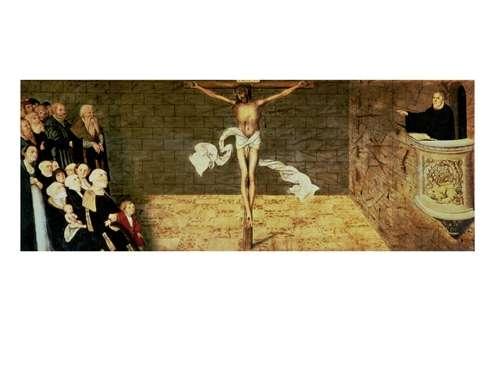 Holl (from "The Reconstruction of Moratlity")--
(p. 94) "Luther – unlike Kant, and in express opposition to Aristotle – did not think the highest goal is attained where rational deliberation makes the correct choice among various possibilities of action. Action is truly moral, truly free, only when the good has become so instinctive that the only thought that presents itself is the correct one and this is at once implemented."
similarly:
Grenz (from "The Moral Quest")--
(p. 137) "The great philosophers believed that at least to some extent the human moral problem was due to ignorance; evil is an error in judgement. Consequently the antidote to evil is knowledge, for correct knowledge leads to correct action or virtuous conduct...Beneath the surface of this understanding of the ethical task is a presupposition that forms the guiding dictum of enlightened humanism in every age, namely, that if people obtain knowledge of the right they can and will do the right.
"Augustine was too heavily influenced by the Bible to adhere slavishly to this principle. He came to see that the human moral problem is not merely ignorance. We do not only lack the knowledge of what is right, we also lack the ability to do what the law commands. And as a result, we cannot do what we know we ought to do. In fact, humans can knowingly and freely choose what is evil. We have the uncanny knack of knowing what we ought to do, even anticipating the unwholesome consequences of an evil act, and yet choosing to engage in conduct we clearly perceive will be to our detriment and to the detriment of others."
--These quotes perfectly describe the lay of the land! JZ

Friday, April 28, 2006
Articles 9, 10, & 11 (of The 39 Articles):
IX. Of Original or Birth Sin. ORIGINAL sin standeth not in the following of Adam (as the Pelagians do vainly talk), but it is the fault and corruption of the nature of every man that naturally is engendered of the offspring of Adam, whereby man is very far gone from original righteousness, and is of his own nature inclined to evil, so that the flesh lusteth always contrary to the spirit; and therefore in every person born into this world, it deserveth God's wrath and damnation. And this infection of nature doth remain, yea, in them that are regenerated, whereby the lust of the flesh, called in Greek phronema sarkos (which some do expound the wisdom, some sensuality, some the affection, some the desire of the flesh), is not subject to the law of God. And although there is no condemnation for them that believe and are baptized, yet the Apostle doth confess that concupiscence and lust hath itself the nature of sin.
X. Of Free Will. THE condition of man after the fall of Adam is such, that he cannot turn and prepare himself, by his own natural strength and good works, to faith and calling upon God. Wherefore we have no power to do good works pleasant and acceptable to God, without the grace of God by Christ preventing us that we may have a good will, and working with us when we have that good will.
XI. Of the Justification of Man. WE are accounted righteous before God, only for the merit of our Lord and Saviour Jesus Christ by faith, and not for our own works or deservings. Wherefore that we are justified by faith only is a most wholesome doctrine, and very full of comfort; as more largely is expressed in the Homily of Justification.
-- Summarized as follows:

X. Of Free Will. THE condition of man after the fall of Adam is such, that he cannot turn and prepare himself, by his own natural strength and good works, to faith and calling upon God. Wherefore we have no power to do good works pleasant and acceptable to God, without the grace of God by Christ preventing us that we may have a good will, and working with us when we have that good will.
XI. Of the Justification of Man. WE are accounted righteous before God, only for the merit of our Lord and Saviour Jesus Christ by faith, and not for our own works or deservings. Wherefore that we are justified by faith only is a most wholesome doctrine, and very full of comfort; as more largely is expressed in the Homily of Justification.
-- Summarized as follows:

Thursday, April 27, 2006
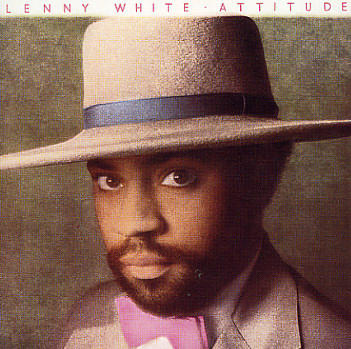
JAZ's Top 50 Movie Recommendations
Top 50 Movie Recommendations (listed in no particular order)
--'The Saddest Music in the World' Canada during the Great Depression? Filmed with hand-held cameras, the lenses glossed strangely with vaseline? 90% b/w, 10% color? A comedy about the impact of guilt and sadness on the conscious mind, as experienced through music? Capra-style diologue? ...forget all that; just watch the hockey-buzzer-mediated duel between the Simese floutest and the Mexican funeral band. My girlfriend and I fell in love while watching this film. Also great with the sound off.
--'The Ruling Class - Criterion Collection' Huge movie! It asks: What would happen if you dropped Jesus Christ and Jack the Ripper into English aristocracy? Possibly the most accomplished piece of "cult cinema" ever constructed. Also, the C of E Bishop is a scream!
--'The Last Days of Disco' Don't watch this unless you can watch it more than once. Notoriously hated by non-WASPs. An exploration into the ways in which people do (and, more importantly, don't) change. Brilliant dialogue.
Waiting For Guffman 'Waiting for Guffman' My favorite movie. Snobby, but surprizingly not anti-Christian. The extra footage is a must!
--'Network'
--'The Cruise' My favorite documentary. Quasi-prophetic in its anticipation of 9/11. A wonderful tour of NYC, a disturbed-genius autodidact, and idol worship at its urban grandest. Apart from the world trade center stuff, the "Grid Plan" speech, and the confession on Brooklyn Bridge are amazing.
--'The Ice Storm' A strange and particular context (1970s New Canaan, CT) from which to explore the universality of human psycho-sexual tragedy, both in the adult and (as it develops) in the child. An eerily all-star cast of kid actors. This movie has a low anthropology, but gives birth to a genuinely redemptive hope, born in wake of God's wrath portrayed as an ice storm, requiring an innocent death.
--'How To Get Ahead in Advertising - Criterion Collection' Boil!
--'Stardust Memories' Favorite moive from my favorite film maker. Rampling's portrayal of insanity is really horrifying. Yet the movie is beautiful aesthetically, full of hilarious character studies, some of his funniest jokes, and a deeply serious underbelly.
--'Being There' My Grandmother is an extra in this movie; she walks by right before Peter Sellers gets hit by the car. Even if she weren't in it, I would love this film.
--'True Stories'
--'The Addiction' Probably the only vampire movie that uses blood-sucking as a metaphor for sin. Explored from the perspective of a D.Phil student of Existentialism who is bitten by a vampire in the East Village one night. Plus a soundtrack by Onyx/Cypress Hill. Features Christopher Walken. The ending is explicitly Christian, and protestant at that!
--'The American Astronaut'
--'La Dolce Vita'
--'Thief' Michael Mann's early masterpiece. He would later try to recapture its magic in Heat, almost move for move. Plus the Tuesday Weld is indeed the best part of all! Her lengthy interaction with Cann in the diner is perfect.
--'The Ninth Configuration' By the guy who wrote The Exorcist. Features a segment depicting an astronaut worshipping the crucified Jesus on the surface of the moon!
--'The Swimmer'
--'Wings of Desire'
--'The Wife' A beautifully made, scathing criticism of the New Age. Julie Hagarty is one of my favorite actresses.
--'The 5,000 Fingers of Dr. T'
--'Rushmore - Criterion Collection'
--'The Brothers Quay Collection: Ten Astonishing Short Films 1984-1993'
--'Metropolitan' The best Foreign movie ever made about the American upper crust, New York's 400. "I don't think you have to have read a book in order to have an opinion on it!"
--'Jules Verne 3 Pack Collection (3pc)'
--'Flirting With Disaster (Collector's Edition)'
--'Marnie' The dated quality of 1960s Freudian psycho-analysis provides some of my favorite subject matter. The girl, Tippi, plus Hitchcock's ever present obsession with sex (e.g., horse-riding) brood eerily just under the surface of a strangley explored thesis: women need men to rescue them from themselves via Freudian psychoanalysis.
--'Little Onik'
--'The Cabinet of Dr. Caligari' More of the same Freudian stuff mentioned above. This movie describes the Psychiatrist to be God himself. All is revealed in a horrifying, expressionistic dream sequence depicting a therapeutic break-through.
--'Kicking and Screaming (Baumbach)'
--'Manhunter (Director's Cut, Limited Edition Set)' Tom Noonan plays the scariest serial killer in movie history! Michael Mann's direction is perfect, ever concerning itself with the inner issues of the mind and heart, plus characteristic synth-wash soundtrack and Miami Vice cameos. This is his best movie!
--'Who's Afraid of Virginia Woolf?' The educated are not necessarily friendly. The smartest man I've ever known converted after watching this movie.
--'Bad Lieutenant' Disturbing, but overtly Christian. This movie reveals the offensive side of forgiveness.
--'Hurlyburly (New Line Platinum Series)' I always wondered what uneducated (in the Classical sense) conversation among intelligent people would sound like. This movie answered that question for me. (Worth watching alongside of 'The Player' and 'The Anniversary Party'.
--'Alien - The Director's Cut (Collector's Edition)'
--'The Player (Special Edition) (New Line Platinum Series)'
--'Withnail and I - Criterion Collection' The gay uncle is hilarious!
--'Rize' - Christian "clown-dancers" fight gang violence in the LA ghetto (a documentary). You've never seen the human body move like this before!
--'Black Orpheus - Criterion Collection'
--'The King of Kings - Criterion Collection'
--'Fitzcarraldo' Famous for the on-screen deaths this movie incured. Whether or not they (the deaths) be real or rumored, this movie definitely features a ferry being hoisted over a mountain in the middle of the Amazon rain forest using weird pullies, which is a very cool thing to do in a film.
--'Palindromes' A simple story about a 12-year-old Jewish girl, but played by 10 different actresses, including a 300 pound black women, who only appears for 10 minutes in the middle.
--'After Hours'
--'Faust'
--'Together' Covers a lot of the same ground explored in The Ice Storm, and by Todd Solendz, but in Sweden in the mid-70s. It has a contrived happy-ending, but I like the fact that it does.
--'Paris, Texas'
--'Blood and Roses' Heavily stylized version of LeFanu's "Carmilla", history's most famous story of vampire lesbians. I can't decide which of the heroines is sexier! A personal fave.
--'The Abominable Dr. Phibes' Incredible 60s aesthetic style with a weird Old Testament tale of terror incorporated nicely into the good graces of one Vincent Price. As far as I can remember, he is the only actor in the movie, other than a group of robotic New Orleans jazz musicians. This movie is cool, but not really very smart. A must!
--'Darby O'Gill and the Little People' This one features surreal, midget footage, a banshee, and fantastic Disney live-action story-telling. Works sufficiently with the sound off.
--'Tron (20th Anniversary Collector's Edition)' The left hand did not know what the right hand was doing here. This movie anticipated the future CGI animation, and is gorgeous to look at. It reflects a confused Disney at low-ebb, taking a risk.
--'Xanadu' Zeus sends one of his nine Muse daughters, ONJ, to inspire an artist to open a Roller-skate night club. Gene Kelly dances to this rediculous plot in his final, embarrasing role. Visually stunning, cinematic magic, ...of a very dumb variety. A pathetic, but honest mention.
--'Sideways'
--'Clash of the Titans' The place where Harryhausen's special effects of the 60s comes together with the unforgetable 80s, as descibed in ancient Greece. Sir Lawrence Olivier, U. Andress as Aphrodite, Harry Hamlin from LA Law, all together finally!
--'The Big Blue (Director's Cut)' Hard to defend, though it's unlike any other movie. Rosanne Arquette is another fave!
--'Britannia Hospital' This is the only movie on this list that I have never watched. It's supposed to be really good.
--'The Boy in the Plastic Bubble' Perfect as existential metaphor.
--'The Saddest Music in the World' Canada during the Great Depression? Filmed with hand-held cameras, the lenses glossed strangely with vaseline? 90% b/w, 10% color? A comedy about the impact of guilt and sadness on the conscious mind, as experienced through music? Capra-style diologue? ...forget all that; just watch the hockey-buzzer-mediated duel between the Simese floutest and the Mexican funeral band. My girlfriend and I fell in love while watching this film. Also great with the sound off.
--'The Ruling Class - Criterion Collection' Huge movie! It asks: What would happen if you dropped Jesus Christ and Jack the Ripper into English aristocracy? Possibly the most accomplished piece of "cult cinema" ever constructed. Also, the C of E Bishop is a scream!
--'The Last Days of Disco' Don't watch this unless you can watch it more than once. Notoriously hated by non-WASPs. An exploration into the ways in which people do (and, more importantly, don't) change. Brilliant dialogue.
Waiting For Guffman 'Waiting for Guffman' My favorite movie. Snobby, but surprizingly not anti-Christian. The extra footage is a must!
--'Network'
--'The Cruise' My favorite documentary. Quasi-prophetic in its anticipation of 9/11. A wonderful tour of NYC, a disturbed-genius autodidact, and idol worship at its urban grandest. Apart from the world trade center stuff, the "Grid Plan" speech, and the confession on Brooklyn Bridge are amazing.
--'The Ice Storm' A strange and particular context (1970s New Canaan, CT) from which to explore the universality of human psycho-sexual tragedy, both in the adult and (as it develops) in the child. An eerily all-star cast of kid actors. This movie has a low anthropology, but gives birth to a genuinely redemptive hope, born in wake of God's wrath portrayed as an ice storm, requiring an innocent death.
--'How To Get Ahead in Advertising - Criterion Collection' Boil!
--'Stardust Memories' Favorite moive from my favorite film maker. Rampling's portrayal of insanity is really horrifying. Yet the movie is beautiful aesthetically, full of hilarious character studies, some of his funniest jokes, and a deeply serious underbelly.
--'Being There' My Grandmother is an extra in this movie; she walks by right before Peter Sellers gets hit by the car. Even if she weren't in it, I would love this film.
--'True Stories'
--'The Addiction' Probably the only vampire movie that uses blood-sucking as a metaphor for sin. Explored from the perspective of a D.Phil student of Existentialism who is bitten by a vampire in the East Village one night. Plus a soundtrack by Onyx/Cypress Hill. Features Christopher Walken. The ending is explicitly Christian, and protestant at that!
--'The American Astronaut'
--'La Dolce Vita'
--'Thief' Michael Mann's early masterpiece. He would later try to recapture its magic in Heat, almost move for move. Plus the Tuesday Weld is indeed the best part of all! Her lengthy interaction with Cann in the diner is perfect.
--'The Ninth Configuration' By the guy who wrote The Exorcist. Features a segment depicting an astronaut worshipping the crucified Jesus on the surface of the moon!
--'The Swimmer'
--'Wings of Desire'
--'The Wife' A beautifully made, scathing criticism of the New Age. Julie Hagarty is one of my favorite actresses.
--'The 5,000 Fingers of Dr. T'
--'Rushmore - Criterion Collection'
--'The Brothers Quay Collection: Ten Astonishing Short Films 1984-1993'
--'Metropolitan' The best Foreign movie ever made about the American upper crust, New York's 400. "I don't think you have to have read a book in order to have an opinion on it!"
--'Jules Verne 3 Pack Collection (3pc)'
--'Flirting With Disaster (Collector's Edition)'
--'Marnie' The dated quality of 1960s Freudian psycho-analysis provides some of my favorite subject matter. The girl, Tippi, plus Hitchcock's ever present obsession with sex (e.g., horse-riding) brood eerily just under the surface of a strangley explored thesis: women need men to rescue them from themselves via Freudian psychoanalysis.
--'Little Onik'
--'The Cabinet of Dr. Caligari' More of the same Freudian stuff mentioned above. This movie describes the Psychiatrist to be God himself. All is revealed in a horrifying, expressionistic dream sequence depicting a therapeutic break-through.
--'Kicking and Screaming (Baumbach)'
--'Manhunter (Director's Cut, Limited Edition Set)' Tom Noonan plays the scariest serial killer in movie history! Michael Mann's direction is perfect, ever concerning itself with the inner issues of the mind and heart, plus characteristic synth-wash soundtrack and Miami Vice cameos. This is his best movie!
--'Who's Afraid of Virginia Woolf?' The educated are not necessarily friendly. The smartest man I've ever known converted after watching this movie.
--'Bad Lieutenant' Disturbing, but overtly Christian. This movie reveals the offensive side of forgiveness.
--'Hurlyburly (New Line Platinum Series)' I always wondered what uneducated (in the Classical sense) conversation among intelligent people would sound like. This movie answered that question for me. (Worth watching alongside of 'The Player' and 'The Anniversary Party'.
--'Alien - The Director's Cut (Collector's Edition)'
--'The Player (Special Edition) (New Line Platinum Series)'
--'Withnail and I - Criterion Collection' The gay uncle is hilarious!
--'Rize' - Christian "clown-dancers" fight gang violence in the LA ghetto (a documentary). You've never seen the human body move like this before!
--'Black Orpheus - Criterion Collection'
--'The King of Kings - Criterion Collection'
--'Fitzcarraldo' Famous for the on-screen deaths this movie incured. Whether or not they (the deaths) be real or rumored, this movie definitely features a ferry being hoisted over a mountain in the middle of the Amazon rain forest using weird pullies, which is a very cool thing to do in a film.
--'Palindromes' A simple story about a 12-year-old Jewish girl, but played by 10 different actresses, including a 300 pound black women, who only appears for 10 minutes in the middle.
--'After Hours'
--'Faust'
--'Together' Covers a lot of the same ground explored in The Ice Storm, and by Todd Solendz, but in Sweden in the mid-70s. It has a contrived happy-ending, but I like the fact that it does.
--'Paris, Texas'
--'Blood and Roses' Heavily stylized version of LeFanu's "Carmilla", history's most famous story of vampire lesbians. I can't decide which of the heroines is sexier! A personal fave.
--'The Abominable Dr. Phibes' Incredible 60s aesthetic style with a weird Old Testament tale of terror incorporated nicely into the good graces of one Vincent Price. As far as I can remember, he is the only actor in the movie, other than a group of robotic New Orleans jazz musicians. This movie is cool, but not really very smart. A must!
--'Darby O'Gill and the Little People' This one features surreal, midget footage, a banshee, and fantastic Disney live-action story-telling. Works sufficiently with the sound off.
--'Tron (20th Anniversary Collector's Edition)' The left hand did not know what the right hand was doing here. This movie anticipated the future CGI animation, and is gorgeous to look at. It reflects a confused Disney at low-ebb, taking a risk.
--'Xanadu' Zeus sends one of his nine Muse daughters, ONJ, to inspire an artist to open a Roller-skate night club. Gene Kelly dances to this rediculous plot in his final, embarrasing role. Visually stunning, cinematic magic, ...of a very dumb variety. A pathetic, but honest mention.
--'Sideways'
--'Clash of the Titans' The place where Harryhausen's special effects of the 60s comes together with the unforgetable 80s, as descibed in ancient Greece. Sir Lawrence Olivier, U. Andress as Aphrodite, Harry Hamlin from LA Law, all together finally!
--'The Big Blue (Director's Cut)' Hard to defend, though it's unlike any other movie. Rosanne Arquette is another fave!
--'Britannia Hospital' This is the only movie on this list that I have never watched. It's supposed to be really good.
--'The Boy in the Plastic Bubble' Perfect as existential metaphor.
Wednesday, April 26, 2006

Monday, April 24, 2006
1 Corinthians 1, regarding differences between the UK and the US (excerpt taken from "Last Night a DJ Saved My Life", by Brewster & Broughton, 1999.)
"Brothers, think of what you were when you were called. Not many of you were wise by human standards; not many were influential; not many were of noble birth. But God chose the foolish things of the world to shame the wise; God chose the weak things of the world to shame the strong." (1 Corinthians 1: 26-27)
 Photo: Northern Soul Dancers
"In less than a quarter of a century, the idea of dancing to someone playing records had evolved from a bizarre experiment in a Yorkshire working men's club to an intricate world of nightclubs, DJs, and music.
"This world had matured more rapidly in the UK than the US -- maybe because Britain seems to invest far more energy in its youth culture, which is somehow more accepting of outside novelties and is usually energetically downmarket in its social make-up. While the cafe society were twisting in New York's Peppermint Lounge, the kids doing the same dance in the Lyceum were clerks, apprentices and shop girls. Perhaps it's because Britain is a nation based on duty, a country of subjects not citizens, that its young people expend so much effort in trying to escape, but it's herethat club culture was built, even if the records which filled it were from across the Atlantic. As the pages turn on the DJ's story, you'll see that Britain made him a home, while America gave him his music.
"The connections between the two countries have always been strong, and one theme has a particular resonance -- the passionate romance between white working-class kids in the UK and black music made in America. Perhaps the connection is work, perhaps it's the refusal to defer pleasure. If you were black and American you sang about pay day, you waited for the eagle on your dollar to fly. If you were British and working class, you just said Ready Steady Go, the weekend starts here." (p. 79)
 Photo: Northern Soul Dancers
"In less than a quarter of a century, the idea of dancing to someone playing records had evolved from a bizarre experiment in a Yorkshire working men's club to an intricate world of nightclubs, DJs, and music.
"This world had matured more rapidly in the UK than the US -- maybe because Britain seems to invest far more energy in its youth culture, which is somehow more accepting of outside novelties and is usually energetically downmarket in its social make-up. While the cafe society were twisting in New York's Peppermint Lounge, the kids doing the same dance in the Lyceum were clerks, apprentices and shop girls. Perhaps it's because Britain is a nation based on duty, a country of subjects not citizens, that its young people expend so much effort in trying to escape, but it's herethat club culture was built, even if the records which filled it were from across the Atlantic. As the pages turn on the DJ's story, you'll see that Britain made him a home, while America gave him his music.
"The connections between the two countries have always been strong, and one theme has a particular resonance -- the passionate romance between white working-class kids in the UK and black music made in America. Perhaps the connection is work, perhaps it's the refusal to defer pleasure. If you were black and American you sang about pay day, you waited for the eagle on your dollar to fly. If you were British and working class, you just said Ready Steady Go, the weekend starts here." (p. 79)
Friday, April 21, 2006
Imagination and the Prayer of Humble Access

I know the album cover is (a bit) silly, but the second song on this LP (So Good, So Right,...as sampled by Eric Sermon's "Get the Money") has me hooked. The title track opener is amazing as well. Think of the incredible soaring male falsettos of the Delphonics coupled with Larry Levan style, 80s disco production. And check out their second single from In the Heat of the Night, their second album, the song "Just An Illusion". Find the extended 12" mix if possible. Folks, we're dealing with a really really really great song here (dare I say perfect?)!
Also, here's the BCP's Prayer of Humble Access (We used to tell my brother Simeon that he was not "good enough" to get to say this prayer)...
"We do not presume to come to this your table, merciful Lord, trusting in our own righteousness, but in your manifold and great mercies. We are not worthy so much as to gather up the crumbs under your table. But you are the same Lord whose nature is always to have mercy. Grant us therefore, gracious Lord, so to eat the flesh of your dear Son Jesus Christ and to drink his blood, that our sinful bodies may be made clean by his body and our souls washed through his most precious blood, and that we may evermore dwell in him, and he in us. Amen."
I don't know what's better, the song Just An Illusion, or the prayer. --JZ
Thursday, April 20, 2006
David Zahl is 27 today!!!




It's that two-month-long time of year when David and I are only one year apart. Here's to you (and Cate) on this special day, also Hitler's birthday.
Love, JAZ
Saturday, April 15, 2006

Wednesday, April 12, 2006
Christ Among the Partisans (By GARRY WILLS)
THERE is no such thing as a "Christian politics." If it is a politics, it cannot be Christian. Jesus told Pilate: "My reign is not of this present order. If my reign were of this present order, my supporters would have fought against my being turned over to the Jews. But my reign is not here" (John 18:36). Jesus brought no political message or program.
This is a truth that needs emphasis at a time when some Democrats, fearing that the Republicans have advanced over them by the use of religion, want to respond with a claim that Jesus is really on their side. He is not. He avoided those who would trap him into taking sides for or against the Roman occupation of Judea. He paid his taxes to the occupying power but said only, "Let Caesar have what belongs to him, and God have what belongs to him" (Matthew 22:21). He was the original proponent of a separation of church and state.
Those who want the state to engage in public worship, or even to have prayer in schools, are defying his injunction: "When you pray, be not like the pretenders, who prefer to pray in the synagogues and in the public square, in the sight of others. In truth I tell you, that is all the profit they will have. But you, when you pray, go into your inner chamber and, locking the door, pray there in hiding to your Father, and your Father who sees you in hiding will reward you" (Matthew 6:5-6). He shocked people by his repeated violation of the external holiness code of his time, emphasizing that his religion was an internal matter of the heart.
But doesn't Jesus say to care for the poor? Repeatedly and insistently, but what he says goes far beyond politics and is of a different order. He declares that only one test will determine who will come into his reign: whether one has treated the poor, the hungry, the homeless and the imprisoned as one would Jesus himself. "Whenever you did these things to the lowliest of my brothers, you were doing it to me" (Matthew 25:40). No government can propose that as its program. Theocracy itself never went so far, nor could it.
The state cannot indulge in self-sacrifice. If it is to treat the poor well, it must do so on grounds of justice, appealing to arguments that will convince people who are not followers of Jesus or of any other religion. The norms of justice will fall short of the demands of love that Jesus imposes. A Christian may adopt just political measures from his or her own motive of love, but that is not the argument that will define justice for state purposes.
To claim that the state's burden of justice, which falls short of the supreme test Jesus imposes, is actually what he wills — that would be to substitute some lesser and false religion for what Jesus brought from the Father. Of course, Christians who do not meet the lower standard of state justice to the poor will, a fortiori, fail to pass the higher test.
The Romans did not believe Jesus when he said he had no political ambitions. That is why the soldiers mocked him as a failed king, giving him a robe and scepter and bowing in fake obedience (John 19:1-3). Those who today say that they are creating or following a "Christian politics" continue the work of those soldiers, disregarding the words of Jesus that his reign is not of this order.
Some people want to display and honor the Ten Commandments as a political commitment enjoined by the religion of Jesus. That very act is a violation of the First and Second Commandments. By erecting a false religion — imposing a reign of Jesus in this order — they are worshiping a false god. They commit idolatry. They also take the Lord's name in vain.
Some may think that removing Jesus from politics would mean removing morality from politics. They think we would all be better off if we took up the slogan "What would Jesus do?"
That is not a question his disciples ask in the Gospels. They never knew what Jesus was going to do next. He could round on Peter and call him "Satan." He could refuse to receive his mother when she asked to see him. He might tell his followers that they are unworthy of him if they do not hate their mother and their father. He might kill pigs by the hundreds. He might whip people out of church precincts.
The Jesus of the Gospels is not a great ethical teacher like Socrates, our leading humanitarian. He is an apocalyptic figure who steps outside the boundaries of normal morality to signal that the Father's judgment is breaking into history. His miracles were not acts of charity but eschatological signs — accepting the unclean, promising heavenly rewards, making last things first.
He is more a higher Nietzsche, beyond good and evil, than a higher Socrates. No politician is going to tell the lustful that they must pluck out their right eye. We cannot do what Jesus would do because we are not divine.
It was blasphemous to say, as the deputy under secretary of defense, Lt. Gen. William Boykin, repeatedly did, that God made George Bush president in 2000, when a majority of Americans did not vote for him. It would not remove the blasphemy for Democrats to imply that God wants Bush not to be president. Jesus should not be recruited as a campaign aide. To trivialize the mystery of Jesus is not to serve the Gospels.
The Gospels are scary, dark and demanding. It is not surprising that people want to tame them, dilute them, make them into generic encouragements to be loving and peaceful and fair. If that is all they are, then we may as well make Socrates our redeemer.
It is true that the tamed Gospels can be put to humanitarian purposes, and religious institutions have long done this, in defiance of what Jesus said in the Gospels.
Jesus was the victim of every institutional authority in his life and death. He said: "Do not be called Rabbi, since you have only one teacher, and you are all brothers. And call no one on earth your father, since you have only one Father, the one in heaven. And do not be called leaders, since you have only one leader, the Messiah" (Matthew 23:8-10).
If Democrats want to fight Republicans for the support of an institutional Jesus, they will have to give up the person who said those words. They will have to turn away from what Flannery O'Connor described as "the bleeding stinking mad shadow of Jesus" and "a wild ragged figure" who flits "from tree to tree in the back" of the mind.
He was never that thing that all politicians wish to be esteemed — respectable. At various times in the Gospels, Jesus is called a devil, the devil's agent, irreligious, unclean, a mocker of Jewish law, a drunkard, a glutton, a promoter of immorality.
The institutional Jesus of the Republicans has no similarity to the Gospel figure. Neither will any institutional Jesus of the Democrats.
This is a truth that needs emphasis at a time when some Democrats, fearing that the Republicans have advanced over them by the use of religion, want to respond with a claim that Jesus is really on their side. He is not. He avoided those who would trap him into taking sides for or against the Roman occupation of Judea. He paid his taxes to the occupying power but said only, "Let Caesar have what belongs to him, and God have what belongs to him" (Matthew 22:21). He was the original proponent of a separation of church and state.
Those who want the state to engage in public worship, or even to have prayer in schools, are defying his injunction: "When you pray, be not like the pretenders, who prefer to pray in the synagogues and in the public square, in the sight of others. In truth I tell you, that is all the profit they will have. But you, when you pray, go into your inner chamber and, locking the door, pray there in hiding to your Father, and your Father who sees you in hiding will reward you" (Matthew 6:5-6). He shocked people by his repeated violation of the external holiness code of his time, emphasizing that his religion was an internal matter of the heart.
But doesn't Jesus say to care for the poor? Repeatedly and insistently, but what he says goes far beyond politics and is of a different order. He declares that only one test will determine who will come into his reign: whether one has treated the poor, the hungry, the homeless and the imprisoned as one would Jesus himself. "Whenever you did these things to the lowliest of my brothers, you were doing it to me" (Matthew 25:40). No government can propose that as its program. Theocracy itself never went so far, nor could it.
The state cannot indulge in self-sacrifice. If it is to treat the poor well, it must do so on grounds of justice, appealing to arguments that will convince people who are not followers of Jesus or of any other religion. The norms of justice will fall short of the demands of love that Jesus imposes. A Christian may adopt just political measures from his or her own motive of love, but that is not the argument that will define justice for state purposes.
To claim that the state's burden of justice, which falls short of the supreme test Jesus imposes, is actually what he wills — that would be to substitute some lesser and false religion for what Jesus brought from the Father. Of course, Christians who do not meet the lower standard of state justice to the poor will, a fortiori, fail to pass the higher test.
The Romans did not believe Jesus when he said he had no political ambitions. That is why the soldiers mocked him as a failed king, giving him a robe and scepter and bowing in fake obedience (John 19:1-3). Those who today say that they are creating or following a "Christian politics" continue the work of those soldiers, disregarding the words of Jesus that his reign is not of this order.
Some people want to display and honor the Ten Commandments as a political commitment enjoined by the religion of Jesus. That very act is a violation of the First and Second Commandments. By erecting a false religion — imposing a reign of Jesus in this order — they are worshiping a false god. They commit idolatry. They also take the Lord's name in vain.
Some may think that removing Jesus from politics would mean removing morality from politics. They think we would all be better off if we took up the slogan "What would Jesus do?"
That is not a question his disciples ask in the Gospels. They never knew what Jesus was going to do next. He could round on Peter and call him "Satan." He could refuse to receive his mother when she asked to see him. He might tell his followers that they are unworthy of him if they do not hate their mother and their father. He might kill pigs by the hundreds. He might whip people out of church precincts.
The Jesus of the Gospels is not a great ethical teacher like Socrates, our leading humanitarian. He is an apocalyptic figure who steps outside the boundaries of normal morality to signal that the Father's judgment is breaking into history. His miracles were not acts of charity but eschatological signs — accepting the unclean, promising heavenly rewards, making last things first.
He is more a higher Nietzsche, beyond good and evil, than a higher Socrates. No politician is going to tell the lustful that they must pluck out their right eye. We cannot do what Jesus would do because we are not divine.
It was blasphemous to say, as the deputy under secretary of defense, Lt. Gen. William Boykin, repeatedly did, that God made George Bush president in 2000, when a majority of Americans did not vote for him. It would not remove the blasphemy for Democrats to imply that God wants Bush not to be president. Jesus should not be recruited as a campaign aide. To trivialize the mystery of Jesus is not to serve the Gospels.
The Gospels are scary, dark and demanding. It is not surprising that people want to tame them, dilute them, make them into generic encouragements to be loving and peaceful and fair. If that is all they are, then we may as well make Socrates our redeemer.
It is true that the tamed Gospels can be put to humanitarian purposes, and religious institutions have long done this, in defiance of what Jesus said in the Gospels.
Jesus was the victim of every institutional authority in his life and death. He said: "Do not be called Rabbi, since you have only one teacher, and you are all brothers. And call no one on earth your father, since you have only one Father, the one in heaven. And do not be called leaders, since you have only one leader, the Messiah" (Matthew 23:8-10).
If Democrats want to fight Republicans for the support of an institutional Jesus, they will have to give up the person who said those words. They will have to turn away from what Flannery O'Connor described as "the bleeding stinking mad shadow of Jesus" and "a wild ragged figure" who flits "from tree to tree in the back" of the mind.
He was never that thing that all politicians wish to be esteemed — respectable. At various times in the Gospels, Jesus is called a devil, the devil's agent, irreligious, unclean, a mocker of Jewish law, a drunkard, a glutton, a promoter of immorality.
The institutional Jesus of the Republicans has no similarity to the Gospel figure. Neither will any institutional Jesus of the Democrats.
Tuesday, April 11, 2006
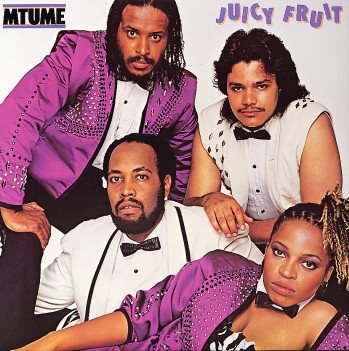
Saturday, April 08, 2006





Thursday, April 06, 2006
Excerpt from a recent sermon by PZ:
"This is really the point of my sermon:
We talk about forgiveness, and, golly, haven't you heard a zillion trillion sermons about forgiveness of sinners, ...but it never actually happens.
When lightning actually strikes and sin actually rears its powerful head in the world, Christians, generally speaking, shut down, and they shut the door, and they are very merciless, and unforgiving. It's just an absolute habit.
This is why lapsed Roman Catholics and lapsed evangelicals predominate in NYC. Most NYC young people have come from environments where all they heard when sin came into the door was some form of accusation and judgement from what they interpretted as the Christian community. So they, in turn, say 'sianara'.
Do we actually believe a word of what we so stentoriously and with such bravado speak about all the time? Do we actually believe it for a sec?
Well, I'm very sceptical."
p.s., If you want me to email you a full mp3 copy of this sermon, just leave your email address in the comments section, which I'll delete after I've sent it your way. --JZ
We talk about forgiveness, and, golly, haven't you heard a zillion trillion sermons about forgiveness of sinners, ...but it never actually happens.
When lightning actually strikes and sin actually rears its powerful head in the world, Christians, generally speaking, shut down, and they shut the door, and they are very merciless, and unforgiving. It's just an absolute habit.
This is why lapsed Roman Catholics and lapsed evangelicals predominate in NYC. Most NYC young people have come from environments where all they heard when sin came into the door was some form of accusation and judgement from what they interpretted as the Christian community. So they, in turn, say 'sianara'.
Do we actually believe a word of what we so stentoriously and with such bravado speak about all the time? Do we actually believe it for a sec?
Well, I'm very sceptical."
p.s., If you want me to email you a full mp3 copy of this sermon, just leave your email address in the comments section, which I'll delete after I've sent it your way. --JZ

Wednesday, April 05, 2006
Bonhoeffer quotes:
(taken from Ethics) --
“In a world where success is the measure and justification of all things the figure of Him who was sentenced and crucified remains a stranger and is at best the object of pity. The world will allow itself to be subdued only by success.”
"One is distressed by the failure of reasonable people to perceive either the depths of evil or the depths of the holy. With the best of intentions they believe that a little reason will suffice them to clamp together the parting timbers of the building."
“It is only through God’s being made man that it is possible to know real men and not despise them."
“Justification by grace and faith alone remains in every respect the final word and for this reason, when we speak of the things before the last, we must not speak of them as having any value of their own, but we must bring to light their relation to the ultimate.”
“What is the penultimate? It is everything that precedes the ultimate, everything that precedes the justification of the sinner by grace alone, everything which is to be regarded as leading up to the last thing when the last thing has been found. It is at the same time everything which follows the ultimate and yet again precedes it. There is, therefore, no penultimate in itself; as though a thing could justify itself in itself as being a thing before the last thing; a thing becomes penultimate only through the ultimate, that is to say, at the moment when it has already lost its own validity. The penultimate, then, does not determine the ultimate: it is the ultimate which determines the penultimate.”
“In a world where success is the measure and justification of all things the figure of Him who was sentenced and crucified remains a stranger and is at best the object of pity. The world will allow itself to be subdued only by success.”
"One is distressed by the failure of reasonable people to perceive either the depths of evil or the depths of the holy. With the best of intentions they believe that a little reason will suffice them to clamp together the parting timbers of the building."
“It is only through God’s being made man that it is possible to know real men and not despise them."
“Justification by grace and faith alone remains in every respect the final word and for this reason, when we speak of the things before the last, we must not speak of them as having any value of their own, but we must bring to light their relation to the ultimate.”
“What is the penultimate? It is everything that precedes the ultimate, everything that precedes the justification of the sinner by grace alone, everything which is to be regarded as leading up to the last thing when the last thing has been found. It is at the same time everything which follows the ultimate and yet again precedes it. There is, therefore, no penultimate in itself; as though a thing could justify itself in itself as being a thing before the last thing; a thing becomes penultimate only through the ultimate, that is to say, at the moment when it has already lost its own validity. The penultimate, then, does not determine the ultimate: it is the ultimate which determines the penultimate.”
Thursday, March 30, 2006
Christian Ethics: Stanley Holmgren vs. Karl Holl (two completely different modes of Christian thought?)

Holmgren:
“The Christian moral life…involves many encounters with unknown places. We must frequently decide what to do in new and even confusing circumstances…We need Christian character that has been shaped through practice, and which is open to the voice of the Holy Spirit. Christian conscience involves each and every one of these things as we steer our course through life. We must both think and feel, we must both remember and plan, and we must both hear and act. Involving all of these aspects of ourselves, conscience is the process of bringing the fullness of the Christian vision to bear upon a single choice.” (from Ethics After Easter, p. 123)
Karl Holl:
"Luther – unlike Kant (and Holmgren - JZ), and in express opposition to Aristotle – did not think the highest goal is attained where rational deliberation makes the correct choice among various possibilities of action. Action is truly moral, truly free, only when the good has become so instinctive that the only thought that presents itself is the correct one and this is at once implemented." (from The Reconstruction of Morality, p. 94)
Remember "Simple Simon", the Mantronix jam from 1988? I'd like to dedicate it to one of the two ethicist listed above. -- JAZ
p.s., If you would like me to email you this song, please post your address in the comments, and I'll deliver it to you pronto, deleting your email address immediately thereafter.
Tuesday, March 28, 2006
It's official! (now featuring photos)

some photos from our trip to Transylvania (where Christians go to test their faith) --
 The Outlaw's Lodge eatery (where I proposed)
 Moments after.
 Castle Dracula!!!
 Happy Couple back in London
Sunday, March 26, 2006

Friday, March 17, 2006

Subscribe to:
Posts (Atom)

