Monday, May 08, 2006

Katie Holmes & Tom Cruise's Baby: A 'Blue-Eyed Beauty'


Katie Holmes and Tom Cruise "joyously welcomed the arrival of a baby girl, Suri, today," Cruise's rep said in a statement after PEOPLE first broke the news Tuesday afternoon.

"The child weighed 7 pounds, 7 ounces and was 20 inches in length. Both mother and daughter are doing well."

Suri was born in an L.A.-area hospital – just down the hall from where Brooke Shields gave birth to her daughter Grier on the same day.

The birth went so smoothly that Holmes left the hospital within 24 hours. Holmes, Cruise and baby Suri are back home now and doing well.

Suri "has lots and lots of dark hair and big, blue eyes," says a source close to Holmes's family. "She's going to be a beautiful baby."

Adds Cruise's friend Kirstie Alley: "Tom does everything 150 percent, and fatherhood he does 300 percent. They're going to have a great kid."

The name Suri has its origins in Hebrew meaning "princess," or in Persian meaning "red rose."

Last October, barely six months into their romance, an ecstatic Cruise and Holmes revealed that they were expectant parents.

Cruise, 43, and Holmes, 27, had made no secret of their desire to start a family together: When asked by PEOPLE last June if they were planning to have children, Holmes smiled and said simply, "Yes."

Friends of the Toledo, Ohio-bred Holmes called her perfectly suited to her upcoming role. "She almost seems born for motherhood," said Oliver Hudson, actress Kate Hudson's brother and an old pal who costarred with Holmes in Dawson's Creek. "She's a nurturer. She's got mother qualities a lot of girls her age don't have."

Cruise, meanwhile, is "a great dad already," according to his pal, actress Leah Remini. He has two children from his marriage to Nicole Kidman: Isabella, 13, and Connor, 11, whom Cruise and Kidman adopted as infants. Remini told PEOPLE that both kids are "so cool…You can sit and talk to them about life."

As for marriage, Cruise and Holmes plan to tie the knot soon, Cruise said on the German TV program Wetten, dass..? on April 1. "In summer we want to get married. I won't let this woman get away."

Immediately ahead for the new dad: the May 5 release of Mission: Impossible 3. Holmes stars in the recently released satirical film about Washington politics, Thank You for Smoking.

Friday, May 05, 2006

Two exceprts from PZ's most recent "State of the Church" posting:


It is amazing. I heard about a sermon preached recently at a large and celebrated evangelical church (not in Pittsburgh), and it was that massive same-old, same-old. The preacher said that there are two questions we shall all be asked on Judgment Day: One, did we accept Christ? And Two, how did we do after we had accepted Christ? He said that he “guaranteed” that we would all be asked these two questions.

Now here is this preacher acting like Britney Spears: “Oops! I did it again.” Oops, I preached the Law again, to Christians. I started by preaching the Grace of God – that is, before you accepted Christ – but then, after you became a Christian, it’s the Law for you!

This is just the same thing we hear everywhere and Sunday after Sunday, from here to eternity. You preach forgiveness to sinners, then once they respond in joy to that great enabling word, you place their necks securely under the Law.

---------------

The best alien story ever written is the story of Christ’s coming to the earth. Why? Because it is truly an alien story. The gift of Grace is alien to the human condition. Grace is not Law. It does not accuse, nor does it demand, nor does it legislate, nor does it require. It sets all that aside. The best tag-line for a science-fiction move that has ever been written was written by St. Paul, when he said, “Christ is the end of the Law, for them that believe” (Romans 10:4).

That is alien wisdom. It could never have come from a human hand.

We would have put in requirements, or conditions, or “tweaked” it (a truly Legal phrase), or talked about “good cop, bad cop,” or put it in our own action-consequence lingo. We could never, ever have come up with something like, “Christ is the end of the Law.” And for Christians, no less.

St. Paul was not a “covenantal nomist.”

Flee churches that place nice Christian sufferers under the Law.

But… where will you go?

Click Me to read it all!

Fitz Allison quote:

from "Fear, Love, & Worship"--

(p.12) "A lot of nonsense is talked about our looking for God and our trying to find him. Yet, actually, the reverse is the case."

Tuesday, May 02, 2006

Simeon Zahl comment:


(excerpt taken from comment thread on Pontifications blog: Click Me to Read the full post and thread!)

"For me anyway, the thing I really disagree with about the ontological change model is that it assumes that the ontological change alters the individual’s relationship, pastorally, to the Law. That is why I am very nearly as unhappy with Calvin as with the RCC! Lex semper accusat. I have never met anyone who really experienced it otherwise, at least for any length of time, though I’m sure you will say your experience has been different in this regard than mine. If you can describe ontological transformation in such a way that a devolving of pastoral care into a course on the 3rd use of the Law is avoided, I might be able to subscribe to it, but I’m pretty sure that’s not possible.

"For the meantime, I will stick the simultaneous model which provides both hope and change, and a great deal of compassion, but also has proper wariness about the so-called 3rd Use. A former Christian recently referred to the 3rd Use as Christianity’s “bait and switch” tactic in terms of grace: they say it’s all grace, and then as soon as you’re “in” they turn it all around and it’s all about law again. I feel very strongly that this “bait and switch” is not the gospel, and that a justification that feels like that is not justification at all.

"I already responded to you at length a few months ago on John Camp, as you know, why, scripturally as well as pastorally, I cannot accept the infusion/ ontological change model. My position now is the same that it was then. I posted today simply to show support for Nathan, because I had noticed recently precisely the same (what I felt was a) misunderstanding on the part of many Catholics about the Lutheran conception of justification that he was lamenting. I don’t really expect to change your mind, Al! But I think it is significant that two people who agree with Luther but who don’t know each other seem to find the common RC characterization of the Lutheran view of justification wanting in precisely the same way. I think my previous response to you about infusion/ imputation covers the territory of why precisely it is wanting pretty well, or at least as well as I know how ( Click Me! )."

Monday, May 01, 2006

(mock) Contemporary Worship Song Titles -- a list by Art & John Zahl


"Fountain of Management"

"What I Want"

"Lord, May I Borrow Your Cup?"

"Land of Honor"

"All His Compartments"

"Lord, Your 'Yes' Is My 'If'"

"We Want To Be Real Jews"

"Double-Barrel Undone"

"Did You Mean It?"

"I'm Gonna Run for Jesus (the runner's theme)"

"We Are Your Gym"

"Kingdom Jamboree"

"God, You Are A River"

"See Thee In Me"

"Peel Me, God"

"Piece of God"

"Mighty Man of Categories"

"You Lord, My Favorite Choice"

Sunday, April 30, 2006

Karl Holl and Stanley Grenz quotes:

Holl (from "The Reconstruction of Moratlity")--

(p. 94) "Luther – unlike Kant, and in express opposition to Aristotle – did not think the highest goal is attained where rational deliberation makes the correct choice among various possibilities of action. Action is truly moral, truly free, only when the good has become so instinctive that the only thought that presents itself is the correct one and this is at once implemented."

similarly:

Grenz (from "The Moral Quest")--

(p. 137) "The great philosophers believed that at least to some extent the human moral problem was due to ignorance; evil is an error in judgement. Consequently the antidote to evil is knowledge, for correct knowledge leads to correct action or virtuous conduct...Beneath the surface of this understanding of the ethical task is a presupposition that forms the guiding dictum of enlightened humanism in every age, namely, that if people obtain knowledge of the right they can and will do the right.

"Augustine was too heavily influenced by the Bible to adhere slavishly to this principle. He came to see that the human moral problem is not merely ignorance. We do not only lack the knowledge of what is right, we also lack the ability to do what the law commands. And as a result, we cannot do what we know we ought to do. In fact, humans can knowingly and freely choose what is evil. We have the uncanny knack of knowing what we ought to do, even anticipating the unwholesome consequences of an evil act, and yet choosing to engage in conduct we clearly perceive will be to our detriment and to the detriment of others."

--These quotes perfectly describe the lay of the land! JZ

"simul iustus et peccator"

Friday, April 28, 2006

Articles 9, 10, & 11 (of The 39 Articles):

IX. Of Original or Birth Sin. ORIGINAL sin standeth not in the following of Adam (as the Pelagians do vainly talk), but it is the fault and corruption of the nature of every man that naturally is engendered of the offspring of Adam, whereby man is very far gone from original righteousness, and is of his own nature inclined to evil, so that the flesh lusteth always contrary to the spirit; and therefore in every person born into this world, it deserveth God's wrath and damnation. And this infection of nature doth remain, yea, in them that are regenerated, whereby the lust of the flesh, called in Greek phronema sarkos (which some do expound the wisdom, some sensuality, some the affection, some the desire of the flesh), is not subject to the law of God. And although there is no condemnation for them that believe and are baptized, yet the Apostle doth confess that concupiscence and lust hath itself the nature of sin.

X. Of Free Will. THE condition of man after the fall of Adam is such, that he cannot turn and prepare himself, by his own natural strength and good works, to faith and calling upon God. Wherefore we have no power to do good works pleasant and acceptable to God, without the grace of God by Christ preventing us that we may have a good will, and working with us when we have that good will.

XI. Of the Justification of Man. WE are accounted righteous before God, only for the merit of our Lord and Saviour Jesus Christ by faith, and not for our own works or deservings. Wherefore that we are justified by faith only is a most wholesome doctrine, and very full of comfort; as more largely is expressed in the Homily of Justification.

-- Summarized as follows:

Thursday, April 27, 2006

Something for all of us to consider:


He appears to be fully sanctified.

JAZ's Top 50 Movie Recommendations

Top 50 Movie Recommendations (listed in no particular order)

--'The Saddest Music in the World' Canada during the Great Depression? Filmed with hand-held cameras, the lenses glossed strangely with vaseline? 90% b/w, 10% color? A comedy about the impact of guilt and sadness on the conscious mind, as experienced through music? Capra-style diologue? ...forget all that; just watch the hockey-buzzer-mediated duel between the Simese floutest and the Mexican funeral band. My girlfriend and I fell in love while watching this film. Also great with the sound off.
--'The Ruling Class - Criterion Collection' Huge movie! It asks: What would happen if you dropped Jesus Christ and Jack the Ripper into English aristocracy? Possibly the most accomplished piece of "cult cinema" ever constructed. Also, the C of E Bishop is a scream!
--'The Last Days of Disco' Don't watch this unless you can watch it more than once. Notoriously hated by non-WASPs. An exploration into the ways in which people do (and, more importantly, don't) change. Brilliant dialogue.
Waiting For Guffman 'Waiting for Guffman' My favorite movie. Snobby, but surprizingly not anti-Christian. The extra footage is a must!
--'Network'
--'The Cruise' My favorite documentary. Quasi-prophetic in its anticipation of 9/11. A wonderful tour of NYC, a disturbed-genius autodidact, and idol worship at its urban grandest. Apart from the world trade center stuff, the "Grid Plan" speech, and the confession on Brooklyn Bridge are amazing.
--'The Ice Storm' A strange and particular context (1970s New Canaan, CT) from which to explore the universality of human psycho-sexual tragedy, both in the adult and (as it develops) in the child. An eerily all-star cast of kid actors. This movie has a low anthropology, but gives birth to a genuinely redemptive hope, born in wake of God's wrath portrayed as an ice storm, requiring an innocent death.
--'How To Get Ahead in Advertising - Criterion Collection' Boil!
--'Stardust Memories' Favorite moive from my favorite film maker. Rampling's portrayal of insanity is really horrifying. Yet the movie is beautiful aesthetically, full of hilarious character studies, some of his funniest jokes, and a deeply serious underbelly.
--'Being There' My Grandmother is an extra in this movie; she walks by right before Peter Sellers gets hit by the car. Even if she weren't in it, I would love this film.
--'True Stories'
--'The Addiction' Probably the only vampire movie that uses blood-sucking as a metaphor for sin. Explored from the perspective of a D.Phil student of Existentialism who is bitten by a vampire in the East Village one night. Plus a soundtrack by Onyx/Cypress Hill. Features Christopher Walken. The ending is explicitly Christian, and protestant at that!
--'The American Astronaut'
--'La Dolce Vita'
--'Thief' Michael Mann's early masterpiece. He would later try to recapture its magic in Heat, almost move for move. Plus the Tuesday Weld is indeed the best part of all! Her lengthy interaction with Cann in the diner is perfect.
--'The Ninth Configuration' By the guy who wrote The Exorcist. Features a segment depicting an astronaut worshipping the crucified Jesus on the surface of the moon!
--'The Swimmer'
--'Wings of Desire'
--'The Wife' A beautifully made, scathing criticism of the New Age. Julie Hagarty is one of my favorite actresses.
--'The 5,000 Fingers of Dr. T'
--'Rushmore - Criterion Collection'
--'The Brothers Quay Collection: Ten Astonishing Short Films 1984-1993'
--'Metropolitan' The best Foreign movie ever made about the American upper crust, New York's 400. "I don't think you have to have read a book in order to have an opinion on it!"
--'Jules Verne 3 Pack Collection (3pc)'
--'Flirting With Disaster (Collector's Edition)'
--'Marnie' The dated quality of 1960s Freudian psycho-analysis provides some of my favorite subject matter. The girl, Tippi, plus Hitchcock's ever present obsession with sex (e.g., horse-riding) brood eerily just under the surface of a strangley explored thesis: women need men to rescue them from themselves via Freudian psychoanalysis.
--'Little Onik'
--'The Cabinet of Dr. Caligari' More of the same Freudian stuff mentioned above. This movie describes the Psychiatrist to be God himself. All is revealed in a horrifying, expressionistic dream sequence depicting a therapeutic break-through.
--'Kicking and Screaming (Baumbach)'
--'Manhunter (Director's Cut, Limited Edition Set)' Tom Noonan plays the scariest serial killer in movie history! Michael Mann's direction is perfect, ever concerning itself with the inner issues of the mind and heart, plus characteristic synth-wash soundtrack and Miami Vice cameos. This is his best movie!
--'Who's Afraid of Virginia Woolf?' The educated are not necessarily friendly. The smartest man I've ever known converted after watching this movie.
--'Bad Lieutenant' Disturbing, but overtly Christian. This movie reveals the offensive side of forgiveness.
--'Hurlyburly (New Line Platinum Series)' I always wondered what uneducated (in the Classical sense) conversation among intelligent people would sound like. This movie answered that question for me. (Worth watching alongside of 'The Player' and 'The Anniversary Party'.
--'Alien - The Director's Cut (Collector's Edition)'
--'The Player (Special Edition) (New Line Platinum Series)'
--'Withnail and I - Criterion Collection' The gay uncle is hilarious!
--'Rize' - Christian "clown-dancers" fight gang violence in the LA ghetto (a documentary). You've never seen the human body move like this before!
--'Black Orpheus - Criterion Collection'
--'The King of Kings - Criterion Collection'
--'Fitzcarraldo' Famous for the on-screen deaths this movie incured. Whether or not they (the deaths) be real or rumored, this movie definitely features a ferry being hoisted over a mountain in the middle of the Amazon rain forest using weird pullies, which is a very cool thing to do in a film.
--'Palindromes' A simple story about a 12-year-old Jewish girl, but played by 10 different actresses, including a 300 pound black women, who only appears for 10 minutes in the middle.
--'After Hours'
--'Faust'
--'Together' Covers a lot of the same ground explored in The Ice Storm, and by Todd Solendz, but in Sweden in the mid-70s. It has a contrived happy-ending, but I like the fact that it does.
--'Paris, Texas'
--'Blood and Roses' Heavily stylized version of LeFanu's "Carmilla", history's most famous story of vampire lesbians. I can't decide which of the heroines is sexier! A personal fave.
--'The Abominable Dr. Phibes' Incredible 60s aesthetic style with a weird Old Testament tale of terror incorporated nicely into the good graces of one Vincent Price. As far as I can remember, he is the only actor in the movie, other than a group of robotic New Orleans jazz musicians. This movie is cool, but not really very smart. A must!
--'Darby O'Gill and the Little People' This one features surreal, midget footage, a banshee, and fantastic Disney live-action story-telling. Works sufficiently with the sound off.
--'Tron (20th Anniversary Collector's Edition)' The left hand did not know what the right hand was doing here. This movie anticipated the future CGI animation, and is gorgeous to look at. It reflects a confused Disney at low-ebb, taking a risk.
--'Xanadu' Zeus sends one of his nine Muse daughters, ONJ, to inspire an artist to open a Roller-skate night club. Gene Kelly dances to this rediculous plot in his final, embarrasing role. Visually stunning, cinematic magic, ...of a very dumb variety. A pathetic, but honest mention.
--'Sideways'
--'Clash of the Titans' The place where Harryhausen's special effects of the 60s comes together with the unforgetable 80s, as descibed in ancient Greece. Sir Lawrence Olivier, U. Andress as Aphrodite, Harry Hamlin from LA Law, all together finally!
--'The Big Blue (Director's Cut)' Hard to defend, though it's unlike any other movie. Rosanne Arquette is another fave!
--'Britannia Hospital' This is the only movie on this list that I have never watched. It's supposed to be really good.
--'The Boy in the Plastic Bubble' Perfect as existential metaphor.

Wednesday, April 26, 2006

Monday, April 24, 2006

1 Corinthians 1, regarding differences between the UK and the US (excerpt taken from "Last Night a DJ Saved My Life", by Brewster & Broughton, 1999.)

"Brothers, think of what you were when you were called. Not many of you were wise by human standards; not many were influential; not many were of noble birth. But God chose the foolish things of the world to shame the wise; God chose the weak things of the world to shame the strong." (1 Corinthians 1: 26-27)

Photo: Northern Soul Dancers

"In less than a quarter of a century, the idea of dancing to someone playing records had evolved from a bizarre experiment in a Yorkshire working men's club to an intricate world of nightclubs, DJs, and music.

"This world had matured more rapidly in the UK than the US -- maybe because Britain seems to invest far more energy in its youth culture, which is somehow more accepting of outside novelties and is usually energetically downmarket in its social make-up. While the cafe society were twisting in New York's Peppermint Lounge, the kids doing the same dance in the Lyceum were clerks, apprentices and shop girls. Perhaps it's because Britain is a nation based on duty, a country of subjects not citizens, that its young people expend so much effort in trying to escape, but it's herethat club culture was built, even if the records which filled it were from across the Atlantic. As the pages turn on the DJ's story, you'll see that Britain made him a home, while America gave him his music.

"The connections between the two countries have always been strong, and one theme has a particular resonance -- the passionate romance between white working-class kids in the UK and black music made in America. Perhaps the connection is work, perhaps it's the refusal to defer pleasure. If you were black and American you sang about pay day, you waited for the eagle on your dollar to fly. If you were British and working class, you just said Ready Steady Go, the weekend starts here." (p. 79)

Friday, April 21, 2006

Imagination and the Prayer of Humble Access


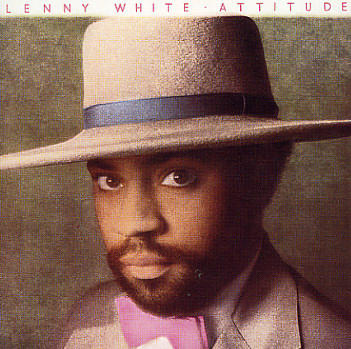
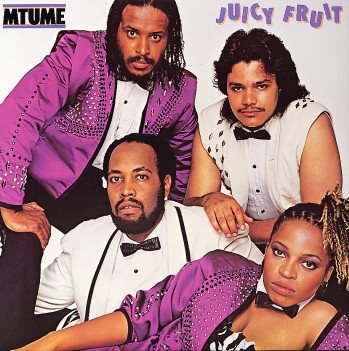
I know the album cover is (a bit) silly, but the second song on this LP (So Good, So Right,...as sampled by Eric Sermon's "Get the Money") has me hooked. The title track opener is amazing as well. Think of the incredible soaring male falsettos of the Delphonics coupled with Larry Levan style, 80s disco production. And check out their second single from In the Heat of the Night, their second album, the song "Just An Illusion". Find the extended 12" mix if possible. Folks, we're dealing with a really really really great song here (dare I say perfect?)!

Also, here's the BCP's Prayer of Humble Access (We used to tell my brother Simeon that he was not "good enough" to get to say this prayer)...

"We do not presume to come to this your table, merciful Lord, trusting in our own righteousness, but in your manifold and great mercies. We are not worthy so much as to gather up the crumbs under your table. But you are the same Lord whose nature is always to have mercy. Grant us therefore, gracious Lord, so to eat the flesh of your dear Son Jesus Christ and to drink his blood, that our sinful bodies may be made clean by his body and our souls washed through his most precious blood, and that we may evermore dwell in him, and he in us. Amen."

I don't know what's better, the song Just An Illusion, or the prayer. --JZ

Thursday, April 20, 2006

David Zahl is 27 today!!!


It's that two-month-long time of year when David and I are only one year apart. Here's to you (and Cate) on this special day, also Hitler's birthday.

Love, JAZ

Saturday, April 15, 2006

Wednesday, April 12, 2006

Christ Among the Partisans (By GARRY WILLS)

THERE is no such thing as a "Christian politics." If it is a politics, it cannot be Christian. Jesus told Pilate: "My reign is not of this present order. If my reign were of this present order, my supporters would have fought against my being turned over to the Jews. But my reign is not here" (John 18:36). Jesus brought no political message or program.

This is a truth that needs emphasis at a time when some Democrats, fearing that the Republicans have advanced over them by the use of religion, want to respond with a claim that Jesus is really on their side. He is not. He avoided those who would trap him into taking sides for or against the Roman occupation of Judea. He paid his taxes to the occupying power but said only, "Let Caesar have what belongs to him, and God have what belongs to him" (Matthew 22:21). He was the original proponent of a separation of church and state.

Those who want the state to engage in public worship, or even to have prayer in schools, are defying his injunction: "When you pray, be not like the pretenders, who prefer to pray in the synagogues and in the public square, in the sight of others. In truth I tell you, that is all the profit they will have. But you, when you pray, go into your inner chamber and, locking the door, pray there in hiding to your Father, and your Father who sees you in hiding will reward you" (Matthew 6:5-6). He shocked people by his repeated violation of the external holiness code of his time, emphasizing that his religion was an internal matter of the heart.

But doesn't Jesus say to care for the poor? Repeatedly and insistently, but what he says goes far beyond politics and is of a different order. He declares that only one test will determine who will come into his reign: whether one has treated the poor, the hungry, the homeless and the imprisoned as one would Jesus himself. "Whenever you did these things to the lowliest of my brothers, you were doing it to me" (Matthew 25:40). No government can propose that as its program. Theocracy itself never went so far, nor could it.

The state cannot indulge in self-sacrifice. If it is to treat the poor well, it must do so on grounds of justice, appealing to arguments that will convince people who are not followers of Jesus or of any other religion. The norms of justice will fall short of the demands of love that Jesus imposes. A Christian may adopt just political measures from his or her own motive of love, but that is not the argument that will define justice for state purposes.

To claim that the state's burden of justice, which falls short of the supreme test Jesus imposes, is actually what he wills — that would be to substitute some lesser and false religion for what Jesus brought from the Father. Of course, Christians who do not meet the lower standard of state justice to the poor will, a fortiori, fail to pass the higher test.

The Romans did not believe Jesus when he said he had no political ambitions. That is why the soldiers mocked him as a failed king, giving him a robe and scepter and bowing in fake obedience (John 19:1-3). Those who today say that they are creating or following a "Christian politics" continue the work of those soldiers, disregarding the words of Jesus that his reign is not of this order.

Some people want to display and honor the Ten Commandments as a political commitment enjoined by the religion of Jesus. That very act is a violation of the First and Second Commandments. By erecting a false religion — imposing a reign of Jesus in this order — they are worshiping a false god. They commit idolatry. They also take the Lord's name in vain.

Some may think that removing Jesus from politics would mean removing morality from politics. They think we would all be better off if we took up the slogan "What would Jesus do?"

That is not a question his disciples ask in the Gospels. They never knew what Jesus was going to do next. He could round on Peter and call him "Satan." He could refuse to receive his mother when she asked to see him. He might tell his followers that they are unworthy of him if they do not hate their mother and their father. He might kill pigs by the hundreds. He might whip people out of church precincts.


The Jesus of the Gospels is not a great ethical teacher like Socrates, our leading humanitarian. He is an apocalyptic figure who steps outside the boundaries of normal morality to signal that the Father's judgment is breaking into history. His miracles were not acts of charity but eschatological signs — accepting the unclean, promising heavenly rewards, making last things first.

He is more a higher Nietzsche, beyond good and evil, than a higher Socrates. No politician is going to tell the lustful that they must pluck out their right eye. We cannot do what Jesus would do because we are not divine.

It was blasphemous to say, as the deputy under secretary of defense, Lt. Gen. William Boykin, repeatedly did, that God made George Bush president in 2000, when a majority of Americans did not vote for him. It would not remove the blasphemy for Democrats to imply that God wants Bush not to be president. Jesus should not be recruited as a campaign aide. To trivialize the mystery of Jesus is not to serve the Gospels.

The Gospels are scary, dark and demanding. It is not surprising that people want to tame them, dilute them, make them into generic encouragements to be loving and peaceful and fair. If that is all they are, then we may as well make Socrates our redeemer.

It is true that the tamed Gospels can be put to humanitarian purposes, and religious institutions have long done this, in defiance of what Jesus said in the Gospels.

Jesus was the victim of every institutional authority in his life and death. He said: "Do not be called Rabbi, since you have only one teacher, and you are all brothers. And call no one on earth your father, since you have only one Father, the one in heaven. And do not be called leaders, since you have only one leader, the Messiah" (Matthew 23:8-10).

If Democrats want to fight Republicans for the support of an institutional Jesus, they will have to give up the person who said those words. They will have to turn away from what Flannery O'Connor described as "the bleeding stinking mad shadow of Jesus" and "a wild ragged figure" who flits "from tree to tree in the back" of the mind.

He was never that thing that all politicians wish to be esteemed — respectable. At various times in the Gospels, Jesus is called a devil, the devil's agent, irreligious, unclean, a mocker of Jewish law, a drunkard, a glutton, a promoter of immorality.

The institutional Jesus of the Republicans has no similarity to the Gospel figure. Neither will any institutional Jesus of the Democrats.

Tuesday, April 11, 2006

Saturday, April 08, 2006

Bored at home?


Thursday, April 06, 2006

Excerpt from a recent sermon by PZ:

"This is really the point of my sermon:

We talk about forgiveness, and, golly, haven't you heard a zillion trillion sermons about forgiveness of sinners, ...but it never actually happens.

When lightning actually strikes and sin actually rears its powerful head in the world, Christians, generally speaking, shut down, and they shut the door, and they are very merciless, and unforgiving. It's just an absolute habit.

This is why lapsed Roman Catholics and lapsed evangelicals predominate in NYC. Most NYC young people have come from environments where all they heard when sin came into the door was some form of accusation and judgement from what they interpretted as the Christian community. So they, in turn, say 'sianara'.

Do we actually believe a word of what we so stentoriously and with such bravado speak about all the time? Do we actually believe it for a sec?

Well, I'm very sceptical."

p.s., If you want me to email you a full mp3 copy of this sermon, just leave your email address in the comments section, which I'll delete after I've sent it your way. --JZ

Daniele Baldelli


Read this:

Daniele Baldelli interview

I'd love to hear one of those mix tapes!!!

Wednesday, April 05, 2006

Bonhoeffer quotes:

(taken from Ethics) --

“In a world where success is the measure and justification of all things the figure of Him who was sentenced and crucified remains a stranger and is at best the object of pity. The world will allow itself to be subdued only by success.”

"One is distressed by the failure of reasonable people to perceive either the depths of evil or the depths of the holy. With the best of intentions they believe that a little reason will suffice them to clamp together the parting timbers of the building."

“It is only through God’s being made man that it is possible to know real men and not despise them."

“Justification by grace and faith alone remains in every respect the final word and for this reason, when we speak of the things before the last, we must not speak of them as having any value of their own, but we must bring to light their relation to the ultimate.”

“What is the penultimate? It is everything that precedes the ultimate, everything that precedes the justification of the sinner by grace alone, everything which is to be regarded as leading up to the last thing when the last thing has been found. It is at the same time everything which follows the ultimate and yet again precedes it. There is, therefore, no penultimate in itself; as though a thing could justify itself in itself as being a thing before the last thing; a thing becomes penultimate only through the ultimate, that is to say, at the moment when it has already lost its own validity. The penultimate, then, does not determine the ultimate: it is the ultimate which determines the penultimate.”

Thursday, March 30, 2006

Christian Ethics: Stanley Holmgren vs. Karl Holl (two completely different modes of Christian thought?)


Holmgren:

“The Christian moral life…involves many encounters with unknown places. We must frequently decide what to do in new and even confusing circumstances…We need Christian character that has been shaped through practice, and which is open to the voice of the Holy Spirit. Christian conscience involves each and every one of these things as we steer our course through life. We must both think and feel, we must both remember and plan, and we must both hear and act. Involving all of these aspects of ourselves, conscience is the process of bringing the fullness of the Christian vision to bear upon a single choice.” (from Ethics After Easter, p. 123)

Karl Holl:

"Luther – unlike Kant (and Holmgren - JZ), and in express opposition to Aristotle – did not think the highest goal is attained where rational deliberation makes the correct choice among various possibilities of action. Action is truly moral, truly free, only when the good has become so instinctive that the only thought that presents itself is the correct one and this is at once implemented." (from The Reconstruction of Morality, p. 94)

Remember "Simple Simon", the Mantronix jam from 1988? I'd like to dedicate it to one of the two ethicist listed above. -- JAZ

p.s., If you would like me to email you this song, please post your address in the comments, and I'll deliver it to you pronto, deleting your email address immediately thereafter.

Tuesday, March 28, 2006

It's official! (now featuring photos)


some photos from our trip to Transylvania (where Christians go to test their faith) --

The Outlaw's Lodge eatery (where I proposed)

Moments after.

Castle Dracula!!!

Happy Couple back in London

Sunday, March 26, 2006

Back from Transylvania!!!


(more soon)

Friday, March 17, 2006

Wednesday, March 15, 2006

(from out of blue) John Stamper!


(excerpt taken from a comment by John Stamper)

I think the key problem for so-called evangelicals (so-called because they are often light years from the early Evangelicals’ very radical understanding of sin and forgiveness, grace and the Law, and especially the bound will) turns on what we mean by REPENTANCE. Because what a lot of times these neo-evangelicals will say is that, on the contrary Paul Zahl, we DO welcome sinners… REPENTANT sinners that is.

Now don’t get me wrong – repentance is an absolutely crucial part of the Christian experience. (C.S. Lewis once said that what modern day people want is “not so much a father in heaven but a grandfather in heaven, a senile benevolence that wants nothing so much as to see young people having a good time.”) Repentance, wrath, sin, accusation, judgement, law – this Christian vocabulary has got to be kept and even SHARPENED, precisely against the accomodating spirit of the age. But I think we need to also turn back to the early Luther and Cranmer, for whom it was so crucial, and hear the language, particularly REPENTANCE, in the way it radically attacked the natural man’s thirst for glory, the way it UP-ENDED “common sense” and “reasonable” theologies.

Common sense and Reason say that we repent of SINS. Plural. Acts. And so repentance becomes a meritorious act of the self-disciplined will, the glorious human will freely choosing (with a little help from some grace) to turn from Bad Actions (or Bad Thoughts, Bad Feelings) and successfully resolving not to do these anymore. We may fall off the wagon later, but the key thing is achieving in the moment that successful self-induced resolution. After all, what could it mean to say you were in a state of repentance WHILE YOU WERE STILL DOING THE BAD THING? That’s crazy… right? It’s folly.

But if we think of the problem as fundamentally a state, not actions springing from a state, and most crucially a state in which we are bound and from which we will not be delivered in this life – if we are not judged by God for what we do, as your dad says, but for who we are – then everything begins to be seen differently. Repentance does very much still involve a 180-degree turning, but not fundamentally one of action – not turning away from bad things that I do, but turning away 180-degrees from belief in myself and turning solely to the Cross, clinging to the Cross alone. Repentance becomes a place of perceiving one’s own wretchedness, a place of true self-awareness and grief and abhorence for what one is, and throwing oneself totally on the mercy of Christ. That is exactly the sense that a drunk can be flushed to the gills, reaching for the bottle and also repentent. Actions may indeed alter later after repentance, but if so that happens via the sanctifying work of the Lord which, along with suffering, always remains a mystery, and His sanctifying work from saved person to saved person differs according the secret counsel of His own good pleasure and in His own time, a Work that CANNOT be used as a litmus test to detect those who have “truly” repented. This is folly to a theologian of glory (who necessarily privileges the Free Will and its capacity to choose its actions) but to a theologian of the Cross, who correctly sees himself in a state of paralysis regarding his ability to choose the Good, it is the only thing that makes sense.

It’s also in this scheme of Luther and Cranmer that we find the radically counterintuitive (but very Biblical and indeed Pauline) idea of forgiveness PRECEDING repentence. Our hearts are hardened – we need an inbreaking Word from without BEFORE we can see as we ought, and love as we ought. Not because we successfully repented first, but because we experience the Word of forgiveness first. THEN we are broken open raw and can admit to what we are. The woman with the oil is broken open by the complete acceptence of her by the man Jesus just as she is, a whore; THAT sovereign action of the electing forgiving Jesus reducing her to wordless grief and tears where all she can do is kiss His feet. (And most crucially, there is no suggestion in the text that she subsequently joins the Young Ladies Christian League and stops plying her trade.) It is the experience of Saul of Tarsus: not because he repented first, but because the bleeding Christ whom he was persecuting loved him and chose him and forgave him; THAT reduces him to wonder and repentence. And this experience becomes a formal part of the Book of Common Prayer: where AFTER receiving absolution we are able to ask for “true repentence.”

So for me what a lot of this turns on is what a modern day evangelical means by Sin (a singular state or plural actions) and therefore what we think God principally cares about. If sin is primarily a plural thing, then we have moralism: God’s primary aim is to improve our behavior (thoughts, feelings). If sin is primarily singular, then God is not primarily concerned with what we do, but with saving us from the Grand Delusion of thinking we can live in any state but utter dependence on Him.

And of course, as Fitz likes to point out, these issues are not primarily intellectual, as if the doctrinal error is a matter of the mind. Hawthorne’s Puritans (no less than the Christians PZ criticizes) are not cruel and prideful to the poor adulteress because they believe the wrong theology; they believe the wrong theology because of the opportunities it gives them to be cruel and proud and self-righteous. “Faith is a rectitude of the heart” as Fitz says.

Tuesday, March 14, 2006

Gerhard Forde quote:


"...The bondage of the will in question is not, for Luther, a matter of force or determinism. No one is forced. It is something more like an addiction. We all do what we want to do! That is precisely our bondage."

recent PZ quote:


"I observe that Christians don't even tolerate sinners, another “other” for all their talk of forgiveness. It is a wondrous fact – an arresting fact – that when Christians fall into sin, the talk one hears literally every Sunday, in principle, of God's forgiveness and welcome to the sinner becomes a dead letter. It is as if we declare "God shows His love for us in that while we were yet sinners, Christ died for us" only to NOT mirror that, any time sin actually strikes close to us in a real live human being. It is an amazing reality that a sinner has about as much chance from Christians as Zontar did from the soldiers in It Conquered the World. (Zontar was burned to death, by the actor Lee Van Cleef.)"

Monday, March 13, 2006

The Peter Principle (by Simeon Zahl)


2/12/03 (by Simeon Zahl)

Peter Talk: What does it mean to live a Christian life?

Today I want to take a look at a character in the Bible about whom I think we tend to have some misconceptions. In any case, the inspiration for this talk came from my realizing I had a misconception about him: the Apostle Peter. Good old Peter, the loyal fisherman. Peter the first head of the Christian church, the first Pope. Probably had a beard. Peter about whom Jesus said “On this rock I will build my church.” And yes, Peter who denied Jesus 3 times. Peter, the great disciple who has been described as “refreshingly human.” Perhaps you have heard a sermon or a talk at some point to the effect of, “See, even Peter screwed up, and royally. It’s ok if you mess up, God loves you anyway.” I definitely have. When I would hear stuff like this, then in my mind I used to make this jump: Peter made some mistakes, but that was all before Jesus died and rose again, before Christianity really started. Afterwards-- after the Holy Spirit came down to the apostles-- Peter preached and healed people and was a generally good guy, and lived happily ever after until his noble martyrdom. After all, he is a saint, is he not? Perhaps this is a picture of Peter that you recognize. Like I said, this picture is definitely the one I had of him until pretty recently: as “the great disciple who was refreshingly human.” I want to take a closer look at this picture of Peter. I want to show that Christians very often (and me specifically) have a misconception about who Peter really is, and about how the Bible really portrays him. I want to try and illuminate the misconception we often have about this important biblical figure and show him as he really is.

Furthermore, I want to show that this subject is more than just a vaguely interesting scriptural quibble. The reason it is more than that, more interesting than that, more relevant than that, is because Peter is the prototypical Christian. It is generally accepted that the apostles are for the most part scriptural “stand-ins” for us. Like us, they are Christians trying to grapple with the trials and joys of the Christian life. I believe that Peter is especially “one of us,” for a simple and obvious reason: he made a lot of mistakes. We know that we tend to screw up a fair bit—morally, academically, spiritually, and so on-- and so we relate especially well to Peter. Do you really relate to John, the “beloved” apostle who never seemed to do anything wrong? He was almost perfect, a true saint. I do not relate to John. I relate to Peter, the guy who denied Jesus because he was afraid of what people would think about him. Peter, who doubted when Jesus told him he could walk on water, and sunk as a result. If you are a Christian, and you feel like sometimes you are not a very good one, then Peter is your man. Peter’s life is as prototypical a Christian life as the Bible gives us. So as we start looking at who Peter really is, as we start trying to clear away our misconceptions about him, we are not just making a small point about Bible interpretation. We are clearing away our own illusions about what a Christian life looks like, about what it means to be a Christian. In Peter we begin to see our own life, naked and honest before God. Have you ever heard the words “What Would Jesus Do?” and thought, “I know exactly what he would do. But I don’t want to do that. It’s too boring, too hard, or too soon.” Well if you have ever felt that way, you probably can relate to Peter. In clearing up the common misconception about Peter, this talk will hopefully make it easier for us to be honest about ourselves—about our own Christian lives-- and therefore will make it easier to be honest with God. Honest with the God who said, “My strength is made perfect in weakness” (2 Corinthians 12:9).
So then, who is Peter? What are we trying to say about him that we do not already know? In answering that question, I am going to focus on three different incidents in Peter’s life:

a) His first meeting with Jesus in John 1,
b) His experience in the garden of Gethsemane as related in Matthew 26,
c) His confrontation with the Apostle Paul, which is described in the second chapter of Paul’s letter to the Galatians.

Each incident gives us a new piece of information about Peter, a new way of looking at him. The total picture that will emerge is one I had never heard until I started studying Peter a few months ago. Ultimately it is a picture of us.
First, let’s take a look at Peter’s meeting with Jesus at the beginning of the gospel of John. Remember, his original name was Simon, not Peter:

[John 1:40-43 “Andrew, Simon Peter’s brother was one of the two who had heard what John [the Baptist] had said, and who had followed Jesus. The first thing Andrew did was to find his brother Simon and tell him, ‘We have found the Messiah’ (that is, the Christ). And he brought [Simon] to Jesus. Jesus looked at him and said, ‘You are Simon son of John. You will be called Peter.’” (emphasis added)]

There are two things that happen here that I think are worth mentioning. First, before Simon says or does anything at all, Jesus renames him “Peter.” In Christianity, as many of you will be able to relate, when we have our first experience of Jesus, we realize that we are being given a whole new identity. Paul talks a lot about “putting off the old self, and putting on the new self.” We are redeemed by God, and as a result we become his servants for the rest of our lives, and we are no longer bound to serve only ourselves. This is what happened to Simon, a fact made abundantly clear by Jesus actually renaming him. For the rest of the book, he is referred to as Simon Peter or just Peter. He is a new man, just like Saul when he was renamed Paul. The other three gospels refer to him as Peter from the very start. They mention that it was Jesus who gave him the name, but they do not describe the incident. So he is Peter, for all intents and purposes, from the moment he meets Jesus until the day he dies.

The second point about this renaming passage from John is that Peter is not just a new name; it is a new name with a meaning. As you may know, the new name comes from the Greek for “Rock.” We learn later on why Jesus names him “the Rock.” Peter is called the Rock because Jesus says to him in Matthew 16:18 “I tell you that you are Peter [i.e. the Rock], and on this rock I will build my church.” Basically, Jesus is saying “buddy, you’re going to be in charge when I’m gone.” We know this is what he meant because after his death, in the book of Acts, the disciples all accept Peter as their leader without any question. They knew beforehand that he was the Rock, the man in charge of the church.

I used to think, “Sure, Peter made a lot of mistakes while he was still learning the ropes, while Jesus was still alive. But things changed after Jesus left and the Holy Spirit came, and Peter became the leader of the Christians, a super-apostle who healed people and preached everywhere, and was generally awesome.” The point is, instead, that Peter was the Rock-- the head of the church and Jesus’ Number 1 Man-- from Day 1, from the moment Jesus met him and changed his name. This means that all the rest of the stuff he did in the gospels—his mistakes, mainly—were done by a full-fledged, prototypical Christian. In a sense, he had already been instated as Pope long before Jesus died. It was the Leader of the Church to whom Jesus said “Get behind me, Satan!” and who didn’t have enough faith to walk on water. For me, this was a new and unsettling insight. I hope that it unsettles you a little bit. Peter was living a prototypical “Christian life” from the minute of his first encounter with Jesus, and the rest of the things he does must therefore be interpreted in this light. We will come back to this point in a moment.

The next passage I want to look at is one that I always sort of skimmed until recently:

[Matthew 26: 36-45: “Then Jesus went with them to a place called Gethsemane, and he said to his disciples, ‘Sit here, while I go yonder and pray.’ And taking with him Peter and the two sons of Zebedee, he began to be sorrowful and troubled. Then he said to them, ‘My soul is very sorrowful, even to death; remain here, and watch with me.’ And going a little farther he fell on his face and prayed, ‘My Father, if it be possible, let this cup pass from me; nevertheless, not as I will but as thou wilt.’ And he came to the disciples and found them sleeping; and he said to Peter, ‘So, you could not watch with me one hour? Watch and pray that you may not enter into temptation; the spirit indeed is willing, but the flesh is weak.’ Again, for a second time, he went away and prayed, ‘My Father, if this cannot pass unless I drink it, thy will be done.’ And again he came and found them sleeping, for their eyes were heavy. So, leaving them again, he went away and prayed for the third time, saying the same words. Then he came to the disciples and said to them, ‘Are you still sleeping and taking your rest? Behold, the hour is at hand, and the Son of man is betrayed into the hands of sinners.’” (emphasis added)]

Let’s unpack this a little bit. Picture this: Jesus tells you to stay awake three times; you promptly fall asleep three times. This is the big night, the night of his arrest. You have been following Jesus day-in, day-out for 3 or so years, and you believe he is the Son of God and the Savior of the World. And you cannot even keep awake when he asks you to. He is sweating blood; you are taking a nap. -- Obviously, Peter and co. are pretty miserable here at doing what Jesus asks them. They do what they want to do, not what he wants them to do…. 3 times. Peter was supposed to be in charge: How do you think he felt? I think he was perfectly aware of what a failure he was proving to be. I bet he felt deeply, deeply ashamed. He must have been asking himself, “Why the heck did he choose me? I’m terrible at this. I have no self-control, and I keep choosing myself over my Lord. How on earth am I supposed to be the Rock on which he will build his church?” This passage to me is just so stark in its opposition between what Jesus wants the disciples to do and what they actually do. Peter and Co. come across so clearly as a bunch of failures. I think this passage often doesn’t get enough attention.

Now I want to put this evening of weakness in Gethsemane in the context of everything else Peter does in the gospels. If you go through an exhaustive concordance looking for every reference to “Simon” and “Peter” in Matthew, Mark, Luke, and John, you will be led to the following events:

a) Peter is afraid and sinks into the water (Matt. 14:27-31).

b) Peter tries to persuade Jesus that he will not have to die, and gets the following reply: “Get behind me, Satan! You are a stumbling block to me; you do not have in mind the things of God but the things of men” (Matt. 16:23, etc.).

c) He denies Jesus three times! (Matt. 26: 69-75, etc.).

d) He draws his sword in Gethsemane and is rebuked for it (John 16:10-11, etc.).

e) He gets rebuked for asking—out of jealousy-- about John, the beloved disciple: “If it is my will that he remain until I come, what is that to you?” (John 21:22).

f) He falls asleep in Gethsemane (Matt. 26:40-46, etc.).

g) He even loses the race to the empty tomb! (John 20:3-4).

In all of this, Peter only does a single good thing: he acknowledges that Jesus is the Christ, the Son of God, and is the first of the disciples to do so (Matt. 16:13-19, etc.). A wonderful, central, important moment, to be sure. But it stands alone in Peter’s gospel story. Otherwise, everything he does in the gospels ends in a correction, a rebuke, or just simple failure. He seems to be pretty useless. This point makes us wonder exactly what kind of a Christian life this is that Peter is leading. Definitely not one of someone who is generally good, but screws up sometimes. Not messing up is the exception. Failure and rebuke is the rule. Are you surprised? I certainly was. It became almost comical going through the concordance references. Like it was a joke. But it is not a joke. Instead, the large-scale ineffectiveness of Peter in terms of his behavior, his actions, points, I believe, to a widespread misconception about who he is, and therefore about how the Bible depicts the Christian life. But before we get to the Heart of the Matter, let’s look at one more relevant passage. At this point, I thought, “Well, maybe Peter is not a very good Christian early on, but he gets better, right? Doesn’t he do all that cool stuff in Acts? Doesn’t it say that people would lay the sick on the side of the road in the hope that even Peter’s shadow would touch them and heal them?” The answer is: Yes, he is used powerfully throughout the book of Acts. But does he really make “progress” as a Christian, in the sense of becoming less prone to failure in Christ’s service? The answer, I believe, is no. To understand why this is the case, it is necessary to look at a passage from Paul’s letter to the Galatians. The context of Paul’s words is this: he is recounting a meeting he had recently had with Peter. Peter, and most of the leaders of the early church, had been persuaded by the arguments of “the circumcision party,” the group who believed that for Gentiles to become Christians, they had to get circumcised and follow certain dietary rules and other precepts of the Jewish faith.

[Galatians 2:11-14: “When Peter came to Antioch, I opposed him to his face, because he was clearly in the wrong. Before certain men came from James, he used to eat with the Gentiles. But when they arrived, he began to draw back and separate himself from the Gentiles because he was afraid of those who belonged to the circumcision group [“party”]. The other Jews joined him in his hypocrisy, so that by their hypocrisy even Barnabas was led astray. When I saw that they were not acting in line with the truth of the gospel, I said to Peter in front of them all, ‘You are a Jew, yet you live like a Gentile and not like a Jew. How is it, then, that you force Gentiles to follow Jewish customs?’”]

Peter was “clearly in the wrong,” had fallen into “hypocrisy,” and was “not acting in line with the truth of the gospel,” for he believed that people had to follow certain laws and rules in order to attain the salvation Christ offers us. He had forgotten that Jesus’ message was for all mankind, and that, thanks to his perfect sacrifice, we are no longer bound to fulfill the Law. And Peter, the Father of the Church and original disciple of Jesus, was publicly rebuked by some upstart who had not even met Jesus before he died, much less been one of his trusted followers and disciples from the beginning. And yet Peter accepted the rebuke and changed his mind on the subject. -- In other words, the Father of the Church had fallen into heresy! He completely misunderstood the entire relationship of Grace and Law that Jesus died to make clear to us; he showed himself to have profoundly misunderstood Jesus’ whole message! I wonder, is there any way he could have screwed up more royally? Not really… Again, let’s think about how he must have felt: humbled, ashamed… Again he must have asked God, “Why me? I’m no good at this. I seem to get everything wrong. You chose the wrong guy for the job.”
So we see, the idea that Peter, despite making a lot of mistakes early on, “improved” and became a “good Christian” does not hold water. Instead, every phase of his Christian life was characterized by a colossal failure or rebuke. It is hard to imagine how to be a WORSE Christian than Peter, short of rejecting the faith entirely, once and for all. The great misconception I alluded to at the beginning is thinking that Peter was basically a good Christian who messed up once or twice. Rather, he could be relied upon to fail at doing God’s bidding, with one or two salient exceptions. And he must have spent much of his life full of shame, guilt, and questions about why God called him in the first place. In the same way, it is a misconception to think that the Christian life is basically successful service to the Lord with a few exceptions. In my experience, I do not seem to be much better than Peter at serving my Lord.
I believe that a lot of Christians question their faith sometimes because they misunderstand what Christian life is meant to be. Just as we misunderstand Peter, so we misunderstand who God expects us, his followers, to be. Like Peter, many of us are full of shame deep down because of our private failures and our private fears. Like Peter, we question whether God would love us and care for us if He really knew what went on, and how we really feel, if He really knew how little we think about Him some days, and how often we choose our own desires over his commands.

Let me be more concrete for a moment: many of us are weighed down by the expectations we perceive others to have about us. These expectations may be in school, in our families, at our jobs; if we are “good” at something, we are expected never to fail at it. At college, most people I know (myself included) struggle with the high academic expectations they feel their parents, their friends, and the world lay on them. People respond to this pressure, these expectations, in two different ways: some feel incredibly guilty about how little work they do, and how last-minute they are, and how much class they miss. They live in fear that people will discover that they are not living up to the potential they were always told they had. They do not think they are meeting the expectations the world has for them, and they feel ashamed, and try to hide their failure. Others deal with the same problem in the opposite way: they feel the same expectations, so they work night-and-day to meet them. This group’s great fear is that they might not do well, and that people will think they are not the successful person they were cracked up to be. Both groups believe they have the world fooled; both are afraid deep down that they might be failures. I think these characteristic ways of dealing with expectations apply to many more situations than just the predicament of the student who feels pressure to excel. All of us have areas where people rely on us, and expect us to come through and succeed. And most of us, to one degree or another, live in fear that the world will realize that we do not meet its expectations, and that we are in bondage to guilt and fear and shame in that area, whatever it may be. And we think, “I shouldn’t be in bondage to this, to these expectations. I’m a Christian, after all. Why won’t God take this problem away from me? Maybe I’m not a good Christian…” And we assume no one else really has the same problem. Like Peter, perhaps, we wonder why God chose us to follow Him if we are so bad at giving up control to Him like we know we are supposed to.
-- Maybe your hidden struggle is a different one: maybe it revolves around some secret sexual sin or bondage. Again, maybe you feel you can’t help yourself—you’ve been struggling against it for years and years with no success-- and deep down you think you must not be a good Christian.
-- Maybe instead your issue has to do with Body Image. You know God loves you the way you are, but sometimes you don’t feel like anyone else will, and you just can’t give it up to God.

Especially with these last two, some of you may have experienced the blinding, paralyzing shame that comes with being “discovered” in your sin, especially by another Christian. It feels like the world is going to end. More importantly, it might make you feel like a failure as a Christian. God doesn’t want us to do these things, to be in bondage to them, and yet we do them, and we feel we cannot help ourselves. Does that mean God doesn’t want us? Are we really failures as Christians?
In order to answer that question, let’s look at what happened to Peter when he was “found out” and forced to face his failures as a follower of Christ. The scene is this: Peter has denied Christ three times—for him probably the worst sin imaginable-- then watched his Lord die. There is starting to be evidence that Christ has been resurrected… but Peter still has the denials on his conscience. Christ meets him on the beach, and the two of them go for a walk, just Jesus and his Number 1 Guy:

[John 21:15-17: “When they had finished eating, Jesus said to Simon Peter, ‘Simon, son of John, do you truly love me more than these?’ ‘Yes, Lord,” he said, ‘you know that I love you.’ Jesus said, ‘Feed my lambs.’ Again, Jesus said, ‘ Simon son of John, do you truly love me?’ He answered, ‘Yes, Lord, you know that I love you.’ Jesus said, ‘Take care of my sheep.’ The third time he said to him, ‘Simon son of John, do you love me?’ Peter was hurt because Jesus asked him the third time, ‘Do you love me?’ He said, ‘Lord, you know all things; you know that I love you.’ Jesus said, ‘Feed my sheep.’”]

This passage is usually interpreted as Jesus’ response to Peter’s 3 denials. Notice first that Jesus calls him “Simon,” not Peter. Perhaps Jesus is using his old, pre-Christian name as a way of acknowledging Peter’s continuing sin. In any case, the upshot of this exchange is essentially that Jesus comes to Peter in all his guilt-stricken pain, and instead of saying, “Sorry man, you blew it, I’ll have to find another Rock,” he says instead, “Not only do I know what you did, and forgive you, but I’m leaving you in charge. Feed my sheep when I’m gone. I’m relying on you.” Jesus’ response to Peter’s most devastating sin is to give him even more responsibility and trust. He gives Peter the opposite of what he deserves. That, my friends, is grace.
So it is with us. God loves us despite our sin. God uses us despite our propensity for failure. And God is not deceived when we hide our shame from the world. His love is so much greater than our failures. He knows we’re going to fail. So his response is to shed his love to the world through our failures and our weakness. We have established that Peter was not good at being a Christian, and that he must have felt terrible about himself most of the time. Does this mean that God couldn’t use Peter? By no means! In spite of everything, “the Rock” had a powerful, thriving ministry, a ministry that is still alive today. In spite of everything, thousands were converted through him. In spite of everything, God carried him through and made his love to shine through him. Jesus’ words became flesh in Simon Peter: “My grace is sufficient for you, for my strength is made perfect in weakness.” And so it is with us.
There are a few things I think we can take from Peter’s story. First of all, Peter’s example is an encouragement to us to be truly honest with God and with each other about the things we are so ashamed about. He already knows when we are not being a “good Christian.” In Peter he shows us that being a “good Christian” is not the point. The point is that God’s grace be made manifest in the world, and he has decided in his wisdom that it is best manifested to us in our brokenness before him. His love is not contingent on anything we do or fail to do. It is so much greater. Secondly, sometimes when we do not want to do something, we say, “I’m not ready yet”, or “One day I will be a good enough Christian to do that, but not yet.” We put off being honest about our sources of shame, thinking that one day these problems will find a solution, but that that day has yet to come. This idea comes out of a misconception about Christian life. No one is ever “Ready” to do God’s will. Peter sure as heck wasn’t. God does not wait for us to be worthy of the responsibilities he gives us; he gives them to us in our weakness. So do not fear failure, or discovery. As Peter learned so profoundly, His strength is made perfect in weakness.


Friday, March 10, 2006

Saturday, March 04, 2006

Charles Mallie quote:


"Some Christians are always looking for some sort of calculus or catchphrase to guide them through each day and help them with all of their decisions. I hear this in my own congregation, "Just give me a Christian principle I can put into practice!" I'm sorry, but life in Christ doesn't work that way. Coke or Pepsi? What would Jesus do? Boxers or briefs? What would Jesus do?...I don't know what Jesus would do, but I do know he wouldn't do it in an SUV! Do you see why this breaks down? The real answer to What would Jesus do? is what Jesus has already done. He died for us. He died to rescue us from the eternal punishment that our sin and rebellion deserves. He died to give us life and life more abundantly. He died to set us free.

"In Christ, we are free from worrying about how our life measures up or whether we are making the right decision about this or that. Christianity is not about us, it is for us. The real answer to 'How do I live a God-pleasing life?' is not about behavior. If you are a Christian, then your life is God-pleasing because God is pleased with the sacrifice of Christ on your behalf, which you wear like a Teflon suit. There is nothing we can do to impress him. Nothing! Remember? His sacrifice is so gracious that even on our worst days -- the days that we seem to make every wrong decision there is -- we can rejoice that Christ died for the whole mess of it. The truth of the Gospel is a radical message of forgiveness that actually saves sinners, eases consciences, and soothes souls. This is a God I would enjoy hearing more about, how about you?"


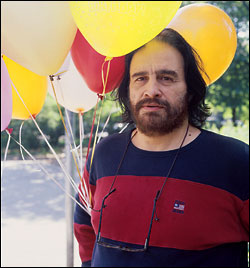
p.s., photo: David Mancuso, current idol of mine. The ballons represent imputed righteousness, despite his very "human"-looking appearance...his "teflon suit".
Thursday, March 02, 2006

David Brooks (for all you Harvard "kids")

Harvard-Bound? Chin Up

By DAVID BROOKS

I've got great news! You're young and you're smart and next year you're beginning college. Unfortunately, I've also got bad news. The only school you got into is Harvard, where, as Peter Beinart of The New Republic notes, students often graduate "without the kind of core knowledge that you'd expect from a good high school student," and required courses can be "a hodgepodge of arbitrary, esoteric classes that cohere into nothing at all."

But don't despair. I've consulted with a bevy of sages, and I've come up with a list. If you do everything on this list, you'll get a great education, no matter what college you attend:

Read Reinhold Niebuhr. Religion is a crucial driving force of this century, and Niebuhr is the wisest guide. As Alan Wolfe of Boston College notes, if everyone read Niebuhr, "The devout would learn that public piety corrupts private faith and that faith must play a prophetic role in society. The atheists would learn that some people who believe in God are really, really smart. All of them would learn that good and evil really do exist — and that it is never as easy as it seems to know which is which. And none of them, so long as they absorbed what they were reading, could believe that the best way to divide opinion is between liberals on the one hand and conservatives on the other."

Read Plato's "Gorgias." As Robert George of Princeton observes, "The explicit point of the dialogue is to demonstrate the superiority of philosophy (the quest for wisdom and truth) to rhetoric (the art of persuasion in the cause of victory). At a deeper level, it teaches that the worldly honors that one may win by being a good speaker ... can all too easily erode one's devotion to truth — a devotion that is critical to our integrity as persons. So rhetorical skills are dangerous, potentially soul-imperiling, gifts." Explains everything you need to know about politics and punditry.

Take a course on ancient Greece. For 2,500 years, educators knew that the core of their mission was to bring students into contact with heroes like Pericles, Socrates and Leonidas. "No habit is so important to acquire," Aristotle wrote, as the ability "to delight in fine characters and noble actions." Alfred North Whitehead agreed, saying, "Moral education is impossible without the habitual vision of greatness."

That core educational principle was abandoned about a generation ago, during a spasm of radical egalitarianism. And once that principle was lost, the entire coherence of higher education was lost with it. So now you've got to find your own ways to learn about history's heroes, the figures who will serve as models to emulate and who will provide you with standards to use to measure your own conduct. Remember, as the British educator Richard Livingstone once wrote, "One is apt to think of moral failure as due to weakness of character: more often it is due to an inadequate ideal."

Learn a foreign language. The biographer Ron Chernow observes, "My impression is that many students have turned into cunning little careerists, jockeying for advancement." To counteract this, he suggests taking "wildly impractical" courses like art history and Elizabethan drama. "They should especially try to master a foreign language as a way to annex another culture and discover unseen sides to themselves. As we have evolved into a matchless global power, we have simply become provincial on an ever larger stage."

Spend a year abroad. Shibley Telhami of the University of Maryland believes that all major universities should require a year abroad: "All evidence suggests this, more than any other, is a transforming experience for students that lasts a lifetime."

Take a course in neuroscience. In the next 50 years, half the explanations you hear for human behavior are going to involve brain structure and function. You've got to know which are serious and which are cockamamie.

Take statistics. Sorry, but you'll find later in life that it's handy to know what a standard deviation is.

Forget about your career for once in your life. This was the core message from everyone I contacted. Raised to be workaholics, students today have developed a "carapace, an enveloping shell that hinders them from seeing the full, rich variety of intellectual and practical opportunities offered by the world," observes Charles Hill of Yale. You've got to burst out of that narrow careerist mentality. Of course, it will be hard when you're surrounded by so many narrow careerist professors building their little subdisciplinary empires.

But you can do it. I have faith.

Tuesday, February 28, 2006

PZ quote re: Contemporary American Evangelical Christian Church mis-guidedness:


Almost every week it seems, I am out in the field, all over the country, and asking how Christianity is faring in whatever region I happen to be in. This is how it stacks up in many places: the mega-churches, almost all of them Pentecostal and offering mostly rock ‘n roll concerts on Sunday mornings, are doing well, but they have tapered off. They are almost all down about 10% or so from a few years ago. The mainline churches are about a third to a quarter full in most places, with some holding their own at 50 to 60% capacity. Our own Episcopal Church is generally failing to attract younger families. This is partly because families with small children are reluctant to entrust their children’s spiritual formation to our denomination, given the current reputation we have. (People usually don’t say this in so many words, but they are voting with their feet; and many old-line Episcopalians are telling me that their grown children are now attending PCA and other conservative churches.)

The other big thing to note is the mall-culture of our life. Everywhere I travel, there are new and bigger malls. I saw one off Route 95 in Florida yesterday, which is a new “destination” mall. It must have been the size of Altoona, Pennsylvania – all stuck in what was very recently a cow pasture. It was Sunday afternoon and the parking lot – more or less in the middle of nowhere – was jampacked, the entry ramps all bumper to bumper. Now these are mostly church-going people, or in that “catchment,” but they are being drawn in vast numbers to new malls everywhere. I think it is fair to say that the biggest competition we are facing, as committed Christians, is the tractor-beam of “shop till you drop.” It is all so empty – an easy target for any serious competitive ideology.

I feel the phrase “empty bromides” provides a clue to the Christian churches’ stalling. For we have stalled, in almost all sectors. Not fallen radically down yet, but stalled.

The preaching in most of these churches, from left to right, is not making contact with the felt needs of people. At least if numbers are any indication. This is because most ministers are speaking from the pulpit as if they are addressing an “in house” group of people who simply need to be motivated to get off their duff and go out there and win disciples. That is not the way to go about it. We need to realize that the people who still come to us Sunday mornings are not a team that needs a cheerleader, but rather a wounded group of sufferers who need to hear the re-animating Word of comfort in God’s Grace and forgiveness.

I noticed this yesterday in a wonderful parish church. I just talked about how it is that people are able to recover from terrible discouragements: They don’t need guilt to motivate them, or cheerleading. They need Love. They need, pure and simple, the strengthening Word that Christ is with them at their point of need. People seemed to line up afterwards. “That was for me”, they said. “You were speaking about my son, my mother, my former spouse…” They don’t need Tony Robbins. They need a Comforter and a Savior.

We are treating congregations as if they are a football squad to be readied for the second half. There is no Balm in Gilead there. No wonder the people who still come are discouraged and so many of our churches are not growing. I almost wonder whether the preachers themselves are in touch with their own need. Can a preacher who tries to exhort his hearers into action really be holding any wisdom about his own problems? We surely are, each of us in public ministry, just sinners and needy weak vessels like everyone else. But that does not seem to be coming through.

“Empty bromides”! And Ferrigno’s book – and note its timeliness in reference to real events that are happening right now, the “cartoons” controversy, which just took 15 lives in Nigeria over the weekend, and the burning of Christian churches, and the dire life-threatening attack on Bishop Ben Kwashi’s family – names it. With the unbeatable pull of the mall (barring a stronger pull from the Rock of Ages, or the Holy Qu’ran, for that matter), Christian churches that offer little of weight and deep comfort to their listeners will go under, slowly. The people won’t come. The people are not coming.

Preachers, dear colleagues, and those who believe in preachers: Look to yourselves, look to your own Achilles heels and your own points of need. Then you can speak with feeling and connection to the enervated selves who are looking up to you, in arithmetically decreasing numbers, on Sunday mornings.

Love,
PZ

Sunday, February 26, 2006

Excellent NY Times article on Redeemer Presbyterian Church (Feb 26, '06):


Preaching the Word and Quoting the Voice

By MICHAEL LUO

In the twilight of the biggest snowstorm in New York City's history, the pews of a rented Baptist church on the Upper West Side of Manhattan were packed for the Rev. Timothy J. Keller's fourth sermon of the day.

The 600 or so who braved the snow for the evening service got what they had come to expect — a compelling discourse by Dr. Keller, this time on Jesus' healing of the paralytic, that quoted such varied sources as C. S. Lewis, The Village Voice and the George MacDonald fairy tale "The Princess and the Goblin." It was the kind of cogent, literary sermon that has helped turn Dr. Keller, a former seminary professor whose only previous pulpit experience was at a small blue-collar church in rural Virginia, into the pastor many call Manhattan's leading evangelist.

Over the last 16 years, Dr. Keller's church, Redeemer Presbyterian, has swelled to 4,400 attendees, mostly young professionals and artists who do not fit the prototypical evangelical mold, spread out across four different services on Sundays. Although Dr. Keller, 55, is hardly a household name among believers outside New York — in part because he has avoided the Christian speaking circuit — his renown is growing in pastoral circles and in the movement to establish or "plant" new churches, a trend among evangelicals these days.

Pastors from around the world are beginning to come in a steady stream to New York City to glean what they can from Dr. Keller and Redeemer. Their goal is to learn how to create similarly effective churches in cosmopolitan cities like New York, which exert outsize influence on the prevailing culture but have traditionally been neglected by evangelicals in favor of the suburbs.

"We're not giving them a turnkey template," said Dr. Keller. "What we're saying is, 'There's lots of overlaps between our big city and your big city. Some of these things you will use. Some of these you will discard. Some of these you will adapt.' "

Believing new churches are the best way to produce new Christians, evangelicals are making a major push to start new churches around the world, said Edmund Gibbs, a professor of church growth at Fuller Theological Seminary outside Los Angeles. But only recently have some evangelicals begun to turn their focus to urban centers.

Dr. Keller "has grasped the strategic significance of the city, of the urban culture and the need to engage that very diverse culture at every level," he said. "Our culture is urban-driven."

In New York City, Redeemer has become the central training ground for anyone planning to start a church in the metropolitan area, whether among Guyanese immigrants in Queens or streetwise youths in the Bronx.

Since 2000, when it established its own training center for "church planters," as they are called in evangelical parlance, Redeemer has helped start more than 50 churches in the city, from faith traditions and denominations as diverse as Assemblies of God, Lutheran and Southern Baptist. In addition, it has helped found 17 "daughter churches" of its own Presbyterian denomination in communities like Williamsburg and Park Slope, Brooklyn; Astoria, Queens; and Hoboken, N.J.

Meanwhile, so-called city-center churches modeled on Redeemer — also attracting audiences of professionals and creative types — have sprung up in places like Boston, Washington, San Francisco, Berlin, London and Amsterdam. The churches emulate much of Redeemer's approach, including its attitude of embracing the city and its focus on the Christian message of grace and redemption, which Dr. Keller argues has been muddled in many churches.

The Rev. Stephen Um, whose church in Boston, Citylife, began four years ago and now attracts about 500 people every Sunday, said he and other pastors had embraced Dr. Keller's emphasis on delving into the prevailing culture almost as much as into the biblical text. Along these lines, Dr. Um is just as likely to cite a postmodern philosopher like Richard Rorty or Michel Foucault in his sermons, as he is, say, Paul's Letter to the Philippians.

"This is Tim's thing," said Dr. Um. "He said, 'You need to enter into a person's worldview, challenge that worldview and retell the story based on the Gospel.' The problem is evangelicals have always started with challenging the worldview. We don't have any credibility."

Redeemer meets in three facilities: the Ethical Culture Society and the First Baptist Church on the Upper West Side, and Hunter College on the Upper East Side.

Unlike most suburban megachurches, much of Redeemer is remarkably traditional — there is no loud rock band or flashy video. What is not traditional is Dr. Keller's skill in speaking the language of his urbane audience. On the day of the snowstorm, Dr. Keller tackled a passage from the Gospel of Mark in which the friends of a paralyzed man carry him to Jesus. At least initially, however, Jesus does not heal the man but offers him a puzzling line about his sins being forgiven.

Part of the point, said Dr. Keller, is people do not realize that their deepest desires often do not match up with their deepest needs.

"We're asking God to get us over that little hump so we can save ourselves," he said. "It doesn't occur to us that we're looking for something besides Jesus to save us."

Observing Dr. Keller's professorial pose on stage, it is easy to understand his appeal. While he hardly shrinks from difficult Christian truths, he sounds different from many of the shrill evangelical voices in the public sphere. "A big part is he preaches on such an intellectual level," said Suzanne Perron, 37, a fashion designer who is one of many who had stopped going to church before she discovered Redeemer several years ago. "You can go to Redeemer and you can not be a Christian and listen to that sermon and be completely engaged."

Dr. Keller shies away from the label evangelical, which is often used to describe theologically conservative Protestant Christians like him, because of the political and fundamentalist connotations that now come with it. He prefers the term orthodox instead, because he believes in the importance of personal conversion or being "born again," and the full authority of the Bible.

An important lesson that Dr. Keller said he had tried to convey to other pastors is that the hard sell rarely works in the city. Becoming a Christian in a place like New York, he said, is more often the product not of one decision but of many little decisions.

"One decision might be Christianity is more relevant than I think," he said. "Or, here's two Christians that I don't think are idiots."

It was the Rev. Terry Gyger, an official with the church-planting arm of the Presbyterian Church in America, an Atlanta-based evangelical denomination, who persuaded Dr. Keller to come to the city to start a church in the late 1980's. At that point, Dr. Keller was a professor at Westminster Theological Seminary and the part-time head of the Presbyterian Church's mercy ministries.

His only previous pastoral experience was at a Presbyterian church in Hopewell, Va., a struggling factory town. Under Dr. Keller, the congregation grew from 90 to roughly 300 in nine years, but that was in the Bible Belt, of course, not New York City.

"I just saw in him the raw ingredients," Mr. Gyger said. "I felt he had the inquisitiveness. He had the intellectual capital. He was very articulate, even though he had not had a lot of preaching experience in the big pulpits of our denomination."

Even so, Dr. Keller was offered the post only after two other candidates turned it down. Within a year of its founding in 1989, however, Redeemer had grown from 50 people to more than 400. By the end of 1992, the church had swelled to more than 1,000 people. Since then, it has continued to grow steadily, all while renting space in several locations.

Sept. 11 proved to be a defining moment for the church. On the Sunday after the terrorist attack, more than 5,000 people showed up. So many people packed the church's Sunday morning service that Dr. Keller called another service on the spot, and 700 people came back to attend. While attendance returned to normal in other churches after several weeks, Redeemer kept attracting about 800 more people a week than it had drawn before the attack.

"For the next five years, I would talk to people about when they joined the church, and they said right after 9/11," Dr. Keller said.

After the attack, the church also began to increase its training for those working to found churches. His church's main goal, Dr. Keller said, is to teach pastors how to truly love the city, rather than fear its worldly influences. Unlike many evangelicals, Dr. Keller advocates an indirect approach to change.

"If you seek power before service, you'll neither get power, nor serve," he said. "If you seek to serve people more than to gain power, you will not only serve people, you will gain influence. That's very much the way Jesus did it."

As a result, one of Redeemer's hallmarks has always been its focus on charity, something it emphasizes in its training of urban pastors. It operates a program called Hope for New York that arranges volunteer opportunities for people from Redeemer with 35 different partner organizations. Last year, 3,300 people from the church volunteered their time.

A looming question for Redeemer, though, is how much of what Dr. Keller and his team have built can be maintained when he ultimately exits the stage. When he was out for several months in the summer of 2002 while undergoing treatment for thyroid cancer, attendance dipped noticeably.

For now, the faithful of Redeemer do not have to contemplate that situation. Dr. Keller continues to preach nearly every Sunday, dashing back and forth to its different rented facilities and putting in unrelenting 80-hour work weeks.

On the night of the snowstorm, Dr. Keller closed his monologue with a moving riff on Jesus' love in spite of humanity's flaws, and a quote from C. S. Lewis, one of his favorite writers: "The hardness of God is kinder than the softness of men, and his compulsion is our liberation."

And then he prayed for his congregation and his city.

Saturday, February 25, 2006

New Mike Fernandez comic (Mike's "interpretation of John Zahl's version of the last supper.")!!!


"This is my interpretation of John Zahl's version of the last supper. You figure out who the apostles should be. Is Blowfly playing Judas? Maybe Don Rickles? Who knows. Nipsey Russell IS Peter. Greenspan should be obvious"...MF

Friday, February 24, 2006

David Bagchi quote:


(taken from his unpublished essay, The function of Luther in the New Perspective on Paul, pp. 3-4. This is a John Camp exclusive!)--

Dunn's second charge against Luther is that he understood 'justification by faith in distinctively individualistic terms', the gospel being for every one 'in his or her own individuality'. In Dunn's view this error has graver consequences than faulty exegeseis alone:

"One might also note its outworking in the individualism and privatization of religion which was such a feature of the political philosophy which dominated the 1980s in the UK".

Warming to his theme, Dunn goes on to include within Luther's legacy not just Margaret Thatcher but also the Third Reich and the apartheid regime in South Africa. There is no mention here of the Enlightenment or political economy; or that Hitler and many of his lieutenants were Roman Catholics, not Lutherans; or that white supremicist Afrikaaners in South Africa were Calvinist, not Lutheran. Clearly, in Dunn's view, Luther has a lot to answer for as a result of his allegedly individualistic understanding of Paul's doctrine of justification by faith.

...Dunn's charge relates not to Luther's understanding of faith but of righteousness.