Friday, February 17, 2006

Bonnie Zahl on Imago Dei:


by Bonnie Zahl

As a researcher in psychology and religion, I study religion from a
psychological perspective (and vice versa, albeit less frequently)—not
to disprove or explain away religion, but to draw parallels between
religious experiences and psychology. One idea that has interested me
both theologically and psychologically is the idea of imago Dei, and
the implications of this idea on our understanding of humans
(particularly Christians.)

There are plenty of things to say about imago Dei, but I will briefly
highlight only one. The Bible says that we were made in the image of
God (Genesis 1:27); no Christian can refute that! But the debates get
heated when we start to talk about the degree to which we retain (and
recover) that image of God, fallen creatures that we are. Rather than
grossly over-generalizing different Christian traditions' view of the
degree to which we retain (or recover) the image of God, I will
outline some research showing that God is (sometimes, and in some
ways) made in the image of man.


First, a clarification of terms: in psychological research, God concept refers to the cognitive
or theological understanding of God. God image, on the other hand, refers
to the emotional or affect based understanding. Discrepancy between
the two can lead to resentment, anger, guilt, or anxiety.
Psychologists are not always consistent with these terms, but often
their methodology makes it clear whether they are tapping into the God
concept ('head knowledge') or God image ('heart knowledge').

Piedmont, Williams, and Ciarrocchi (1997) conducted a study in which
they compared individuals' self-ratings of their personality and their
ratings of what they think Jesus' personality is like (God concept).
Using validated and comparable personality measures, participants (68%
Catholic, 25% Protestant, 7% no religious affiliation) rated their
personality and then their view of Jesus' personality on the scales
(some did it the other way around to counterbalance any order
effects.) Below is a section describing the personality profile
generated by subjects, published in the Journal of Psychology and
Theology:

Based on the psychological meanings of the Adjective Check
List scales (Gough & Heilbrun, 1983), a personological sketch can be
drawn of Jesus' personality. Overall, the results presented here
portray Jesus to be imaged as a caring and concerned individual who
yet maintains a degree of detachment from those around him. In some
ways, this profile is reflective of the self-actualized person as
described by Maslow (1970). The acceptance and compassion for others
is balanced by a need for privacy; he has a concern to bring others
into harmonious relationships while not always encouraging stereotypic
roles and values. No doubt the historiographic profile that emerged
here reflects a Jesus who is perceived to have a complex inner
world.


Piedmont et al.'s study also found that subjects' one's own
personality is associated with their perceptions of Jesus'
personality. Specifically, multiple regression analysis indicated that
subjects' collapsed (i.e. overall) self-ratings were most predictive
of Jesus' level of Conscientiousness. The study also found that 11% of
the variability in ratings of Jesus was accounted for by subjects'
self-ratings, which is a moderate-sized association. Further analyses
revealed that it was self-rated dimensions of Extraversion, Openness,
and Religiousness that constituted the overlap with ratings of Jesus.
In other words, variations a person's self-ratings of those three
dimensions accounted for 11% of the variations in ratings of Jesus
(i.e. they overlapped).

Despite 'knowing' the person of Jesus (as opposed to a more abstract
person of God) biblically and catechistically, our perception of
Jesus' personality is dependent on our own personalities. It is
interesting that in this sample (which, admittedly, is not evenly
distributed amongst the Christian traditions), it was self-ratings of
religiosity that was correlated with ratings of Jesus'
Conscientiousness, not one's own level of conscientiousness. It is
unclear why this is the case, but is noteworthy because it suggests
that religiosity is a stronger predictor than simply one's own
dispositional sense of duty or level of self-control. Subjects were
not just projecting themselves; they were seeing Jesus as what they
thought they ought to see Him as, and the more religiously preoccupied
they were, the more pronounced was their rating on Jesus' level of
Conscientiousness.

Given both the broad and more detailed findings described above, their
conclusion highlights what most interesting about this study:

In many ways this profile reaffirms biblical presentations
of Jesus. That such perceptual consistency is found within our
relatively heterogeneous sample underscores the power of these New
Testament images. Yet despite such influence, the results
show that individuals do not veridically internalize these portrayals.
Perceptions of Jesus are significantly related to the needs and
temperaments of the individuals themselves.


I am not proposing that God is simply Freud's idea of an "idealized
father-figure". But one thing is certain: empirical evidence shows
our tendency to do what Feuerbach saw as a criticism of Christianity:
"In the object which he contemplates, therefore man becomes acquainted
with himself; consciousness of the objective is the self-consciousness
of man. We know the man by the object, by his conception of what is
external to himself." Feuerbach said that when Christians talk about
God, they are really talking about themselves and their own ideas, and
he was not entirely wrong. When we talk about Jesus, we are also
talking about ourselves. Simply put, we sometimes unconsciously
project our own characteristics (particularly those that are
religiously relevant) onto Jesus.

This brings me to the question of whether our sense of control over
our spiritual lives also affects how we see God. It is possible that
there is a direct proportional relationship between the extent to
which we think/ experience ourselves to be able to effect meaningful
change in God's level of affection for us, and the extent to which we
believe that His level of affection actually depends on us? In other
words, if we have regularly experienced efficacy in "cooperating" with
God, we will come to think that His affirmation and continual love
depend on us. Conversely, if we do not think we can effect meaningful
change in God's level of affection for us, we believe that His level
of affection does not depend on us. "For I am convinced that neither
death nor life, neither angels nor demons, neither the present nor the
future, nor any powers, neither height nor depth, nor anything else in
all creation, will be able to separate us from the love of God that is
in Christ Jesus our Lord." (Romans 8:38-39)

Admittedly there are problems with psychology as an approach; it is
reductionist, social psychology renders all experiences as the result
of 'nurturing', how can we study the supernatural using natural
methods, and so on. Certainly psychology and theology are two
distinct disciplines, with different methodologies and epistemologies.
Psychology cannot say much about the supernatural God and His ways,
but it can say plenty about the natural man and his ways. How much of
the fallen (and redeemed) man is in God's image? We do not know; but
we do know that in our fallen (and redeemed) state, we continue (to
one degree or another) to make God in the image of man. This should
serve as a cause for our humility over our own condition.

Reference:
Piedmont, R.L., Williams, J.E.G., & Ciarrocchi, J.W. (1997).
Personality correlates of one's image of Jesus: Historiographic
analysis using the five-factor model of personality. style="font-style:italic;">Journal of Psychology and Theology
,
25, 367-373.

Wednesday, February 15, 2006

Peter Kay's Phoenix Nights (and some random NY Mets memories)--


Are you familiar with Peter Kay? Unless you're British, the answer is probably "no". That's okay, it's not too late. Peter Kay is a much beloved Northern English comedian from a town near Manchester called Bolton (not exactly SW1). He dropped out of school at the age of 15 or 16, and, after working some awful jobs, applied for enrollment at an acting school, where he met former Met, Mookie Wilson. His application was full of untrue information, but, as the school didn't perform (get it?) any background checks, they accepted him. Today he is probably Northern England's favorite comedian, but he remains completely unknown to US audiences, (not unlike Tyler Perry is to the white community in the States). Well, I'm hoping to help change that (like Doc Gooden changed the way people think about looking like rapper Jay-Z).

I was first taken in by his genius (yes, I think his stuff to be truly remarkable), when I caught a single episode of Phoenix Nights last year in the Wycliffe Common Room. They were speaking English, but I couldn't understand a word (sort of like hanging out with Jose Canseco). I still, to this day (and having watched both series multiple times), have to watch the show with the sub-titles turned on. I don't want to steal another great series' thunder, or reduce the uniqueness of Phoenix Nights unhelpfully,... but one can safely compare this show to The Office as being the Northern English equivalent. Darryl Strawberry.

Phoenix Nights stars Peter Kay, wheel chair-bound owner of a drinking club (a dying, if not dead, pub alternative, traditional only to the North of England, though they are all mostly a memory at best these days) called The Phoenix. I believe it was either Met's pitcher Bobby Ojeda or side-armer, Dan Quisenberry, who first coined the very applicable phrase: "Can anything good come out of Nazareth?" In keeping with that sentiment, this show, Phoenix Nights, has a very low anthropology, meaning it's very human, with lots of the important content of each conversation left unspoken. Not one person in the entire 12 episodes is more than mildly attractive by media standards. This note-worthy ugly, forgotten-ness of the lives and people portrayed in the show (all of it centers around this club and their attempts to land more customers, despite somewhat stiff competition from the other local club in Bolton, Banana Grove) opens the door for endless, amazing, layers of jokes. Gary Carter. But the show also has a heart and is very touching at points. A little bit of love goes a long way in Bolton. Episode 4 has Peter Kay falling in love. Nothing quite like wheel chair romance to twist the emotions!

The show is only available on UK format (PAL) DVDs though. Many DVD players able to play both US and English DVDs, but check before you get the discs home. I write this in hopes that many of you will discover this most amazing little piece of British Television. I love the photo above, which shows Peter Kay in character, wheeling his way down the Blackpool boardwalk. You can see the "famous" Blackpool Tower behind him in the distance. If you are willing to trust me with a sincere recommendation (I would not, for instance, sincerely recommend the band Sparks, though I love them!), then get yourself a copy of Phoenix Nights. I'm sure it can be tracked down online (as is also the case with Lenny Dykstra, aka Nails' Upperdeck rookie card).

If you like it, there's a lot more Peter Kay out there for you (numerous stand-up concerts, an earlier skit show called The Peter Kay Thing, and some other stuff as well).

Best, JZ

p.s., I met Keith Hernandez and Dr. Ruth once backstage at David Letterman.

Tuesday, February 14, 2006

Ashley Null (a.k.a., "A. Null") on Cranmer:


"According to Cranmer’s anthropology, what the heart loves, the will chooses, and the mind justifies. The mind doesn’t direct the will. The mind is actually captive to what the will wants, and the will itself, in turn, is captive to what the heart wants.

"The trouble with human nature is that we are born with a heart that loves ourselves over and above everything else in this world, including God. In short, we are born slaves to the lust for self-gratification, i.e., concupiscence. That’s why, if left to ourselves, we will always love those things that make us feel good about ourselves, even as we depart more and more from God and his ways.

"Therefore, God must intervene in our lives in order to bring salvation. Working through Scripture, the Holy Spirit first brings a conviction of sin in a believer’s heart, then he births a living faith by which the believer lays hold of the extrinsic righteousness of Christ."

A letter from the Bishop of NH, Gene Robinson:

February 13, 2006

Brothers and Sisters in Christ,

I am writing to you from an alcohol treatment center where on February 1, with the encouragement and support of my partner, daughters and colleagues, I checked myself in to deal with my increasing dependence on alcohol. Over the 28 days I will be here, I will be dealing with the disease of alcoholism-which, for years, I have thought of as a failure of will or discipline on my part, rather than a disease over which my particular body simply has no control, except to stop drinking altogether.

During my first week here, I have learned so much. The extraordinary experience of community here will inform my ministry for years to come. I eagerly look forward to continuing my recovery in your midst. Once again, God is proving His desire and ability to bring an Easter out of Good Friday. Please keep me in your prayers and know that you are in mine.

Your Brother in Christ,
+Gene

Monday, February 13, 2006

Ed Carson reflects upon the "Footsteps in the Sand" poem:


"John, when I looked back on my life and saw only one set of footprints in the sand, I realized that the Nintendo 64 had been carrying me the whole time!"

Sunday, February 12, 2006

Mark Mattes reviews Paul Zahl's "A Short Systematic Theology":


A Short Systematic Theology. by Paul F. M. Zahl. Grand Rapids, MI: Wm. B. Eerdmans, 2000. viii and 109 pages. Paper. $12.00.

With this delightful gem, Zahl, dean of the Cathedral Church of the Advent (Episcopal) in Birmingham, Alabama, offers a concise summation of the gospel and its impact on life, a work appropriate for personal or group study. His book is decisively Protestant, deeply sensitive to the German Lutheran and Reformed traditions. He builds on his earlier interests in The Protestant Face of Anglicanism (Eerdmans, 1998). Zahl's approach to theology is nonspeculative, narrative-based, brief but meaty and intesnse, sensitive to contemporary pop culture and yet markedly scholarly. Here one will find developed decisive Lutheran themes such as the practical nature of theology, the hiddenness of God in both nature and the cross, Jesus as the friend of sinners, the inability of humanity to escape from the impurity of the heart, sin as self-justification, and the hiddenness of the Spirit's work in the community of the church. In sum, Zahl positions his own work in relation to that of Luther's: "For Luther the unifying principle was God's justification of sinners through Christ's atonement, with the resulting freedom of the Christian. With that principle always in view, the Reformer never needed to organize the rest of his thought. This is the essential model for all theology that is free" (p. 84).

The following points are decisive for Zahl's theology. While God can only be known fully in Christ, God is not divorced from nature - including its sometimes-unfriendly ways toward humanity. Yet, from Christ, we discern that God's will for humanity is a liberation of life - God restructures life from that of a "play of marionettes into life as action and will" (p. 11). Jesus pointed beyond the externals of Jewish legal obedience to the will and its impulses as corrupt, indeed so injured that human agency is unable to heal it (p. 16). Indeed, as an expression of divine love with his gracious invitation to the publicans and tax collectors, Jesus surpassed the law with its demands (p. 19). While this hospitality led Jesus to the cross, such victimization is not beyond God's means of working sub contrario, the "opposite of God's reasoned attributes such as strength and authority and life" (p. 28) to redeem and renew humanity. While Christians currently live "in the presence of Jesus' absence" (p. 35), since Jesus is raised from death and ascended to heaven, we are permitted a direct, nonmediated relation to God (p. 37) and led by the Spirit who we are unable to tame (p. 30). Christ is our "substiture" and as such brings us sinners to God (p. 60). Christian theology is christologically construed, and thus we wee God as Trinity, yet this doctrine is "too intellectual to fuel the Christian movement" (p. 73), which is then properly fueled by the Spirit's agency in us.

This book gets to the core of Christian beliefs quickly and is also fully confident that the historic Protestant tradition speaks to today's concerns. It could be tackled by adult groups in congregations, pastors' study groups, and introductory college or seminary classes. Zahl's is a refreshing voice thanks to his confidence about the gospel.

John Passmore quote:


from 'The Perfectibility of Man' (pp. 90-91)

"Augustine's theology is certainly theocentric, then, in so far as he firmly maintains that nothing but God ought to be loved for its own sake. There is no love 'left over', as it were, to be directed towards the world, or towards our neighbours, or towards ouselves. But this is not inconsistent, according to Augustine, with my loving myself because self-love, rightly understood, is not a distraction from loving God, but is equivalent to it. 'The love wherewith a man truly loves himself is none other than the love of God. For he who loves himself in any other way is rather to be said to hate himself.' For a man to love himself in this sense, to seek his own true good, is to cherish the image of God within, to love God. To raise the question, then, whether Augustine's theology is fundamentally egocentric or fundamentally theocentric is to ask a question which cannot be answered; for on his view a theocentric and an egocentric theology, properly understood, will coincide.

"Luther will have no truck with such concession to self-love. His theology is resolutely theocentric. Those who truly love God, he says, 'submit freely to the will of God whatever it may be; they seek absolutely nothing for themselves'. 'Love your neighbor as yourself' does not imply, as Augustine had also recognized, 'you ought to love yourself'; it rests only on the observable fact that every man does love himself; it is the equivalent of Jesus' other precept: 'All things whatsoever ye would that men should do to you, do ye even so to them.' Men ought not to love themselves. By hating themselves, they can both love God and love their neighbors (b/c love of self exists in opposition, not accordance, to them. - JZ). For the medievel doctrine, as expressed, for example, by Bernard of Clairvaux, that men can attain to perfection by beginning from self-love and gradually arising above it, Luther has nothing but contempt. According to Luther, then, the sign that a man loves God with his whole heart is that he hates himself (in Cranmer's words: "miserable offenders,...not worth so much as to gather the crumbs from under Thy table,...there is no health in us..." - JZ), and is prepared, even to damnation, wholly to submit himself to God's will - not that Luther believed that such a man would be damned(!!!2 Corinth 7:10)! Augustine, in contrast, saw as the perfected man one who love himself, in the 'higher' sense of self-love, but who loved nothing in the world for its own sake. They agree, however, on the crucial point; neither kind of perfection is possible to men."

Saturday, February 11, 2006

Jay Dee dead at 32

You may remember the earlier post about my eager anticipation of this guy's album, Donuts, from Nov. 15th. He was truly an artist, and, fortunately for us, was also extremely prolific. He leaves much incredible music in his wake, but his death (especially at such a young age) is a real tragedy. --JZ

Here follow's his obituary from pitchfork.com, though I'm sure we'll be hearing more about him in the weeks to come:

"James Yancey, the man known to the hip-hop world as Jay Dee and J Dilla, passed away this morning at his home in Los Angeles. He was 32 years old.

"While the cause of death has yet to be confirmed, Yancey had recently suffered from kidney problems. His latest album, Donuts, released on Tuesday, was partially recorded in the hospital using a portable studio.

"Jay Dee began his career as a member of the Ummah, A Tribe Called Quest's production team. He would go on to make beats for Common, Busta Rhymes, De La Soul, Pharcyde, and many others. He was a member of Slum Village, collaborated with Madlib as Jaylib, and put out several acclaimed solo albums, mixes, and singles. Pharrell Williams once called Jay Dee his favorite hip-hop producer.

"Peter Adarkwah, the founder of BBE Records, which released Jay Dee’s 2001 solo album Welcome 2 Detroit, gave the following statement: 'Jay was one of my favorite Hip-Hop producers of all time. His passion for music was a rare thing amongst people in the music industry. His music and presence will be sorely missed for many years to come.'"

Friday, February 10, 2006

Kinks anyone?


by David Zahl

I've never been so excited for Valentine's Day in my life - after years of waiting, Whit Stillman's Metropolitan finally comes out on Criterion Collection DVD! What's more, on the same day, we also get the first ever solo album from Ray Davies (of the Kinks)! To celebrate, I've put together a list of my 17 favorite lesser-known Kinks songs:

1. Sweet Lady Genevieve – Preservation Act 1. From the period where the whole band had long hair and beards and no one listened to them.
2. This Is Where I Belong – Face to Face (single). I’m pretty sure Ray wrote this after the band got mysteriously banned from the States in 1965.
3. Shangri-La – Arthur. The first of many British Empire-themed rock operas from Ray. Cynical and sentimental at the same time, with great drumming.
4. This Time Tomorrow – Lola vs. The Powerman and the Moneygoround, pt. 1. I suspect this song sums up everything we need to know about “life on the road”. I never understood why Ray and Dave stopped singing together like they do on this song/album.
5. Deadend Street – Face to Face (single). With the exception of this song, the working-class-hero bit is the least interesting side of Ray's persona.
6. Starstruck – Village Green Preservation Society. Hard to pick only one from this album. No one ever talks about how awesome the Kinks’ back-up vocals were.
7. It’s Alright – The Kinks (b-side). Also, they sure could rock!
8. Nothing in This World Can Stop Me Worrying About My Baby – Kinda Kinks. Otherwise known as the song from Rushmore. I always wonder how the super-long title came across in 1964.
9. No More Looking Back – Schoolboys in Disgrace. Frampton Comes Alive was only two years away, and you can tell. In a good way…
10. A Rock n Roll Fantasy – Misfits. Worth it if only for the Beach Boys-style breakdown toward the end.
11. Til The End of the Day – The Kink Kontroversy. In the early days, people would accuse Ray of shamelessly recycling the “You Really Got Me” riff. But I don’t see how you could listen this song and fault him for it.
12. Animal Farm – Village Green Preservation Society. I have no idea what he’s talking about here, but it’s really English and really catchy.
13. Something Better Beginning – Kinda Kinks. My father’s favorite Kinks song. Note the brevity.
14. No Reason – Something Else. Is this bossanova? I don’t know. But even if it is, I love it.
15. Art Lover – Give The People What They Want. Latter-day Kinks. Weird and slightly perverted but clearly fantastic.
16. Autumn Almanac – Something Else (single). I just really like the way Ray sings the word, “almanac”, stretching it into four syllables.
17. I’m On an Island – The Kink Kontroversy. JAZ’s favorite Kinks song. Probably their most successful foray into calypso.

While I’m at it, here are 9 of my favorite well-known Kinks songs:

1. Waterloo Sunset – Something Else. As close to perfection as it gets.
2. All Day, All of the Night – The Kinks. Best of the riff-songs, no question.
3. Tired of Waiting for You – The Kinks. Sometimes it takes girls a long time to get ready.
4. Better Things – Give The People What They Want. Sappy but terrific.
5. David Watts – Something Else. More inspired back-up vocals.
6. Days – Village Green Preservation Society (single). More inspired sentimentality.
7. Sunny Afternoon – Face to Face. I heard he wrote this in twenty minutes.
8. Apeman – Lola vs The Powerman and the Moneygoround, pt. 1. I can’t think of any other band that pulled off the mean/silly combination so well so often.
9. Celluloid Heroes – Everybody’s in Showbiz. Why do people sing about Rudolph Valentino so much? Who was he?

Wednesday, February 08, 2006

On Prescription a.k.a., "Don't Tell Me What To Do!" (the first photo below features the lovely Deirdre, as seen in the Warhol Museum, Pittsburgh.)

My friend Will (author of the White Hall blog) recently raised the following question about Prescription:

"Also: what's the problem with something's being prescribed? Jesus prescribed all kinds of things. Preach the gospel, go in peace, sin no more, baptize, make disciples, fear not, do this, etc. etc. etc."

Here's my attempt at answering this question:

Dear Will,

the short answer to your question on prescription usually runs along the following lines: Prescription does not provide a method for bringing about the thing it requires, but, rather (to quote Romans 7) it "increases the trespass," "making sin utterly sinful". It tells the car where to go, but it doesn't put any gas in the tank.

Where there is prescription, there immediately comes the opposite of the thing the prescription intended, and this is what it means for the will to be bound. Knowing better does not equal doing better according to Paul (foolishness to the Greeks), and, if anything, it increases the doing of worse, or, at a minimum, puts the doing of "worse" into the perspective of not being as good as the standard fulfilled.

So the Law (as prescription) brings rebellion and penitance. Paul calls this "the proper use of the law" in 1 Timothy 1: 8, 9. Jesus further clarifies the law in the Sermon on the Mount in his antitheses, by showing that prescription exposes an impossible angling of the heart, one that mere behavioral adherence cannot meet the standard of (i.e., suddenly adultery is not a behavior, but a motive, etc. That portion of the Sermon on the Mount climaxes with: be ye perfect therefore as your Father in heaven is perfect -- good luck!) -- This exact issue is currently being discussed on in the thread under the post called "An Insight from Jeff Dean"; it's a far from settled hermeneutical matter, but what I describing here is the basic sort of Luther 101 position on the matter. I hope those of you who are sympathetic to such a read, can help me to tighten this us if you think I've gone far astray here. Adherants of this position tend to think the bible must be interpreted and/or read through the lens of the Cross if sense is to be made of its text. You get the drift.

Anway, as a result of this awful conundrum known as the human condition post-Fall,...(drum roll) "thanks be to Jesus Christ" who died to on the behalf of us sinners who know ourselves as sinners in light of the fact that we cannot set the record straight in the way the Law demands through our own efforts (i.e., works based righteousness), and God cannot commune with anything less. According to this view, prescription is always basically a big set-up for "repent and believe the Gospel".

If Jesus' command, and any other commandments in the Bible (especially given the nature of human reception of any kind of command as illuminated by Paul in Romans 7 famously) could simply be followed in the way that their imperative nature requires, then why did Jesus have to die, and so brutally at that? In what sense is Grace really grace, and forgiveness really forgiveness and mercy really mercy and love really love if those qualities are not a response to something that requires them? In the same vein, tolerance and love are obviously not the same thing.

Furthermore, if the law can be fulfilled by us, then the Bible often starts to be interpreted as a rule book of some sort, a ladder for us to climb (rather than the story of one who came down and then climbed up on our behalf while we were busy doing our own thing).

Obviously, for those who buy into this read of prescription, the implications are pretty major for how you come to understand the Christian life; the Gospel has to do with a lot more than just conversion, it also has to do with sanctification. Salvation and sanctification become seemingly identical in the view of some. The message one preaches to the Christian is no different than the message one preaches to the non-Christian.

Some Christians try to draw different distinctions as to just how far-reaching the implications of this understanding travel. Does this relationship to the Law altar at the point of conversion? Calvin says yes. Most Christians say yes. Luther appears (at least in his notable Commentary on Galatians, which is the thing that Wesley was listening to when his heart was "strangely warmed") to basically say "No", though that's been well disputed. W. Elert argues strongly against any other interpretation of Luther, and makes for a pretty fun read. My favorite, shared by many, is Gerhard Forde's "On Being a Theologian of the Cross". It is short and really worth reading. I can't plug it enough. Others try to draw lines between different kinds of prescription, that some can be adhered to, while others can't. It's basically the history of Protestant denominational break-down.

The most commonly lobbed criticism of this view that Prescription only works in this strange back-handed manner is "antinomianism", which suggests that being set free from the Law's prescriptive quality through Christ's Cross results in dangerous anarchic freedom, and of the most immoral kind at that. This criticism was not stranger to Paul himself: "Should we sin more that grace may abound?"

For what it's worth, no Lutheran accepts this charge of anti-nomianism ("Certainly not!"), and there are many important and note-worthy arguments, Scriptural verses and passages, plus experiences and testimonies that suggest anti-nomian behavior is not a necessary consequence of such an understanding of the Cross in its relationship to the Law. Some even suggest that such anti-nomian behavior is an impossibility given the profound, heart-changing nature of Grace, that, to the extent it has sunk in, nothing but fruit can be born of it.

It is indeed the case that, to go all the way with such an interpretation of the Gospel is pretty radical; it puts a lot onto the shoulders of Jesus for sure! My father's tag line is: "Low Anthropology, High Christology". Personally, my leanings go pretty much all the way with this one, to the displeasure of many perhaps. Christians seem often to hate this understanding of Christianity. Non-Christians (to the extent they identify with the Prodigal son) tend to love it (i.e., it's irresistable)!

For what it's worth, I think Cranmer bought this view pretty whole-heartedly and my favorite Articles 9, 10, and 11 epitomize this type of thinking. They are especially note-worthy b/c they mention "sin that persists in the regenerate" in almost back-to-back succession with a will that is bound (i.e., not free), and justification by faith in Christ.

Obviously the whole issue gets me pretty excited. But I do hope this helps to lay out the "prescription" matter (as many like me see it anyway) in fairly clear terms.

Guess this isn't such a short answer after all. Maybe I'll post it. Yeah, I think I will, Will. Thanks for asking.

Best, JZ

Is this what comes to mind when you hear the word "cult"?


click for "an explanation" of sorts

I love the funny people in the background! JZ

Monday, February 06, 2006

Moltmann quote (preceded by some criticism of "The Emerging Church"):


The following excerpt struck me as having helpful critical implications for "The Emerging Church" movement, so well-intentioned and prevalent here in the evangelical wings of the C of E.

Would that all "contemporary" churches held themselves to such a line of thought as the following one espoused by Herr Moltmann! I fear that too many Anglicans (and all denoms with an established theological tradition) are neglecting the advantages their theological roots afford them. For example, the Book of Common Prayer oozes theological and pastoral insight!

In England many have chucked liturgy, the understanding being that its absence is the first ingredient necessary for church (re)growth. Liturgy seems to be associated with Imperialism and slavery, or something like that. On the other hand, in the States, many of us adore liturgy for exactly the opposite (wrong) reasons: We think it makes church seem more legitimate, and less ignorant / naive than the less worldly non-denominational alternatives down the street. Such a caricature epitomizes the make-up of most ECUSA congregations in NYC. Oxford is an even more obvious example of the same thing. It is a place where Americans specialize in exactly that kind of insecurity. I've just come from an Alister McGrath debate at the University Student Union, and over half of the questions from the floor came from Americans! English culture, which is pretty depressing by the way, cannot quell such deep need for affirmation. I feel for my fellow American seminarians who have come all the way to England, the supposed Mother Ship of Anglicanism, only to find the most casual, insubstantial churches they've ever seen, churches where the clergy are eager to hear whether or not you have ever been to Willow Creek, Time Square Church, and the Kansas City Prophet place? You can almost hear these poor Episcopalians muttering under their breath, "You mean the Canterbury Trail ends here?..."

The common line (one of Nicky Gumbel's) is that the church must "keep the message, but change the packaging". Unfortunately, I have yet to find one church that has re-packaged without changing the message, theology, and ecclesiology. The first thing to go seems to be any doctrine of sin as total depravity. To the extent that these Christian estimations of human anthropology slighten that doctrine, the Cross is robbed of exactly that much power. The result is always the same poll-vault over Calvary, a place where, given Easter, morality and churchiness as the content of the Christian faith are preached, or, rather, taught. Christianity of this ilk always becomes what I would call "flaky", either overly glory-based or overly mystical in its leanings. I've heard that, in Sydney, they've done a wonderful job of translating the BCP into intelligibly accessible language without losing the pith. To my way of thinking, that sounds like the right initial approach.

But the fact that much of the evangelical Church is totally consumed with being "Radical" (California-Teenage-Mutant-Ninja-Turtle style) and "culturally relevant" displays the extent to which the (actually) radical Christian Gospel has lost its primary seat in Church. We're right to take the criticism of having been overly aloof and obtuse, too far removed from the reality of human anxiety in the day-to-day. I agree. We need to stop painting clownish smiles on frowning faces, while guilt funnels its tithe directly into the Youth Program in hopes that "at least the children will experience Grace".

But let's not necessarily think the problem has been a lack of arcade games in the nave, or that of contemporary-worship-leader "sincerity" (don't even get me started on the flute-playing a la Herbie Mann, though without the shirt off, which would be an improvement, for that matter). Suddenly Sunday church services are being modeled after their own Youth Groups!

What I want to know is, since when has critiquing the secular world's humanistic, Pelagian thinking not sounded radical and relevant? Or is that practise now completely out of vogue except maybe via Paul Walker, Tim Keller, and / or that Terryl Glenn (?) guy at the AMIA flagship on Paulie's Island? Fortunately, Cranmer does it ad infinitum, and, these days, Sunday evenings find me making a bee-line for what is arguably Oxford's most pathetic traditional sung Evensong, where I get the Gospel I crave straight out of the Book of Common Prayer. Only a God of Grace would show up in that service, and He does!

I say, first, start preaching the Gospel again as described in antiquated Article 11: "The justification of man -We are accounted righteous before God solely on account of the merit of our Lord and Savior Jesus Christ through faith and not on account of our own good works or of what we deserve. Consequently the teaching that we are justified by faith alone is a most wholesome and comforting doctrine. This is taught more fully in the homily on Justification." Preach it again and again (like a broken record for consistently broken lives)! Preach it to Christian and non-Christian sinners alike! Preach it like you're Augustine and they're Pelagius. Just as G. Forde says, "let that bird fly!" Those that can hear it will lap it up (yes, I believe in Irresistible Grace), for it is a / (THE) "most wholesome and comforting doctrine". It is sufficient.

Suddenly, good old-fashioned Parish ministry looks pretty radical to me. I can't wait! -- JAZ

p.s., Along similar lines, I like Luther's first thesis of his famous 95, where he basically says the following: "When Jesus said 'Repent and Believe' (because the latter is contingent upon the former), he meant that the entire Christian life should be made up of 'Repenting' (and, thereby, 'Believing')." As far as I'm concerned, it's a pretty good model.

p.p.s., As far as church for the post-modern world goes, I've never seen a better model than the one offered in John Ford's 'Donovan's Reef' (1963). In the movie, we find a church community gathered on Christmas Eve, in Hawaii, during a severe rain storm. A seemingly traditional, children's Christmas pageant begins. The congregation, which includes John Wayne (!), sits (each holding a candle), in their most formal, floral-printed shirts and muumuus, singing Silent Night in traditional Hawaiian tongue. On the stage, the setting is much the same as one might imagine, a small manger, children dressed as angels, and the narrator reads from the beginning of Luke. Only, in introducing the Magi, the wise men are entitled: The Prince of Polynesia, The Emperor of China, and The King of the United States of America. Instead of baring gifts of frankincense, gold and myrrh, the Polynesian, clad in loin cloth and tropical wreath, carries a platter full of pineapples, the Emperor of China brings a tray of different teas, and the King of the USA, strangely enough, carries a phonograph and wears a crooked crown. The scene is peculiar and the “same old story” has vibrancy, and renewed power. Yet the elements include an old German hymn translated into Hawaiian, an old story retold with modern elements (pineapples and a phonograph), an ethnically diverse congregation, children and adults, etc. Truly postmodern! And its poignancy still brings tears to the eyes. This photo of the astronaut on the moon, worshipping the Cross is another favorite image of mine for similar reasons.


(from The Crucified God) --

"A Christianity which does not measure itself in theology and practice by this criterion of Christ crucified loses its identity and becomes confused with the surrounding world; it becomes the religious fulfilment of the prevailing social interests, or of the interests of those who dominate society. It becomes a chameleon which can no longer be distinguished from the leaves of the tree in which it sits.

"But a Christianity which applies to its theology and practice the criterion of its own fundamental origin cannot remain what it is at the present moment in social, political and psychological terms. It experiences an outward crisis of identity, in which its inherited identification with the desires and interests of the world around it is broken down. It becomes something other than what it imagined itself to be, and what was expected of it.

"To be radical, of course, means to seize a matter at its roots. More radical Christian faith can only mean committing oneself without reserve to the 'crucified God'. This is dangerous. It does not promise the confirmation of one's own conceptions, hopes and good intentions. It promises first of all the pain of repentance and fundamental change. It offers no recipe for success. But it brings a confrontation with the truth. It is not positive and constructive, but is in the first instance critical and destructive. It does not bring man into a better harmony with himself and his environment, but into contradiction with himself and his environment. It does not create a home for him and integrate him into society, but makes him 'homeless' and 'rootless' (yep, we become extra-terrestrials. JZ), and liberates him in following Christ who was homeless and rootless. The 'religion of the cross', if faith on this basis can ever be so called, does not elevate and edify in the usual sense (i.e., in the mystical sense. JZ), but scandalizes; and most of all it scandalizes one's 'co-religionists' in one's own circle. But by this scandal it brings liberation into a world which is not free. For ultimately, in a civilization which is constructed on the principle of achievement and enjoyment (not including the USA. JZ), and therefore makes pain and death a private matter, excluded from its public life, so that in the final issue the world must no longer be experienced as offering resistance, there is nothing so unpopular as for the crucified God to be made a present reality through faith. It alienates alienated men (i.e., it won't allow them to understand themselves as Gods, as having ultimate control. JZ), who have come to terms with alienation. And yet this faith, with its consequences, is capable of setting men free from their cultural illusions, releasing them from the involvements which blind them, and confronting them with the truth of their existenc and their society.

"Before there can be correspondance and agreements between faith and the surrounding world, there must first be the painful demonstration of truth in the midst of untruth. In this pain we experience reality outside ourselves, which we have not made or thought out for ourselves (one of the ways in which liturgy is so helpful! JZ). The pain arouses a love which can no longer be indifferent, but seeks out its opposite (Grace = unmerited love for a sinner. JZ), what is ugly and unworthy of love, in order to love it. This pain breaks down the apathy in which everything is a matter of indiffernece, because every one meets is always the same and familiar.

"Thus the Cross in the church is not just what Christian custom would have imagined...It does not invite thought, but a change of mind. It is a symbol which therefore leads out of the church and out of religious longing into fellowship of the oppressed and abandoned. On the other hand, it is a symbol which call the oppressed and godless into the church and through the church into the fellowship of the crucified God. Where this contradiction in the cross, and its revolution in religious values, is forgotten, the cross ceases to be a symbol and becomes an idol, and no longer invites a revolution in thought, but the end of thought in self-affirmation." (pp. 34-35)

Sunday, February 05, 2006

Andrew Pearson's (postulant from the Diocese of SC) excellent sermon from Wycliffe Hall Chapel this past Friday, the 3rd of Feb.


Text: Genesis 11: 1-9
Luke 13: 31-35

A couple years ago The Economist magazine ran a story that said that over four million Americans claim to have had an encounter with aliens—the extra terrestrial kind. Four million! Now, there are just over two million Anglicans in the United States. This begs the question: What are the aliens doing right that the Episcopal Church is doing wrong?

This has little bearing on what I am going to talk about this morning, but it gives you something to think about. Actually, it does have a little something to do with what we’re going to discuss over the next few minutes.

The common theme, I believe, from these two texts hits upon a sensitive area in the human psyche. Each passage addresses the issue of legacy. In some way, we all want to make a name for ourselves. We often wonder “How will I be remembered when I am gone?” Places like London and Oxford are filled with memorials commemorating lives that did something to justify a statue, an arch, or the naming of a street. I once asked my grandmother how she would like to be remembered. I asked her what she would like her epitaph to read on her tombstone. She replied: “I told you that I was sick.”

Well most of us won’t have arches built in our honour or memory or have squares named after us, but we still wonder, in the midst of the fragility and brevity of human life, how we might be remembered by others when we’re gone.

This morning’s readings help us with this dilemma in that they point to two very different ways of accomplishing a legacy. In Genesis 11 we read that the settlers of Babylon said to each other “Come, let us build ourselves a city, with a tower that reaches to the heavens, so that we may make a name for ourselves and not be scattered over the face of the whole world.” The Babylonians were afraid of being forgotten. They thought that they could build something so grand, so wonderful, that it would establish their name indefinitely.

Verse five says that “the Lord came down to see the city and the tower they were building.” The tower could not be seen from heaven; they were a long way away from accomplishing their goal. Humanity is incapable of accomplishing anything that God doesn’t have to stoop down to see. And the Lord speaks in verse six saying, “If as one people speaking the same language they have begun to do this, then nothing they plan to do will be impossible for them.” This is the very important and deep theological principle of “None of us is as dumb as all of us.” God was not afraid that maybe the world would give him a run for his money, but He knows the awful truth of what terrible things would (not could, but would) happen if humanity, left to themselves, got to work. Truly, God’s confusing our language was an act of grace, not one of divine jealousy.

Of course, in an ironic twist, the people of Babel did leave a memorable legacy, but one which I am sure they would have wished away. Nobody wants to be remembered as a failed engineer or building contractor.

Luke chapter 13 paints a very different picture of legacy. Verse 34 reads “Jerusalem, Jerusalem, you who kill the prophets and stone those who sent you, how often I have longed to gather your children together, as a hen gathers her chicks under her wings, and you are not willing.” Jesus knows that no prophet is killed outside of Jerusalem, yet he loves the place. But the very place he loves will be the stage of his own agonizing death.

You may already know that this year is the 450th anniversary of the martyrdom of Thomas Cranmer here in Oxford. Last year we commemorated the 450th anniversary of the martyrdom of Bishops Ridley and Latimer, burned to death here in Oxford as well. All three incredible men of God. (An interesting side note is that all three went to Cambridge, but were executed here in Oxford. This should not strike too much fear into the hearts of David Wenham, Geoff Maughan, Tim Vasbey-Burney, or anybody else that went to Cambridge, but I would at least sleep with one eye open.) We are all probably familiar with what Latimer said to Ridley as the flames began to rise: “Be of good comfort, Master Ridley, and play the man. We shall this day light such a candle by God’s grace in England as I trust shall never be put out.”

And he was right! The Gospel triumphed! These men, two of them well past retirement age, built their lives and their ministries upon the Gospel of Jesus Christ. If they had kept quiet and died natural deaths in retirement, we would have probably never heard of them. Maybe Cranmer, but that’s only because of the Prayer Book. But it’s not because we remember them that constitutes a legacy. It is how God used them to advance his Kingdom.

Our Scripture readings this morning tell us that legacy is a joke; it is a chasing after the wind. We can build our towers here in Babel. (Oxford is a pretty good parallel, I think.) Even in Wycliffe Hall we can get caught up in the academic rat race, forgetting why we’re here. We will read books with pithy and catchy theological quotes, remembering them, so that we might use them in a discussion so that others might think us “cutting edge” or “really intelligent.” We become consumed with the fear of what people might think of us. We feel that we need to make a name for ourselves. We want to fit in, to say the right things.

Maybe that’s not you. It might be that you spend your time thinking about being the rector of a flagship church, a bishop, or the principle of Wycliffe Hall. You want to be somebody.

But friends, our legacy is not rooted in our accomplishments, it’s not even rooted in our individual selves, it is rooted in the person and the Gospel of Jesus Christ. God does not call us to build towers, in fact, he crushes them, he calls us to Jerusalem, into the very world, the very place, that despises us and would rather us be dead. It is a dangerous world. And, surely, we can spend our whole lives living in the safety of Babel. We can be remembered as the nice vicar who looked so nice and did such a nice job with the liturgy (not necessarily bad things). That’s fine, and that’s the road that most clergy in my Episcopal Church have chosen. But brothers in sisters, we here at Wycliffe need to be about the Lord’s business. Jesus cried, “Jerusalem, Jerusalem, you who kill the prophets and stone those who sent you, how often I have longed to gather your children together, as a hen gathers her chicks under her wings, and you are not willing.” We can no longer settle for mediocrity that is rooted in our own abilities, but we must storm the walls of Jerusalem armed with the Word of God, empowered by the Holy Spirit, preaching Christ and him crucified, loving the very people who hate us most. That is our task.

Right before he died, while in captivity, Hugh Latimer wrote the following to an unnamed Christian friend: “The wise men of the world can find shifts to avoid the cross, and the unstable in faith can set themselves to rest with the world; but the simple servant of Christ doth look for no other but oppression in the world. And then it is their most glory, when they be under the cross of their Master Christ, which he did bear not only for our redemption but also for an example to us, that we should follow his steps in suffering, that we might be partakers of his glorious resurrection.

“Embrace Christ’s cross, and Christ shall embrace you.”

450 years ago, that could have easily been you and me being tied to the stake.

What will it be for us today? What will it be for you today? Legacy? No thanks, not for me. I have no confidence in my ability to leave a lasting legacy, but I know that the Gospel does have that power. So as for me, I’ll take Jerusalem and the cross for my task, come what may. Amen.

A via media that I can dig on (Pascal's Pensees 526 and 527)!

"The knowledge of God without that of man's misery causes pride. The knowledge of man's misery without that of God causes despair. The knowledge of Jesus Christ constitutes the middle cause, because in him we find both God and our misery."

Friday, February 03, 2006

Current interests (musically):


Fela Kuti

Raekwon's "Only Built 4 Cuban Links"

A Certain Ratio

Grandmaster Flash (I guess my musical taste has come full circle. I got this album for Christmas when I was 9. Still so good! As far as new genre-defining songs go, "the message" is hard to top!)

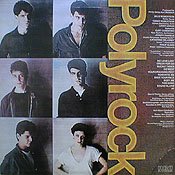
Polyrock (first album produced by P.Glass)

DJ Harvey and also David Mancuso

Miles Davis 1969-1975

Faust

Thursday, February 02, 2006

Excerpt from a dialogue b/w Eberhard Jungel and Paul Zahl (Tuebingen, 1991):


PZ: Herr Jungel, what do you think about the 3rd Use of the Law?

EJ: It is an erroneous teaching.

A new word --

Prolepsis: The use of a descriptive word in anticipation of the act or circumstances that would make it applicable, (as in "Imputation is a proleptic judgement," said A. McGrath in this morning's Doctrine lecture).

Wednesday, February 01, 2006

A Jeff Dean insight:


I think a key distinction we are missing regards the Catholc and Protestant understanding of human nature.

Thomas Aquinas argued that death was part of human nature, such that Adam would have died had he not sinned.

Luther and Calvin, among others, argued the contrary point: death is not "natural," but rather the punishment (or "consequence," as I prefer to think) of sin. Such a distinction is closer to an Eastern Orthodox understanding than a Roman Catholic.

The results in the following distinction: Roman Catholic theology must insist that salvation *adds* something to the human situation, whereas classical Protestant theology claims instead that salvation *removes* something from the human condition situation.

Thus, a Roman Catholic theology would consider the term "sinner" to represent the lack of God's grace, because a "sinner" is one to whom saving grace has not been added. Grace in the Roman Catholic equation, then, is something added to expand the nature of a person, not necessarily to combat "sin."

A Protestant theology, however, would consider "sinner" to be the apt description of a person as such. Grace in the Protestant sense, then, is not something added, but rather the willingness of the Father to overlook our sins because of the sacrifice of the Son.

We might say, then, that "grace" is best understood as a noun for Roman Catholics: something that God gives. Protestants, however, are apt to understand "grace" more as an adverb: the manner in which God acts.

Tuesday, January 31, 2006

Thursday, January 26, 2006

Alister McGrath on William Temple:

"Temple basically made the following statement (paraphrase): 'If you educate a bastard, all you get is an educated bastard.'"

Wednesday, January 25, 2006

South Park on Communion:


Have any of you seen this double episode: "Do the Handicapped Go to Hell?/Probably"? In the end, Satan learns to love himself after leaving his "90s man" boyfriend for Sadam Hussein. God turns out to be a Buddhist (see picture for their hilarious picture of what God, the Buddhist, looks like), and, as far as heaven is concerned: "The answer was: Mormon." Only Mormons in heaven.

(Cut to Sunday School. All the kids are sitting around a table. Sister Anne is their instructor.)

Sister Anne: Hello, children! I'm Sister Anne and I'll be teaching you so that you can all receive your first communion!

Stan: ARE WE GONNA GO TO HELL?!

Sister Anne: Well, hopefully not! That's why you're gonna need to receive communion!

Cartman: A'and as long as we get this communion thing, we're safe?!

Stan: What if we haven't really done anything that horribly bad in our lives?!

Cartman: Yeah! What if we hadn't!

Sister Anne: It doesn't matter, because we are all born with original sin! Now, let me explain how communion works! (takes out a plate of communion waffers. picks one up.) The priest will give you this round cracker and he will say "The body of Christ.", and then you eat it!

Cartman: Jesus was made of crackers?!

Sister Anne: No!

Stan: But crackers are his body!

Sister Anne: Yes!

Kenny: {What?!}

Sister Anne: In the book of Mark, Jesus distributed bread and said, "Eat this, for it is my body"!

Cartman: So, we won't go to Hell as long as we eat crackers!

Sister Anne: No, no, no, no!

Butters: W'well, what're we eatin' then?!

Sister Anne: The body of Christ!

Stan: Nononono! I get it! Jesus wanted us to eat him, but he didn't want us to be cannibals, so he turned himself into crackers, and then told people to eat'im!

Sister Anne: No!

Stan: No?!

Butters: Uh, I can't whistle if I eat too many crackers!

Sister Anne: Look, all you have to know is that when the priest give you the cracker, you eat it! Okay?!

Kenny, Stan, & Cartman: (a little confused.) Okay!

Sister Anne: And then, you will drink a very small amount of wine, for that is the Blood of Christ!

Cartman: Aw, come on, now! This is just getting silly!

Tuesday, January 24, 2006

I'm the one in the top hat.


I used to perform birthday party magic shows. My business card read: "JAZ is his name. Magic is his game!" This is me at age 11, in Charleston, after performing for a bunch of 5-year-olds, including Will Rhodes (now a visiting student at Wadham College, Oxford via Sarah Lawrence).

19 Favorite Christian Bands:

Joy Electric
The Violet Burning
Lift to Experience
The Normals
Mars Ill
Christafari
Cross Movement
The Billions
Lifesavas
Starflyer 59
Sufjan Stevens
The Danielson Family
Grits
Reliant K
Dave Crowder Band
The Orange County Supertones
Atmosphere
Ester Drang
Pedro the Lion

p.s., Please feel free to add to this list in the comments section. I would love to know of some others, particularly those with real artistic/conceptual motivations!

Monday, January 23, 2006

Bishop Colin Buchanon quotes:

taken from "What did Cranmer think he was doing?"--

"In the past it has been conventional to expound as though (Cranmer) designed to bring together the 'consecration' and the reception. But this is to read 1552 through post-1662 eyes. It is far more internally consistent to read 1552 as having no consecration at all...Thus the contention stands that Cranmer had no objective consecration whatsoever in 1552, and that his two-stage process via 1549 to 1552 enabled him to remove everything, whether text, rubric, or ceremony, which might suggest it." (pp. 22, 25)

(A totally de-mystified anamnesis!)

"It is anybody's guess which of the changes listed were directly inspired by Bucer (i.e., read: Calvin). My own guess would be that the only ones where this causation appears really plausible are iii. (no mention of portional homilies) and x. (chapels annexed not mentioned in rubric, meaning, no distinct attention given to the rich) in the Bucer list. Everything else was a natural next step (on Cranmer's pre-suppositions) in any case." (p. 32)

(In other words, Cranmer's sacramental theology was far from equivalent to that of Calvin, though it also resembled Luther consubstantial thought little. Rather, it reflected a certain down-to-earth, pastoral sensitivity, one of a seemingly Zwinglian tenor.)

Sunday, January 22, 2006

Go Steelers?


"It's only football. But since the mills closed and the Steelers arose in the 1970s, this football team and its on-field exploits have been part of the fabric of Pittsburgh, of Western Pennsylvania, of the Steelers Nation. Perhaps they're even too closely woven."

--quoted from The Pittsburgh Post-Gazette (Jan. 22, '06)

Saturday, January 21, 2006

Dennis Wilson (of Beach Boy fame) on Jesus of Nazareth:


"I know a carpenter who had a dream. You killed the man, but you couldn't kill the dream."

(In the comments below, someone wrote the following: "I once read someplace that Dennis was married twelve times. I'll have to double-check. But I'm fairly sure that the last woman he married before he died was Mike Love's 19-year-old niece, Sherry Love. Since Mike and Dennis were cousins, I can only assume she and Dennis were related as well." Here are my thoughts on the matter. Whoever wrote that, you're flying pretty close to the sun!):

Actually, it was Mike Love's illegitimate 18-year-old daughter (even worse). He impregnated her seemingly out of spite for Mike Love. He also regularly used to take women into Mike Love's "Meditation Chamber" on the Beach Boys' touring airplane. I like to think of it more abstractly as an acrimonious apologetic against Eastern Religions. Anyway, as far as Mike Love is concerned, the stories involving Dennis are painfully terrible. Mike actually got a restraining order against Dennis! An amazing, almost unbelievable story.

With the Beach Boys, nothing is ever simple. They are impossibly difficult to reduce to a simple interpretive paradigm. As David Zahl (the real Beach Boys expert, who is at this moment researching a book he is writing about the Beach Boys, the definitive Biography!) once remarked: "One thing you can't say about Brian Wilson is that he has completely lost it!" "Wow," I thought, "I was always pretty sure that that was the one thing you could safely say about Brian..." That's more or less how I always feel when I start interacting with the Beach Boys.

As far as I'm concerned, Dennis Wilson was the ultimate rock star. He bought and totalled a Rolls Royce in the same day. He is by far my favorite beach boy, and the only member of the band who could surf. Dennis may have been the world's most sentimental song-writer as well. And like the infamous "Smile" album, that remained uncompleted and secretly traded for so long, Dennis himself had a secret solo project, the Smile within Smile, called (no kidding) "Bamboo". I've spent hefty dough to get most of that material. It's some of my favorite stuff ever. His songs: "Companion" and "Love Surrounds Me" are all-time faves, and the break on "Pacific Ocean Blues" will have you convinced your listening to an instrumental out-take from the Beastie Boys "Check Your Head" sessions.

But, in light of his profoundly sentimental tendencies, and his severe alcoholism, he prayed and sought the Lord in times of distress. He wrote songs about Christmas, songs about Jesus, endless amounts of songs that describe in mushy detail the need of the heart for love from outside, and, in a binge-y moment with his brother (Brian) he recorded a song called "Oh Lord" in which he cries out to God: "Oh Lord, let me see what there is to see...etc". It is gut-wrenching (as is most of Dennis' most heart-felt gravelly singing), and a fantastic call from the sinner seeking God's absolution. In CS Lewis terms, we are dealing with the ultimate Edmond! I'm convinced we'll see him in heaven.

P.s., DZ was joking about Two-Lane Black Top. I got two copies of it for Christmas a few years ago. Unbearably slow. I tried to watch it all the way through twice, and after what seemed like hours, discovered I'd only reached the 45-minute mark (both times). --JAZ

Friday, January 20, 2006

PZ back at home, feeling much better, and on the way to a full recovery!

Thanks so much for all of your prayers. It turned out Dad had a big ole kidney stone. He plans on being back at work next week. PTL!

p.s., more details are available in the comments section of the initial post about him going into the hospital.

David Zahl reviews Derek Webb's new album:

(Dave is a youth minister with FOCUS. He works predominantly with kids from New England boarding schools.)

There’s one thing about my upbringing that I find more and more remarkable the older I get. Our parents managed to raise us in a home that was unmistakably Christian, evangelical even, but with scarcely any influence from mainstream American “Christian culture”. Sure, we had pictures of Jesus around, and there were definitely a few pillows with embroidered Bible verses. But there was nothing contemporary. No Amy Grant or DC Talk, no Left Behind (speaking of which, there must have been an 80s equivalent – anyone?). I can honestly say I didn’t know who Billy Graham was until I went to boarding school. John and Simeon can back me up.

My intention isn’t to rag on this stuff, tempting as that may be. Just to say that in my four years as a youth minister, I have had to play serious catch-up. Of course, I’d be lying if I didn’t admit that I’ve always found this aloofness pretty impressive/cool.

A few years ago, my brothers and I set out on a quest (Simeon) to find out if we’d missed out on anything good. Buried under all that Nashville-MegaChurch nonsense, there just had to be some quality stuff. So we looked for self-identifying “Christian bands” that we could have more than just an ironic, Stryper-ish interest in, and we found some. Not a ton but definitely a handful: The Normals, The Violet Burning, The 77s, Duvall, even Jars of Clay. The list goes on… a bit.

You’ll notice Caedmon’s Call is missing from that list. Try as I might, I couldn’t get into them – too slick, too nice, no Gospel. Derek Webb used to be one of the lead singers and songwriters in Caedmon’s Call. But he left in 2003 to pursue the solo thing. A student gave me his first record, She Must and Shall Go Free, and I was surprised to find a couple interesting songs on it, especially “Wedding Dress”, where he refers the Church over and over as a whore that runs down the aisle to get away from Jesus.

It got me interested enough to check out his second record, I See Things Upside Down. This time, a full half of the songs rocked. He made no secret of the fact that he’d been listening Yankee Hotel Foxtrot – the first song is even titled “I Want a Broken Heart” – but more amazingly, almost every song pointed to the Gospel. He constantly refers to himself as a sinner, not just a guy who “struggles” but a straight-up enemy of God. The song “I Repent” remains my favorite Derek Webb tune, with lyrics like, “I repent I repent of my pursuit of America’s dream/I repent I repent of living like I deserve anything… I repent I repent of parading my liberty/I repent I repent of paying for what I get for free/for the way I believe that I’m living right/by trading sins for other that are easier to hide/I am wrong and of these things I repent”.

In interviews, he would quote Luther and go off on American pop-Christianity: “We’re so fearful that people would know who we really are. More is wrapped up in trying to look like Jesus than look like people who need Jesus. Which I think is a tragedy. I’m not like Jesus. Not at all, actually. I’m a wreck of a person. I need him. Without him I’d be lost. And I’d rather people see my potential losses than some made-up fictional righteousness that doesn’t get me anywhere. Because if that’s all I show them, they’ll be shocked when they find out that I really am a wreck of a person… And I’d rather people just know that now. I’d rather there be no pretense about whether or not I’m a good person, whether or not I’m somebody they should listen to. I’m not. At all. But I know a guy…” Pure Gospel!

This past Christmas he released Mockingbird, his best record yet. Wilco is still the touchstone, but gone is any trace of Christian-y affect in his voice. The instrumentation is sparse, and the drumming surprisingly good. The vocals are nearly all double-tracked. The lyrics are bold and romantic and political. On “A New Law”, probably the highlight, he sings, “don’t teach me about politics and government, just tell me who to vote for/don’t teach me about truth and beauty, just label my music/don’t teach me how to live like a free man, just give me a new law/I want a new law/gimme that new law”. He ends the song by repeating the phrase, “do not be afraid” over and over. You can get it on itunes.

Of course, he’s not perfect and neither is the record. But keep in mind that his audience consists at least partly of home-schooled kids who grew up on The Newsboys and Michael W Smith, and you’ll be able to forgive him if he gets a tad heavy-handed. This guy deserves our support. Let me know what you think.


p.s. if anyone reading this happens somehow to know Derek Webb, tell him to come to New England, pronto.

Thursday, January 19, 2006

PRAYER REQUEST FOR PAUL ZAHL:


Dad is sick. Here is an excerpt from my mom's email regarding his condition:

"They suspect a blockage
or paralysis of part of his intestine. We have not yet gotten the full
report, but he is in the hospital, having nothing by mouth. His
spirits are good, and the surgeon thinks he does not look too bad, and
the problem may be righting itself. Regardless, we will not know until
tomorrow what the plan is. Surgery is a possibility, but I was
relieved that the surgeon is not knife-happy.

"That's it. What is the prayer? For healing, however God wants to do
it, and preferably, the quickest and easiest way possible."

Thanks for all your support!

love, ever, JAZ

Wednesday, January 18, 2006

Same ole Song and Dance:

Here's a brief summary of my current thinking about church and its relationship to theology as stated many times here previously. This also touches importantly on the distinctions that exist between denominations (as posted on Pontifications). I thought a discussion (should you so desire) might be in order on my blog as well:

"Fitz Allison once remarked: “You know you are preaching the Gospel when people start calling you ‘antinomian’.” What Lutherans call ‘the offense of the Gospel’ is found predominantly in the fact that the Gospel denies our ability to do anything “good” or “righteous” apart from God’s gracious intervention. Calvinists believe that, post-conversion, Christians exist in a new relationship to the Law in that they can now, at least at points, respond positively to the Law (they posit the 3rd Use of the Law to be primary to the Christian life, i.e., as it exhorts/instructs the hearer, rather than, say, convicts, which is the 2nd Use), thereby in some sense co-operating with the Will of God. Lutherans dispute the matter. Melancthon and most Lutherans confess a 3rd use of the Law, though most still deny its primacy. Some Lutherans though, such as Elert, deny its practical reality altogether. This is the ground where the NP’s understanding of Grace and the more “hard-core” Lutheran one part ways (i.e., this is not covenantal nomism, the thing which the New Perspective on Paul suggests to be good Protestant Christianity). It lines up better with Calvin than Luther definitely, not to mention the end of Article IX of the 39 Articles that refers to “sin perpetuate in the regenerate”. I’m an Anglican who holds the Lutheran position on this issue (as it relates to the reception of the Gospel by human beings), though I part ways with the LCMS (and Luther) on other issues (e.g., sacraments, etc.). This produces a view that suggests the message of God for people is identical for both Christians and non-Christians alike. For this reason, no matter what any Lutheran believes, because they deny the 3rd Use’s primacy, Calvinists always think me/us anti-nomian. It is true that, in Luther’s famous commentary on Galatians, he speaks only of “The Two-fold Use of the Law” (I.e., not “The Three-Fold Use of the Law”). The distinction plays out significantly in a Sunday service. Both start with the Law (in its 2nd Use), but one service concludes with the Gospel (Lutheran), the other reasserts the Law in the sense that it can (supposedly) now be received post-Gospel (Calvin). It seems to me that this difference is not so glaring between the Roman Catholic understanding of the Christian life, and Calvin’s, though not Luther’s. Am I wrong in thinking there to be less tension where Calvin and Rome are concerned?"

Monday, January 16, 2006

Simeon Zahl responds to Al Kimel:

(for background, read the posts and comments below dealing with imputation. Simeon is writing in specific response to comments made on Al's blog, Pontifications, where two articles re: Simeon's thoughts can be found. Here I link to the most relevant one: "Losing the Bible" by Al Kimel)

Al,

Thank you once again for a great piece, for flattering me again with such a thoughtful reponse, and for furthering this discussion of what I think are some of the most important issues there are. You are a great dialogue partner and host.

I agree that there is more to understanding the Bible than looking at isolated texts and their singular grammatical-historical meaning. I agree wholeheartedly that we must look to the wider Scriptural witness on various issues if we in our sinfulness are to approximate anything anywhere near the “true meaning of Scripture.” Even so, would you agree that the first step towards such a more comprehensive view is to assess as best we can the grammatical-historical meaning of individual passages in Scripture?

To apply this to the imputation/ infusion discussion, I would agree that 2 Corinthians 5:21 and Galatians 3:13 are not enough in and of themselves on which to base our entire doctrine of justification. But I see imputation everywhere in Scripture. As I have argued before, I think that atonement, and the very forgiveness of sins, imply an imputational framework. That an atonement for our sins through someone else bearing them for us took place on the Cross surely is not in doubt here. For us to be treated in any sense as righteous on the basis of the righteousness of someone else—an idea that permeates Paul, however you interpret “on the basis of”—it seems to me must be an imputational rather than an infusional event. And I do not think you can have both—this particular issue is an either/ or. I have already argued this, and many are not convinced. But neither have I as yet been convinced by the responses.

For our present purposes, the point is that I see imputation as basic in Paul, and as profoundly present in the major emphasis in all four Gospels on the Passion that results in the Death of the Innocent.

Furthermore, I see imputation as absolutely necessary to any idea of loving the unlovable, of loving sinners. The Incarnation is the first word to us of a love from God that we do not deserve, a love we did nothing to earn or even accept. John tells us, in fact, that we did not accept it (“He was in the world… yet the world did not know him. He came to his own, and his own people did not receive Him”- 1:10-11).

Justification is true in the here and now, in our lives, not just in the abstract. This means that imputation and infusion each have their own practical consequences in how people are treated. To love a sinner in practice is to impute righteousness to them. It is to love them although they do not deserve it, because of what Christ has done. We see imputation in practice everywhere in the Gospels. The injunction to love our (sinful) neighbor, much less our enemy, would mean loving sin for its own sake, were it not for the imputation that stands behind it. Let me explain.

Jesus’ loving interactions with sinful and unlovable people also permeate the Gospel texts. We all know that God does not and cannot love sin. Therefore for Jesus to love sinners, he must have loved them on the basis of a righteousness, a sinlessness, that was not theirs. This is imputation practiced. Jesus practiced it with the woman caught in adultery, when he treated her precisely as if she had not broken the Law, though she undeniably had. He practiced it when he raised Lazarus and Jairus’ daughter and the widow’s son from the grave—that love was certainly not contingent on their active, willful “response” to his love! He practiced it when he restored Simon Peter following his denials—He responded to Peter’s sin by restating Peter’s position of leadership in the Church! This, too, was love based on imputation, not infusion.

God meeting us in our sin is not the exception, but the rule, at least if you see Jesus’ treatment of sinners in the Gospels as paradigmatic of God meeting us in our sin. I do. A perfect and perfectly just God, the God of whom the Psalmist says “Evil may not sojourn with thee” (5:4), cannot love sinners unless there is some mechanism behind it—he can love sin only if he does not see it as sin, and that is precisely what imputation enables. Or, rather, imputation explains what is going on when he loves us and we do not deserve it. It is a thoroughly biblical description of an even more thoroughly biblical love of a perfect God for sinners.

You may argue that he loves sinners not on the basis of their sin but because there is yet some good in them—the image of God left over from Creation, that persists in spite of the Fall—but I cannot accept this argument. To me, it sounds like a cop-out: the clear emphasis in the Gospels and in Paul and John and virtually everywhere else is on the love for the sinner, not the love for the one who is mysteriously good deep inside where no one can see. He did not love the adulteress in her secret, intrinsic, albeit thwarted goodness. He loved her in her sin, and that can only take place if his righteousness is imputed. His strength is not just made manifest also in weakness, it is made PERFECT in it (2 Corinthians 12:9). Here is my thesis: Love for sinners means imputation.

And for all its origin in the subtle mechanics of atonement, imputation is alive and real today. When we love our sinful neighbor. When a shepherd loves his wayward flock. When my wife loves her proud and absurd husband.

Al, as a priest, you have far more pastoral experience than I do. When someone is difficult in your congregation, someone is acting out in their sin in a way that is extremely distasteful and uncomfortable for you and everyone else, on what basis can you love them as Christ loved them? They do not deserve love, and yet Christ loved them, and so I have no doubt you loved them too. What I am saying is that your love for the unlovable, your mercy for the merciless, by definition is based on an imputational rather than infusional model. Do you disagree? I would appreciate you thoughts on what it means to love a sinner, in light of our differing views of justification.


But what of all the verses you say imply transformational models of justification, i.e. that say we must be improving or else we are not Christians? The verses that supposedly see sanctification in this life as a requirement for acceptance at the final judgment? First of all, this supposed profusion of verses is often appealed to in abstract, very rarely more specifically. If you want to talk about “those verses”, then please cite them, and we can discuss. The only verse that has been quoted so far in this discussion concerns God pouring his love into our hearts (Romans 5:5), an event that can be understood perfectly well in an imputational framework. I would just say, “Yes, his loved is poured into our hearts. But it is his love, not ours. It has nothing to do with an infusion, with an improved state in terms of less tendency to sin and greater tendency to love in our very nature. It is his love, not our love activated by his love, as an infusional view would have to assume”.

You referred to the wider Pauline and NT witness to “regeneration, adoption, union with Christ, baptismal incorporation into the Church, growth in holiness, death and resurrection, final judgment.” First of all, of all of these categories, the only ones that are remotely problematic for a full imputational view are “regeneration” and “growth in holiness”—and I think they too can be understood by imputation. Adoption? What a great metaphor for imputation! Union with Christ? Absolutely, though with no fundamental ontological change in our nature in this life. Baptismal incorporation into the Church? Yep, but only on the basis of his righteousness, not ours. Death and resurrection? Of course! “Death, where is thy sting!” Christ defeated death for me, not on the basis of my righteousness, but on the basis of his. Final judgment? Thank God I will be covered with the blood of the Lamb on that Day, or surely I would be damned.

But what about regeneration and growth in holiness? The imputational view accepts these, too, but only descriptively, not prescriptively. I believe that imputation really does produce fruit in our lives, that there is real love that is poured in our hearts for others. But it does so on the basis of his righteousness and most emphatically not our own, so that He is always the initiator, we always the theologically passive object of his initiating love. So yes, I believe believing Christians do change, and do bear fruit. But I do not think this has anything to do with an ontological change that results in a new ability not to sin located in the believer’s nature. And when it does not appear to be occurring, when believers do not appear to be producing fruit, we can only say, with Paul, “Oh the depth of the riches and wisdom and knowledge of God! How unsearchable are his judgments and how inscrutable his ways!” (Romans 11:33).

The dominant NT metaphor for sanctification is that of “fruit”. Jesus says that a good tree will produce only good fruit, and a bad tree only bad (Matthew 7:17-20). The fruit metaphor (in addition to Matthew, see especially Galatians 5:22-23) is a profoundly passive one. Does the tree have control over whether or not it is healthy? Can it “participate” in the production of fruit in any sense that could involve the will? Does a tree even have a “will”? Are the water, the good soil, the weather, and its very genetic makeup, in any way a result of the tree’s initiative or participation?

Of course not. It is the most passive of metaphors. With the Lord as our planter, Creator, and gardener, we cannot but produce the fruit he chooses. But our status as a “good tree” is based on imputation, not infusion; substitution, not progressive improvement. So insofar as “transformation” is occurring in us and fruit is being produced, it is on the basis of his action, not ours. Infusion requires that we in some meaningful sense “participate” in that transformation. Imputation says that it simply happens, because of what has been done to us, not because of how we interact with what has been done to us. If we love back, it is with his love, not our own. Imputation, not infusion.

Finally, the infusion perspective deals very poorly with recidivism and persistent sin in the baptized believer. And show me a Christian who does not “backslide” every minute and every hour! Who is not enraptured with love for themselves on a regular basis! Whose first instinct is not to defend themselves against ad hominem arguments…! You did not defend yourself earlier in this thread when attacked by someone in this way: you just defended your point, and I applaud you for it. But if you are anything like me, who was also subject to that attack, your initial feeling was anger at being treated unfairly, and a desire to retaliate in kind. The loving dismissal you gave was not your first instinct, surely? If it was, you are a better man than I; I can tell you, love was not my first reaction!

It is in such things that I see the highly apparent lack of an infusion of righteousness in my nature. I cling to the Blood, which effected my righteousness through imputation, because without it I am damned. Otherwise, I missed my infusion, and that is a very scary thought. Some would dismiss my subjective account of my own sinfulness as missing the deeper and hidden reality, the “mystery” that the infusion is real even if I can never see it. But if the infusion is so “mysterious” that I never see its results, and never feel comforted in my sin by a sense of improvement, what use is it to me? It becomes a mere fantasy, totally out of touch with the reality of my sin and need. It morphs into a dreadful judgment on me for not bearing more fruit—it leads to guilt and death and exhaustion, subjected once again to a Law from which I thought Christ had freed me. Imputation covers me in this; infusion does not. Imputation allows for recidivism, without condoning it. As Thomas Nipperdey once described the Lutheran view of justification over and against the Reformed view (which is eerily similar in practice to the RC view), it is “an ethic of mercy” instead of “an ethic of probation”.

I find far more mercy in imputation, and I need far more mercy. Thank God I do not have to look far in the Scriptures to find a persistent love for sinners, based not on their own righteousness but on His. It is acted out in the Gospels. It is achieved on the Cross. And it is explained by Paul, not to mention Peter and John. It is far more than a first-phase exegetical grammatical-historical step.

Again, in your open-minded and absolutely fair treatment of my views, and your willingness to discuss them in light of your own, differing views, you have imputed to me a right to your time and gifts and experience that I do not deserve. As my brother put it recently, “When you disagree with someone strongly, you have two options: to impute love to them, or to hate them.” You have certainly done the former, and I thank you for it.

Simeon Zahl

Trey Parker on actors:


"But really the main reason we wanted to use puppets instead of actors is because we hate actors...all of 'em, every single one. That's why we do all the voices in South Park, and we do animation. No matter how big or small the actor, they always just have such an attitude and think that they're all rad. There's no lamer thing you can be in the world than an actor. It' the most self-serving...I'm just going off right now. We just wanted to do a show that ripped on celebrities and how much people love celebrities..."

Saturday, January 14, 2006

Rize! (a date movie)


Have you seen 'Rize'? It's a documentary that tells a story only God could invent:

The Problem: Gang violence in the LA ghetto.

The Solution: Birthday party clown entertainers dance their way up and out en masse. At least 50 of these "gangs" have grown up in the heart of the hood. This movie tells their story. The dancing is incredible; you have never seen the human body move like this!

...And they all turn out to be Christians.

p.s., It's a wonderful depiction of Isaiah 41:18 in action ("I will open rivers on the bare heights, and fountains in the midst of the valleys. I will make the wilderness a pool of water, and the dry land springs of water..."). God's work is more creative than the law would lead you to believe! ---JZ

Brennan Manning quote:


--from "Lion and the Lamb"

"Unfortunately, the whole concept of grace is alien to the American psyche. In our culture the tradition of “rugged individualism” has assumed a religious dimension. Americans are the people par excellence who get things done. Give us enough time, money and manpower and we can achieve anything. Listen to all the Sunday sermons with their emphasis on willpower and personal effort, and you get the impression that a do-it-yourself spirituality is the American fashion, that the Pelagian heresy is very much in vogue.

"Though the Scriptures speak insistently of the divine initiative in the work of salvation, that by grace we are saved, that the Tremendous Lover has taken to the chase, American spirituality still seems to start with self, not with God. Personal responsibility replaces personal response. We seem engrossed in our own efforts to grow in holiness. We talk about acquiring virtue, as though it were some kind of skill that can be acquired through personal effort, like good handwriting or a well-grooved golf swing. In seasons of penance, we focus on getting rid of our hang-ups and sweating through various spiritual exercises, as if they were a religious muscle-building program designed to produce that Christian Charles Atlas.

"The emphasis is always on what I do rather than on what God is doing in my life. In this macho approach God is reduced to a benign old spectator on the sidelines. The American mystique orients us to attribute any growth in the spiritual life to our own sturdy efforts and vigorous resolutions. We become convinced that we can do a pretty good job of following Jesus if we just, once and for all, make up our minds and really buckle down to it. Well, if that’s all there is to Christian discipleship, then in the words of singer Peggy Lee, “Let’s break out the booze.” All we’re doing is transferring the Horatio Alger legend of the self-made man from the economic sphere to the spiritual one" (pp. 159-160).

Friday, January 13, 2006

Insightful comment about Narnia:


"Most churches will try to turn you into a 'Susan'."

Fernando Botero (possible genius)


Nino de Vallecas, 1959

Wednesday, January 11, 2006